
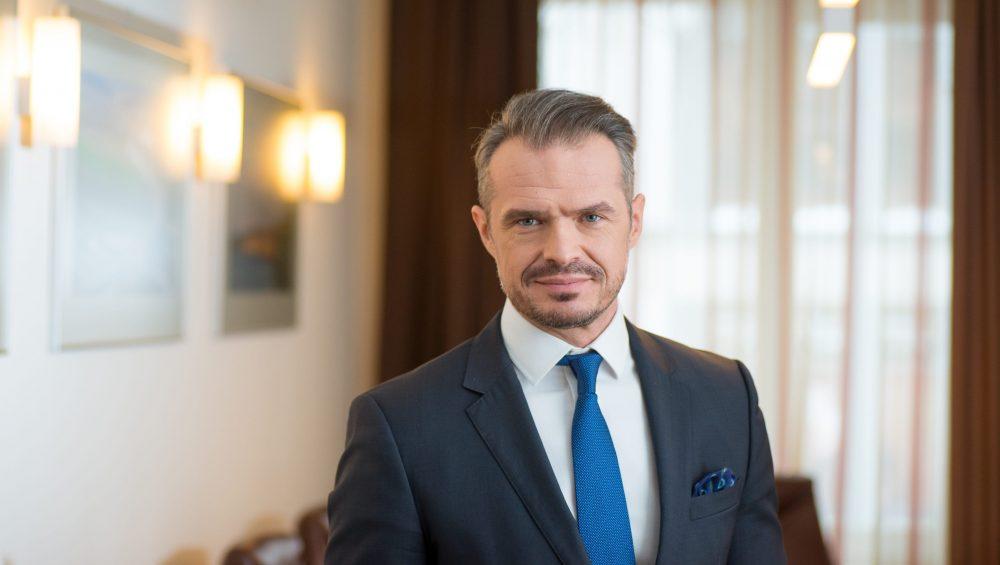


On April 17, 2026, the HACC held the first part of the examination of Sławomir Nowak — former head of Ukravtodor and a key figure in the case — who testified as a witness via video link from the Polish side.
At the outset, Nowak attempted to refuse the question-and-answer format and asked to be allowed to read a free narrative statement. The judge rejected the motion, explaining that as a witness Nowak is required to answer questions from the prosecution and defense, while the right to give a free statement belongs only to defendants.
During the prosecution's examination, Nowak confirmed that he headed Ukravtodor from November 2016 to December 2019, responsible for strategic management and cooperation with state authorities and international institutions.
A substantial portion of the examination concerned Nowak's relationships with prosecution witness Jacek Paluch and Altcom owner Oleksandr Tislenko, who holds defendant status in the Ukrainian proceedings. Nowak described Paluch as “a criminal and a slanderer” whose testimony formed the basis for the charges in the Polish case. The two had known each other since 2004 through family connections, but the relationship soured after Paluch allegedly engaged in financial dealings behind Nowak's back. Regarding Tislenko, Nowak stated he had met him at an official meeting as the incoming Ukravtodor head, held at the Cabinet of Ministers with then-Prime Minister Volodymyr Hroisman in attendance.
On the Kyiv–Odesa road construction contract between Ukravtodor and Altcom, Nowak stressed that the agreement had been signed well before his appointment. His own role, he claimed, was limited to facilitating the proper execution of a contract that was already problematic — allegedly due to the war and the company's Donetsk origins. He likened his role as Ukravtodor head in signing addenda to that of a “notary” simply certifying the outcome of lengthy negotiations between ministries and international financial institutions, and denied any informal arrangements with Tislenko outside of meetings or official engagements.
Particular attention was paid to the company Kvalvia. Nowak acknowledged that in 2017 he had introduced Paluch to Tislenko to help Paluch find employment. This connection led to the establishment of a construction firm intended to enter the Polish market, with Paluch as manager. Nowak denied any personal financial interest in the venture.
Nowak also stated that in Poland, one part of the criminal case against him had already been closed for lack of grounds for charges, as all testimony rested solely on Paluch's statements, which a separate court had allegedly ruled to be defamatory in a distinct ruling. The prosecutor handling that case was disciplined and dismissed. The second part of the case — in which Nowak is a defendant on Ukravtodor corruption charges — is before the Warsaw District Court and has reached the witness examination stage.
Throughout the examination, Nowak repeatedly evaded direct answers to the prosecutor's questions and attempted to redirect to discrediting Paluch, until the presiding judge intervened.
The next hearing dates will be coordinated with the Polish court outside the formal procedural framework. The next session is tentatively scheduled for April 21 at 11:00.
One positive development is also worth noting: the interpreter was replaced. The quality of interpretation was markedly higher than at the previous hearing, allowing participants to communicate considerably more effectively despite the technical challenges.
The case concerns a cross-border corruption scheme running from 2017 to 2019. According to the NABU and the SAPO, Nowak received bribes from contractor companies while serving as acting head of Ukravtodor. The central episode involves alleged bribery by Altcom owner Oleksandr Tislenko.
