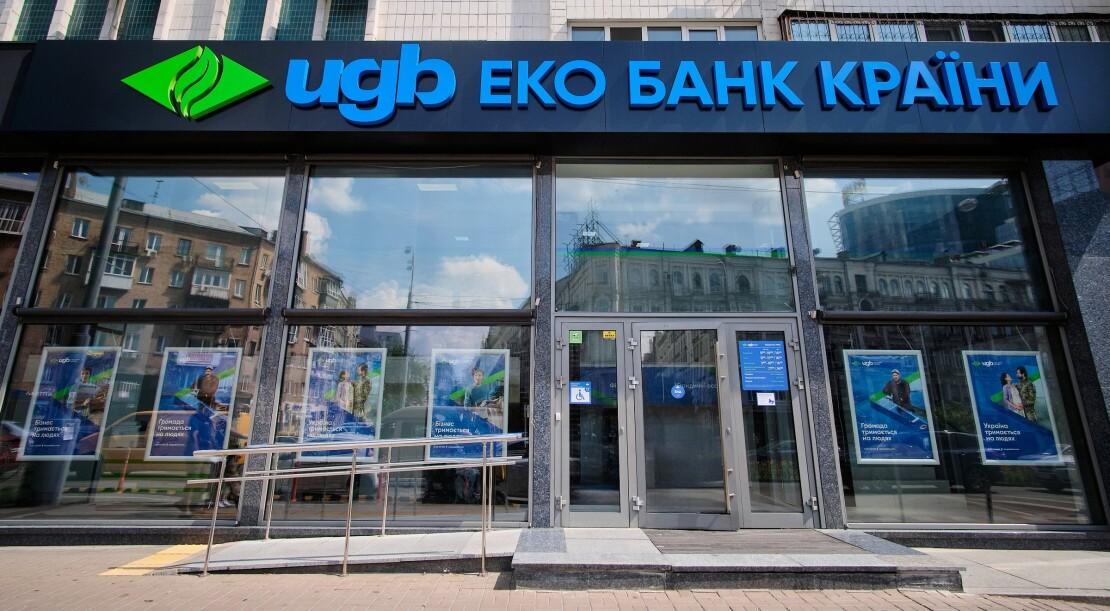

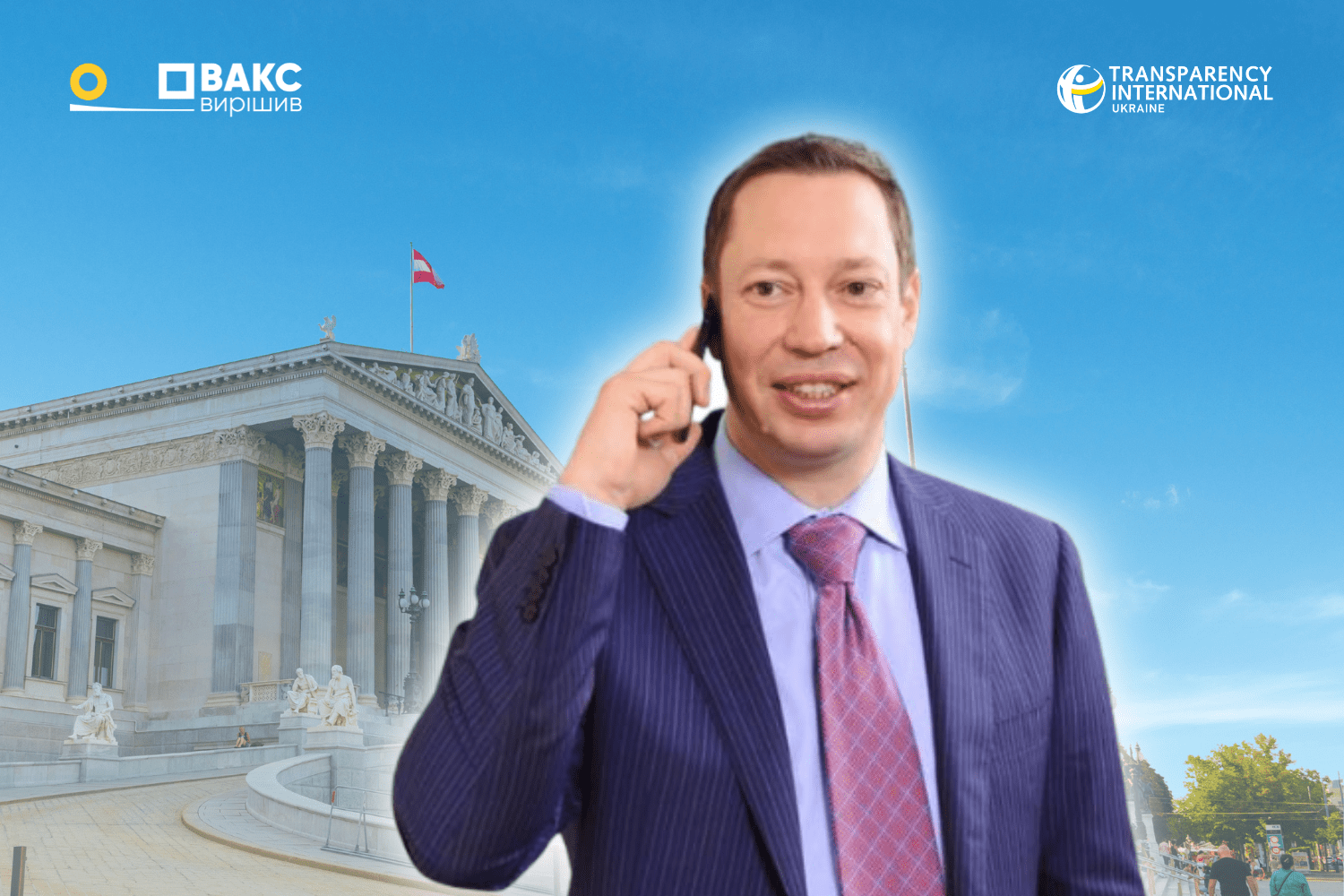


The HACC has concluded the preliminary proceedings in the case of the embezzlement of approximately UAH 206 million from state-owned Ukrgasbank, and the trial on the merits has now begun. The defendants include former National Bank of Ukraine Governor Kyrylo Shevchenko and former Deputy Minister of Justice Denys Chernyshov, who are currently in hiding in Austria. Below we cover the substance of the alleged scheme, the people in the dock and how they got there, and what unfolded over nearly a year of preliminary proceedings.
What is the case about?
The case concerns the alleged misappropriation of nearly UAH 206 million from JSB Ukrgasbank by a criminal organization and the subsequent laundering of those funds. According to the prosecution, in November 2014, Ukrgasbank officials set up a scheme to siphon money out of the bank, and it operated through March 2020. Over that period, the bank made over a thousand transfers to 52 fictitious intermediaries, unlawfully spending approximately UAH 206 million.
The defendants' actions are charged under Articles 191, 255, 209, and 366 of the Criminal Code of Ukraine, according to each participant's role.
The investigation was opened on February 20, 2019. On February 28, 2025, the indictment against eight defendants was referred to the HACC. The HACC held its first preliminary hearing on May 30, 2025, and exactly 11 months later — on April 30, 2026 — the preliminary proceedings concluded. The case has now been scheduled for trial on the merits, with the first hearing held on May 1, 2026.
Who are the defendants?
There are currently seven defendants in the case:
-
Kyrylo Shevchenko — according to the prosecution, the leader of the criminal organization; former First Deputy Chairman of the Board of JSB Ukrgasbank, and later acting Chairman and full Chairman of the Board of the same bank. From 2020 to 2022 he served as Governor of the National Bank of Ukraine;
-
Denys Chernyshov — former adviser to the Chairman of the Board of JSB Ukrgasbank, and later Deputy Chairman of the Board under Kyrylo Shevchenko; from 2016 to 2019 he served as Deputy Minister of Justice of Ukraine
-
three fictitious bank "partners," namely former First Deputy Prosecutor General Mykola Herasymiuk — who also previously competed for the position of SAPO head — his wife Kateryna Herasymiuk, and Denys Chernyshov's wife Nataliia Chernyshova
-
Olena Khmelenko — former head of one of the bank's departments
-
Dymytrii Kozak — former head of the bank's Odesa regional directorate.
The case also included another former bank department head, Oleksii Liutyi, whose materials were severed into a separate proceeding after he entered a plea agreement.
What sets this case apart?
Ukrgasbank is effectively state-owned, with nearly 95% of its shares held by the Ukrainian state. Through the criminal scheme, the bank lost approximately UAH 206 million. The investigation holds that the defendants unlawfully misappropriated these funds and subsequently laundered them.
A total of 16 individuals were originally implicated in the case. Half of them entered plea agreements during the investigation, agreeing to provide incriminating testimony. They also compensated UAH 35 million in damages and transferred over UAH 14.5 million in support of the Armed Forces of Ukraine.
Of the remaining defendants, only Oleksii Liutyi and — more recently — Dymytrii Kozak have actually appeared in court in person. All others are abroad, particularly in the Austrian capital of Vienna, and have been placed on the international wanted list. As emerged from the hearings, SAPO prosecutors filed motions for the defendants' detention and extradition arrest, but the Austrian court denied them, citing the active hostilities on Ukrainian territory.
According to HACC data, as of March 2025, one in eight cases is being heard in absentia (without the defendants physically present) due to their hiding abroad. Our analysis of these cases is available on the HACC Decided platform.
How did the defendants end up abroad?
Kyrylo Shevchenko crossed the Polish border in September 2022, ostensibly traveling to London on a business trip — a trip that abruptly turned into a vacation. He never returned and is now in Austria.
Shevchenko himself and his defense counsel attribute his stay there to political persecution. On those grounds, Shevchenko has even applied to Austrian authorities for political asylum. His defense has shown investigators a letter from competent Austrian authorities confirming that the asylum procedure is currently underway. According to him, that is precisely why he cannot return to Ukraine — his international passport has supposedly been retained by the Austrian authorities for that procedure.
Shevchenko subsequently informed the court that he received employment authorization in Austria in August of this year and began working in September at an Austrian investment firm as Deputy Head of Investment. He declined to name the company, claiming his employer had not consented to disclosure.
The prosecutor maintains that Denys Chernyshov left Ukraine at the same time as Shevchenko. At one of the early hearings, Chernyshov filed a motion for adjournment in which he attributed his departure to Austria to his "active pro-Ukrainian position." He further refused to return, citing inadequate conditions in pre-trial detention — specifically, that detainees are not evacuated from their cells during air raid alerts, and that he has no wish to put himself at risk. The irony is that, while at the Ministry of Justice, Chernyshov was the very official responsible for the penitentiary system. His "pro-Ukrainian position" argument struck the court as deeply implausible, given that Chernyshov in fact fled Ukraine by exploiting a state employee's vacation leave with travel authorization.
In correspondence with the prosecution, Chernyshov justified his refusal to return by pointing to active hostilities, martial law, and his alleged need for medical treatment abroad. At one hearing, he recounted that at the start of the full-scale invasion he had traveled to western Ukraine together with Shevchenko and worked remotely from Uzhhorod. Beginning in September 2022, he was on leave, during which he traveled to Austria for writing work, medical treatment, and to bring his wife back to Ukraine. The couple, however, later changed their minds about returning due to the escalation of hostilities.
Kateryna Herasymiuk left Ukraine at the end of February 2022. Chernyshova left in March 2022, and Khmelenko in May 2022. Herasymiuk traveled to Slovakia in January 2023 and now lives with his wife in Austria.
Kyrylo Shevchenko, Denys Chernyshov, and Olena Khmelenko were placed on the international wanted list on October 28, 2022. The Herasymiuks and Nataliia Chernyshova followed on April 26, 2023. Prosecutors moved for in absentia proceedings against all of them. Dymytrii Kozak, by contrast, was at that point under no interim measure or travel restriction; he traveled to Israel in January 2025 for medical treatment. He is the only defendant in the case to have returned to Ukraine.
Shevchenko's claim of political persecution
Kyrylo Shevchenko maintains that the case against him bears all the hallmarks of political persecution. At one hearing, attended via video link from abroad, he stated that President Volodymyr Zelenskyy had purportedly blackmailed him into submitting his resignation as NBU Governor of his own accord.
The political persecution, in Shevchenko's telling, was rooted in attempts to pressure the National Bank into facilitating corrupt arrangements. According to him, after the war began, he had on multiple occasions, as NBU Governor, prevented unlawful transactions in arms procurement — and the Office of the President took exception. As a result, he claims, he was effectively pushed out of the position to make way for Yermak's confidant Andrii Pyshnyi. The NABU, however, opened the investigation in 2019 — well before Shevchenko was appointed NBU Governor. It is therefore somewhat curious to now link the case to a desire to remove him from that office.
Shevchenko also complained that he began receiving threats after his statement at a hearing before HACC Judge Andrii Bitsiuk, in which he mentioned the names of Zelenskyy and Andrii Yermak, the Head of the Office of the President. As a result, Shevchenko maintained, he was forced to turn to the competent Austrian authorities, who are currently investigating those threats.
A flood of motions: what happened during the preliminary proceedings?
The lead-up to the trial was marked by a large number of recusal motions from the parties. The prosecutor and defendant Shevchenko sought to recuse one judge from the panel on the grounds that, at the pre-trial investigation stage, she had reviewed a self-recusal motion by the investigating judge. Defense counsel then moved to recuse the entire panel because that judge had not been removed. Later still, the defense filed further recusal motions on the grounds that the court had supposedly disregarded counsel's right to rest and had appointed a substitute attorney without sufficient basis. Defense counsel also sought to recuse the judges over the approval of a plea agreement with one of the defendants — Oleksii Liutyi. The court denied all of these motions.
The defense also repeatedly moved to recuse the prosecutors. The grounds varied: the alleged disclosure of pre-trial investigation information to the media, and the prosecutor's refusal to disclose severed materials to the defense for review. Another ground was an alleged conflict of interest on the prosecutors' part stemming from proceedings opened against an SBI prosecutor on Shevchenko's complaint and a Pecherskyi Court ruling. The prosecutor in question stated that she was unaware of any such proceedings and was not biased, since she had not previously seen the defendants (the case had been handled by a different prosecutor up until then). The HACC denied these defense motions as well.
Given the large number of defense counsel involved, hearings were frequently disrupted or adjourned, and overall progress toward the trial on the merits was slow.
Below are some of the key events from among the many that took place during the preliminary stage:
-
On June 27, 2025, one of the defense attorneys filed a motion with the HACC Appeals Chamber to transfer the criminal proceedings from the HACC to the Solomianskyi District Court of Kyiv. He argued that the case did not fall within HACC's jurisdiction, on the grounds that JSB Ukrgasbank was supposedly not a state bank. The HACC Appeals Chamber denied the motion, reaching the opposite conclusion.
-
On October 17, 2025, on Mykola Herasymiuk's instructions, his defense counsel withdrew from representing him while continuing to represent Kateryna Herasymiuk. The court appointed a public defender from the free legal aid center, but could not immediately accept the withdrawal — the Herasymiuks have not been appearing at hearings, even via video link, so the defendant's consent could not be confirmed directly.
-
At the October 24, 2025 hearing, the court identified grounds in the conduct of one of Khmelenko's defense attorneys for referral to the Bar Council Disciplinary Commission. Another of her attorneys failed to appear at the hearing without explanation. Khmelenko herself had by that point dismissed her counsel, and one of her attorneys — present at the hearing — concluded that he no longer had authority to represent her. However, the dismissal had not been properly formalized, so the court could not immediately accept it. The other attorney characterized the court's handling of the matter as arbitrary and insisted on the immediate acceptance of the dismissal. The defendant withdrew from defense representation entirely.
-
The only meaningful development at the end of November was the granting of the prosecutor's motion to sever the materials concerning Oleksii Liutyi following his plea agreement.
-
At the February 27 hearing, the defense filed over 25 complaints regarding the actions of the detectives and prosecutors. The court refused to consider most of them at this stage — prompting a wave of judicial recusal motions. The court, in turn, sought to impose strict procedural rules and timing to limit delay tactics. That same day, the court once again initiated disciplinary proceedings against a defense attorney — this time over the lack of internet and connectivity, which the court characterized as poor work organization.
On April 30, the case finally moved to the trial on the merits. At the conclusion of the preliminary hearing, the court denied virtually all of the defense's complaints and the prosecution's motions, authorizing in absentia proceedings only against Mykola and Kateryna Herasymiuk. As to Shevchenko, the Chernyshovs, and Khmelenko, the court denied the request, since they have been participating in hearings via video link.
Now that the preliminary stage is over, what matters most is a quality trial on the merits. The court must thoroughly examine the investigation materials, establish all the relevant facts, and properly assess the defendants' conduct. It is important that the trial proceed within reasonable time frames — and that any further delay tactics, if they continue, draw an appropriate procedural response.
A quality trial of high-level corruption cases is not just a public demand — it is a parameter assessed in Ukraine's EU integration process. At present, there is unfortunately no visible progress on legislative changes that would help strengthen the trial of top corruption cases at the HACC. It is therefore up to the government and parliament whether Ukraine will move from limited progress to full compliance with EU requirements on this front of our commitments.
This material is prepared by the Transparency International Ukraine team