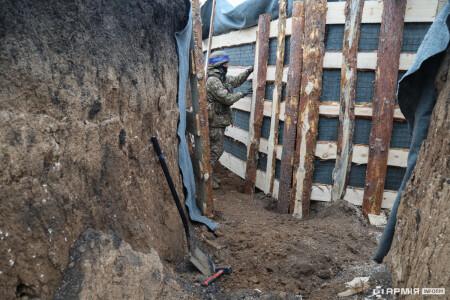

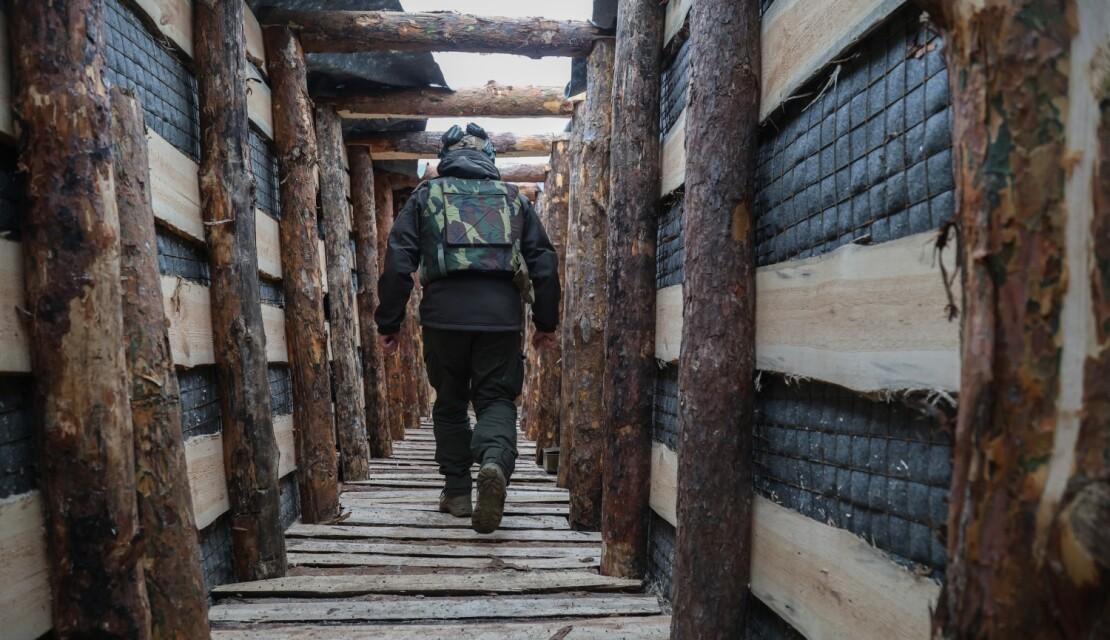
The NABU and the SAPO uncovered a corruption scheme related to the construction of fortifications (dugouts) in the Joint Forces Operation zone in Donetsk region in 2015.
Notices of suspicion in this case were served on:
- the former Head of the Main Directorate of Operational Support, Lieutenant General of the Armed Forces of Ukraine
- an official of the Major Construction Department of the Donetsk Regional State Administration.
According to the investigation, the corruption scheme began in March 2015, when, at the initiative of the then Head of the Main Directorate of Operational Support of the Armed Forces of Ukraine and the leadership of Sector “M” in Donetsk region, construction began on a platoon strongpoint codenamed “Experimental.” The construction was carried out haphazardly: without any contracts with the Ministry of Defense, without approved project documentation, and using ordinary metal shipping containers instead of reinforced concrete structures. When, in April 2015, the state officially allocated funds for fortifications and delegated the contracting authority functions to the Donetsk Regional State Administration, the defendants decided to “legalize” the already-built substandard facility to secure payment for the work on behalf of the private contractor Azovstalsbud.
Acting knowingly in the interests of the contractor, the Lieutenant General abused his position and pressured his subordinates. In particular, he issued a verbal order to approve project documentation “E-3007 AI,” which had been prepared backdated — after construction had already been completed. This documentation in effect merely recorded the use of metal containers, which directly contradicted the tactical and technical requirements of the General Staff, which called for durable precast reinforced concrete elements to protect troops from shelling. Despite objections from the Central Design Institute regarding the project's non-compliance with safety standards, the general continued to lobby for Azovstalsbud's interests, seeking to obtain favorable conclusions at any cost.
To conceal the violations, the Donetsk Regional State Administration official assured his superiors that the substitution of durable reinforced concrete with ordinary metal containers had allegedly been formally approved by the military at the outset of the works. In December 2015, the Lieutenant General confirmed this with his signature, which enabled payment to be transferred to the contractor without valid grounds. As a result of these joint actions, the state suffered losses totaling UAH 2,871,327.65. In effect, funds were paid for a facility that was incapable of fulfilling its primary purpose — protecting the lives of soldiers on the front line.
The actions of both defendants are charged under Article 364(2) of the Criminal Code of Ukraine.
Concurrently, the Ministry of Defense of Ukraine also filed a civil claim in the case.
In February 2026, the HACC panel of judges granted the motion of the former Armed Forces official and released him from criminal liability due to the expiration of the statute of limitations under Article 49 of the Criminal Code of Ukraine (more than ten years had elapsed since the last episode on December 8, 2015). The proceedings against him were closed. The court also lifted the seizure on his apartment and dismissed the civil claim without consideration.

 01/07/2021