
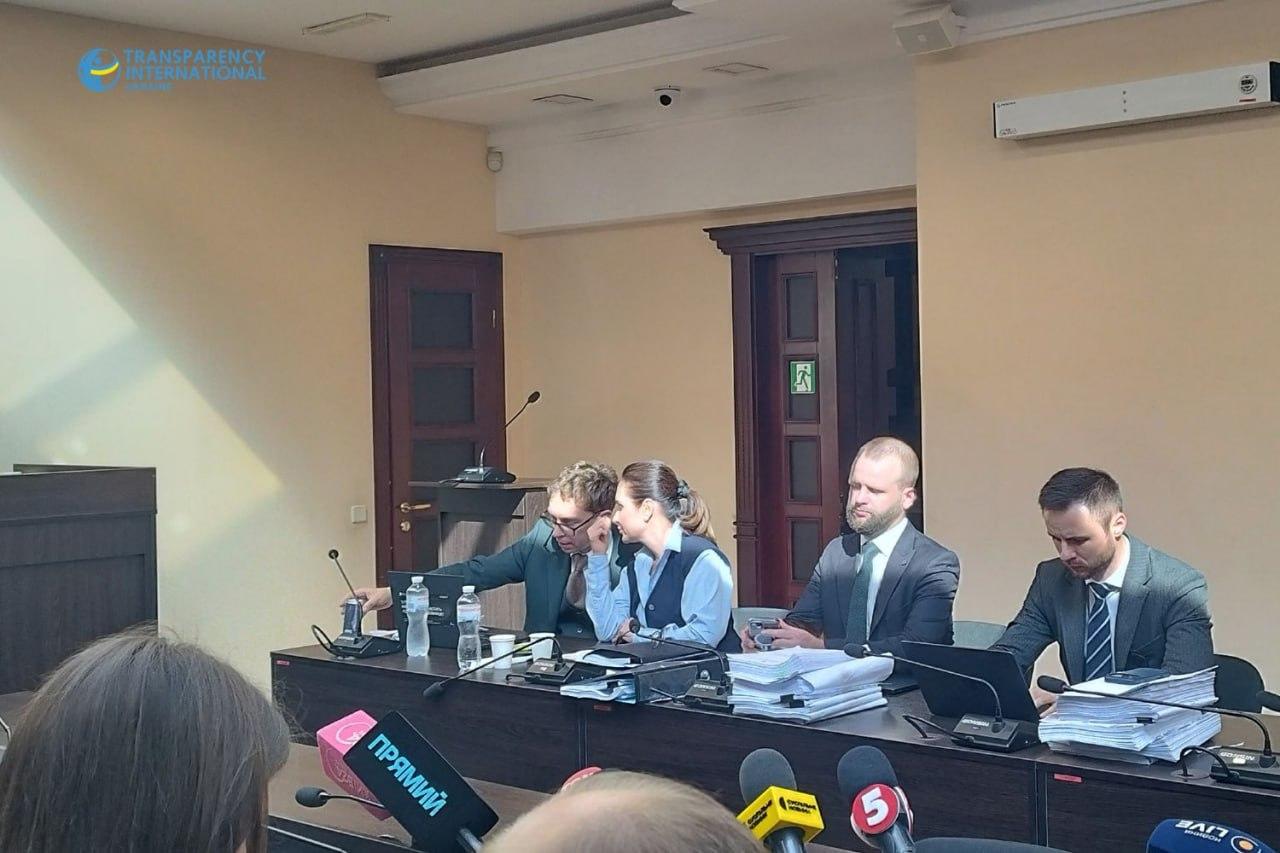


According to investigators, 11 people were involved in the crimes, and the criminal organization systematically seized companies' funds and then laundered them.
The prosecution charges the suspects under Articles 206, 191, and 255 of the Criminal Code. Investigators established that members of the organization sought to gain control over a number of assets, including the companies Budmontazh Service and Philosophy Development and the Pushkinska property.
The “understanding” and division of roles
A key piece of evidence is the record of covert investigative actions carried out at Maksym Mykytas's home. It turned up a document from November 2024 — a so-called “memorandum,” or “understanding.” It laid out plans to take control of the Pushkinska and Metrobud projects, among others.
According to the documents, roles were divided as follows:
- Maksym Mykytas handled the technical side of carrying out the projects;
- Vadym Stolar dealt with financing and the use of corrupt connections.
Mudra's role
According to investigators, deputy head of the Office of the President Iryna Mudra served as the organization's “liaison.” Her task was to establish communication with the leadership of state-owned Sense Bank and to make sure financial monitoring did not block the suspicious schemes.
The case file contains conversations between Mudra and Mykytas in which she reports on the bank leadership's loyalty. Commenting on the readiness of management board chair Stupak and supervisory board head Hladyshchenko to cooperate, Mudra remarked:
“Honestly, these ones at Sense Bank today — putty in your hands. Just little darlings. You know, they came crawling up like little kittens.”
It was Mudra, the prosecution says, who confirmed that the bank was ready for these “off-the-books” talks, after which Mykytas sent his trusted representative — Yelizarov (Valyk) — to finalize the arrangements.
Laundering UAH 200 million through “manual mode”
One of the central episodes is the attempt to launder UAH 200 million to post bail for Halushchenko, a suspect in another proceeding (the bail was posted on June 29, 2026).
Investigators recorded the suspects searching for ways to bypass financial monitoring. Yelizarov explained to Mykytas that depositing such a sum in cash was impossible, so they needed high-revenue companies to run cashless payments through.
For the final tranche, they planned to interfere artificially with the bank's system — here Sense Bank employee Liudmyla Snihur came into play. In a conversation quoted by the prosecutor, Yelizarov explains the “manual window” scheme:
“Finmon monitors the incoming side too, and they give us a window — when they take their system down for servicing, that's when we generate the payment order and send it, so it doesn't get caught in manual check.”
Mykytas later briefed Mudra on the scheme, explaining that bank staff would create a technical pause in the monitoring system (a “window”) to let the first 50 million through without checks.
Mykytas: Hello — so look, here's the plan. There's no way, no way Finmon lets it through just like that. So tomorrow we open an account, we put the money in. He says: “I make a window in manual mode and we release the money.” A manual mode.
Mudra: What — what is that? I didn't understand.
Mykytas: I don't know how. He says: “That's my end of it. I'll make a window in manual mode, and we release the money.” And it'll be that way for every sum. There. That's it.
Mudra: And what amount gets deposited?
Mykytas: Well, 50 for now. The first 50.
Where the money went
The prosecutor paid particular attention to the events of June 22 and 23, 2026, when the huge cash sums were handed over directly. These episodes were captured through covert investigative actions, in which the suspects discussed “bags of cash” and the risks of moving them right under law enforcement's nose.
On June 22, the first main tranche of UAH 50 million was delivered, and later that day another UAH 10 million separately. On June 23, the suspects moved two more tranches: UAH 70 million and UAH 20 million.
In all, UAH 150 million in cash passed through the participants' hands over the two days — money that, investigators say, was criminally obtained and meant to cover Halushchenko's bail.
Investigators established that the sum was split into three main parts and kept:
- in conversion centers (“laundries”) — UAH 86 million;
- in Mykytas's offices — UAH 45 million;
- at Mykytas's home — UAH 20 million.
According to investigators, Mykytas wanted to transfer more than UAH 50 million at once, which Hladyshenko opposed. Mykytas therefore asked Mudra to lean on the Sense Bank leadership.
The prosecutor also presented evidence of Iryna Mudra's involvement in the raiding and hacking episode — covered in more detail in the reporting on Maksym Mykytas's preventive-measure hearing. Mudra's role was to influence Ministry of Justice officials over the work of the anti-raiding commission.
For lack of time, the prosecutor was unable to read out and substantiate the risk of a further criminal offense, and will continue at the next hearing.