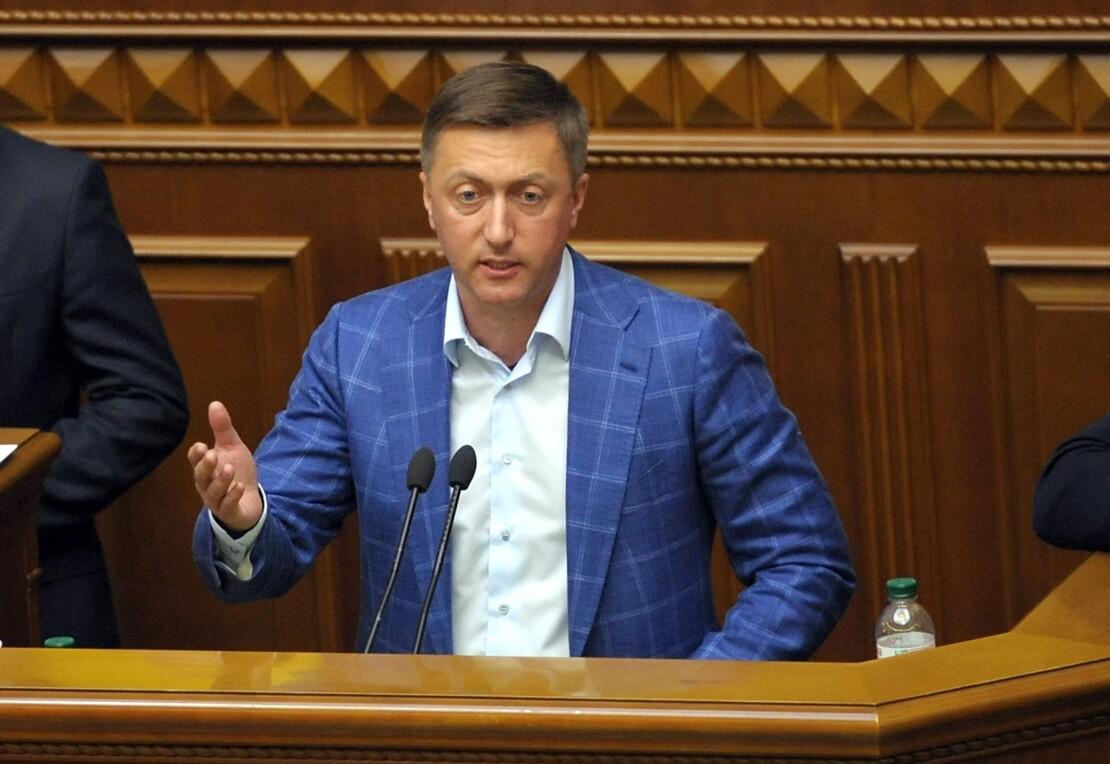

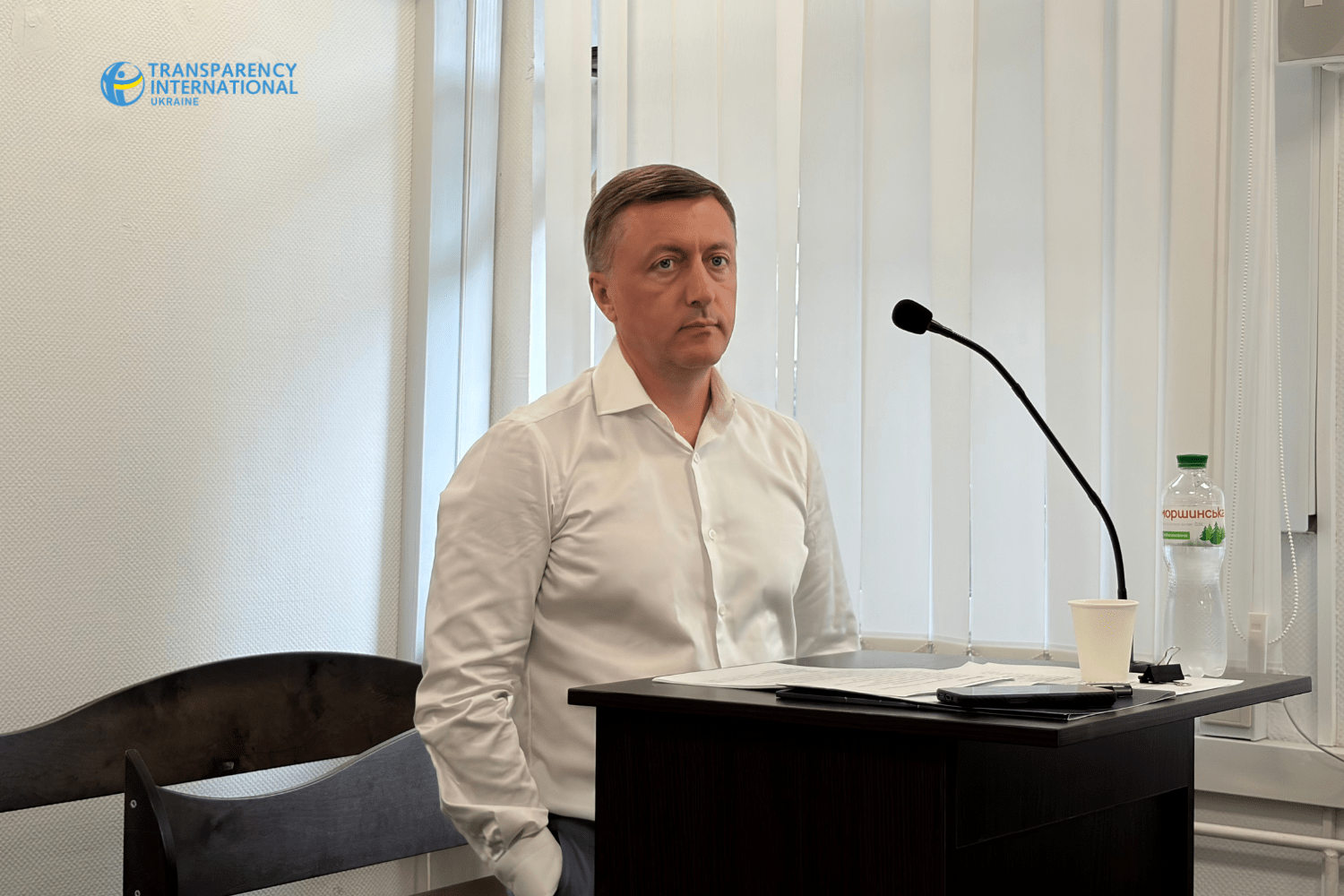


Closing arguments are under way in the case of MP Serhii Labaziuk, charged with attempting to bribe Oleksandr Kubrakov, then Deputy Prime Minister for Restoration, and Mustafa Nayyem, then head of the Agency for Restoration. Today Labaziuk and his defense concluded their statements.
The arguments opened on July 14, when the floor went to the prosecution.
The prosecution's position
The prosecutor rejects the defense's claim of provocation and pressure on Labaziuk. Investigators found that it was Labaziuk who initiated every meeting — including those at the Sutra restaurant and in Ivan Bahrianyi Park with Kubrakov on August 8 and 31. He was the first to ask to “be told who to deal with” after his company was allegedly squeezed out of the market and left without work.
The prosecutor flatly rejects the defense's argument that Labaziuk's conduct should be classified as trading in influence. She maintains that the covert investigative records, the questioning of Nayyem and Kubrakov, and other evidence fully refute the defense and confirm that the MP's actions were correctly classified.
The scheme to capture the “billion” — projects worth UAH 1 billion — was, the prosecution argues, Labaziuk's own initiative. On August 9, URD representative Nazimov, whom Labaziuk had brought in, immediately steered his meeting with Nayyem toward “cooperation,” by which he meant a bribe; he wrote the amount on a sheet of paper — 3–5% of the billion.
Investigators also stressed that Labaziuk offered Kubrakov apartments in Arden Palace as thanks for helping resolve his difficult situation.
According to investigators, the bribe was passed in a Chinese box with deliberate secrecy: the money was delivered not by Labaziuk but by his driver, Shudra — and Shudra handed it over not from his own car but inside Nayyem's, a further layer of concealment. When Nayyem thanked him for the box, Labaziuk answered with a veiled phrase: “China makes good tea.” All of this, investigators say, points to Labaziuk's direct intent to bribe.
The prosecutor asked for prison terms for both men: 8 years and 6 months for Labaziuk and 8 years for Nazimov. For each she also sought confiscation of property and a ban on holding public office. For the legal entity URD LLC, she asked the court to impose a fine of 70,000 tax-free minimum incomes and to confiscate the stake in its charter capital.
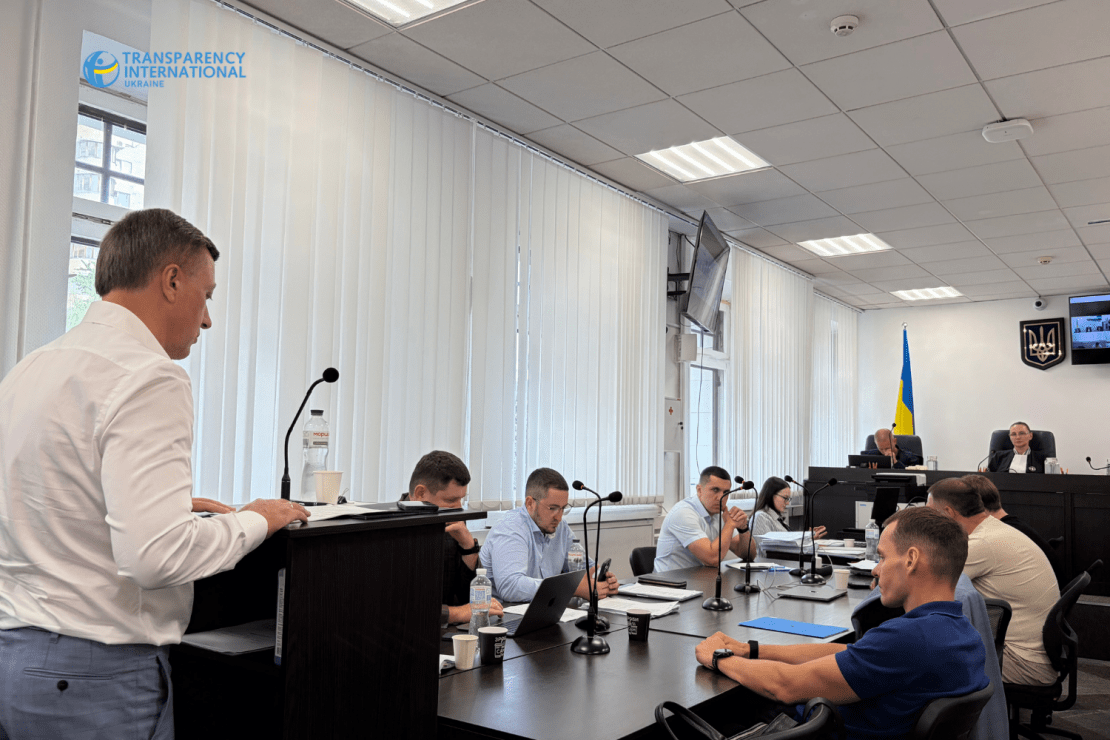
The defense's position
The defense argues that bias marked the prosecution's conduct from NABU's first social-media posts through the serving of the notice of suspicion. The lawyers are convinced that investigators deliberately built a prejudged picture of the MP's supposedly established guilt.
They point to what they call a substantial restriction of the right to defense, caused by the court's refusal to permit the questioning of detectives and other witnesses. The questioning of Nayyem and Kubrakov was cut short, they say, leaving the defense unable to ask all its questions. The defense insists that Kubrakov's and Nayyem's statements that Labaziuk offered them an unlawful benefit are untrue, and that their testimony is false and should be ruled inadmissible.
The defense's central argument is that Nayyem and Kubrakov provoked and incited the offense: exploiting their positions, their influence, and their friendship with Labaziuk, they themselves demanded money, applied pressure, and used covert methods.
There is, the defense contends, no proper evidence that either Labaziuk or Nazimov initiated the bribe. Labaziuk showed Kubrakov only friendly gratitude and approached him with a legal question about reinstating open tender procedures. Nazimov, for his part, allegedly played a purely technical role, believing that arrangements for free-of-charge work were already in place; he could not physically have offered a bribe himself during a first meeting with Nayyem, then a stranger to him.
The defense separately stresses the absence of the elements of a crime under the charged Article 369 of the Criminal Code of Ukraine. Neither Nayyem nor Kubrakov in fact held special official powers to allocate tender funds, so the classification is mistaken. Even granting the facts of money changing hands and negotiations, Labaziuk's conduct under pressure and demands from officials looks closer to trading in influence.
On these grounds the defense asks the court to acquit Labaziuk and Nazimov in full for lack of proven guilt, to return all seized property, and to apply no confiscation to the defendants or to URD LLC.
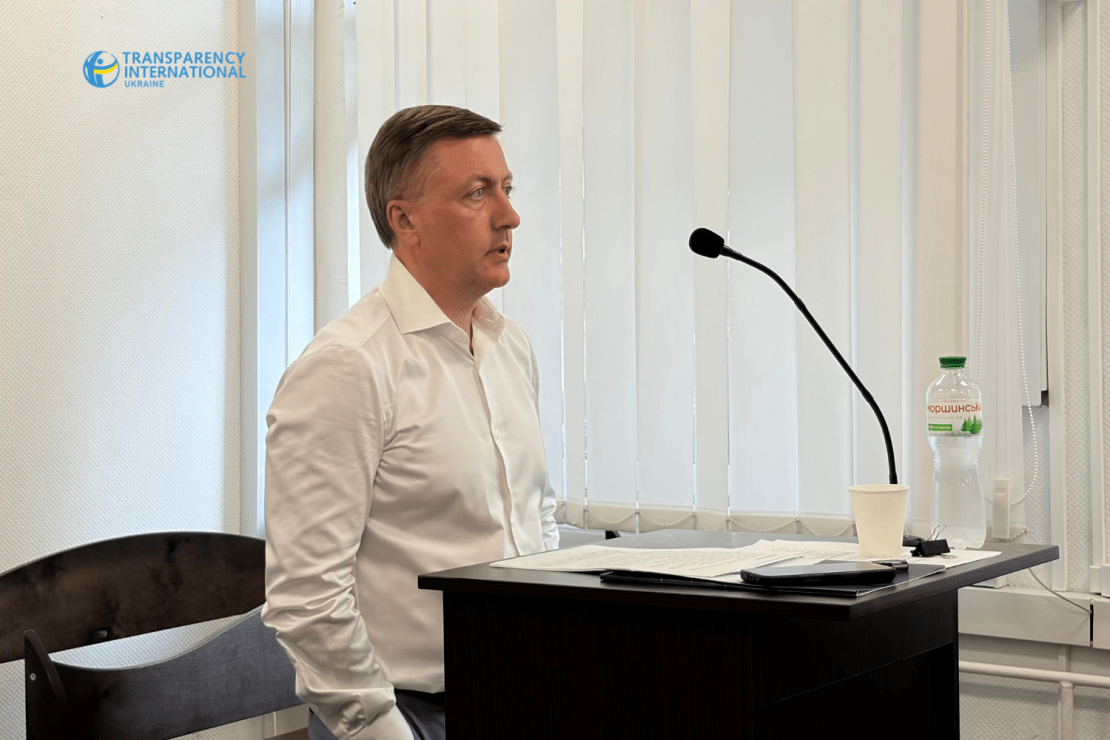
In his own statement, Labaziuk said he had never given or taken a bribe and brought himself to hand over the money only after 10 months of relentless provocation, incitement, and pressure from Kubrakov and Nayyem.
His company URD was, he said, brazenly thrown off the market when transparent tenders were canceled, so he used his status as an MP solely to secure a meeting with officials and protect the business and its staff. He was given an ultimatum, the MP claims — play by their rules or see the company destroyed. He handed over the money on Nayyem's direct demand as “payment of a debt,” guided by the established kickback rate of 3–5%. Labaziuk is convinced that had Nayyem and Kubrakov not been acting as undercover NABU agents, they would either have refused to help or helped lawfully and without any bribes.