
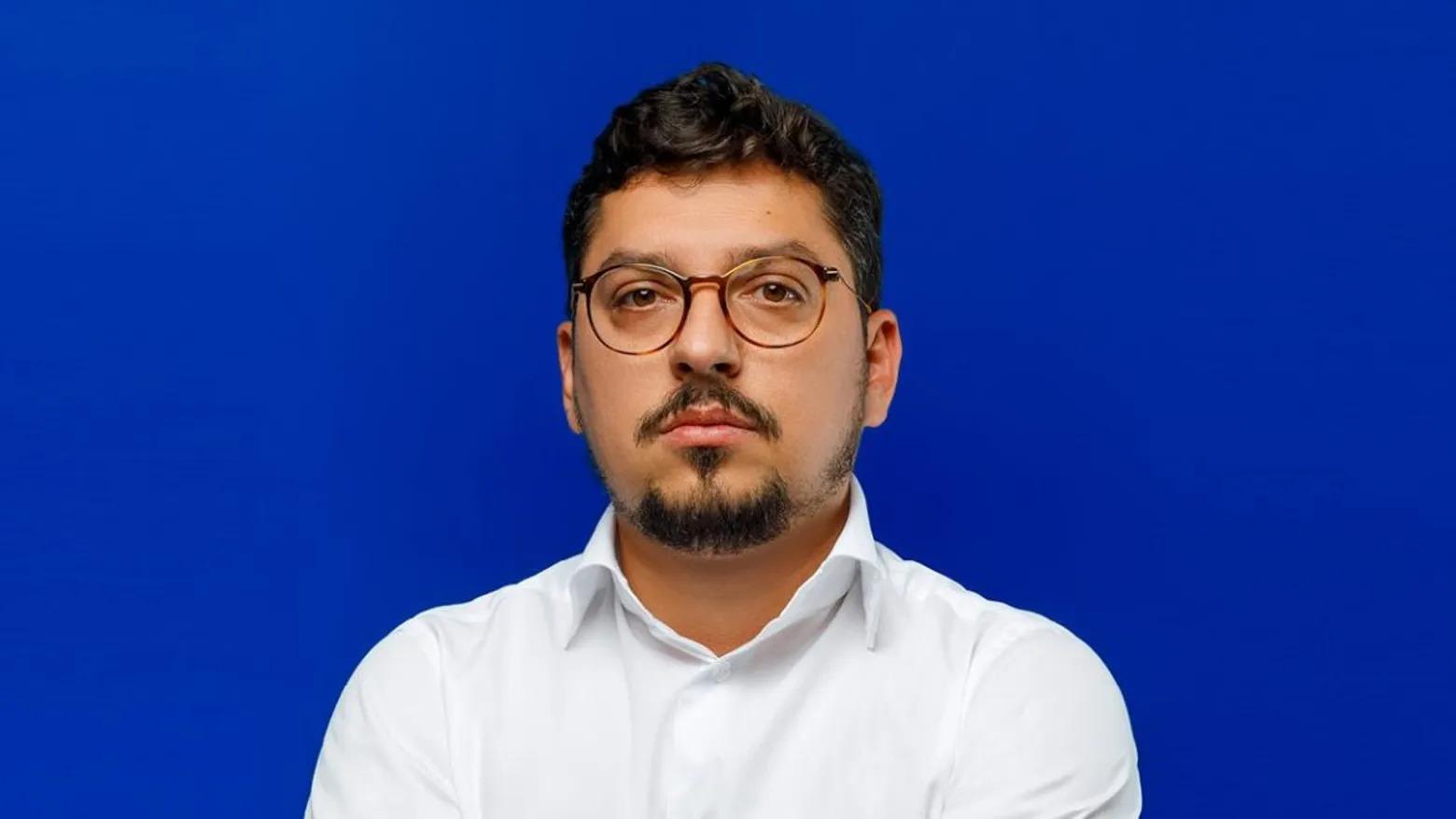


The HACC is holding a hearing on the preventive measure for Oleksii Stupak — chair of the management board of Sense Bank JSC, who was exposed together with others in the NABU–SAPO Operation Forrest Gump. On August 19, 2026, the Cabinet of Ministers moved to suspend Stupak from his post, but he went on leave until September 3.
The SAPO prosecutor charges him with aiding in the use of laundered property and committing acts aimed at disguising the sources of the funds. According to the prosecution, Stupak provided cover for laundering UAH 87 million.
Investigators established that events unfolded between June 9 and 29, 2026:
- June 9–22: active preparation, recruitment of participants, and development of the technical laundering mechanism;
- June 22–29: the actual posting of the laundered funds as bail for another suspect, Herman Halushchenko.
Stupak was drawn into the scheme by deputy head of the Office of the President Iryna Mudra. According to investigators, she was tasked with laundering cash supplied by businessman Mindich in order to convert it into cashless bail. As early as June 10, Mudra met with Stupak and supervisory board chair Mykola Hladyshenko, and the bank's leadership gave preliminary consent to take part in the scheme.
According to covert investigative materials, on June 13 Stupak gave final confirmation of his readiness to assist Maksym Mykytas's “trusted people.” The recordings capture his remark to Mudra — “Better to communicate with him” — meaning direct contact with himself, as the bank's head, for prompt handling of matters.
On June 15, Stupak met with the intermediary Valentyn Yelizarov (Valyk). Afterward, Yelizarov reported to Mykytas: “Stupak's ready to cooperate, he's already across all the details of the scheme. He only asked one thing: 'cash or not cash?'” The prosecutor stressed that the question about “cash” shows the bank's management board chair understood from the outset the money's illegal origin, its form, and the need to conceal where it came from.
On June 16, Stupak and Yelizarov met in Khodosivka. The meeting was documented through visual surveillance. There, Stupak reviewed a list of front companies and proposed a technical plan for bypassing the security system.
From Yelizarov's report to Mykytas afterward:
“Stupak will help. He explained that these payments will need to be run through in manual mode. He suggested taking the payment-processing system 'down for servicing' so the financial-monitoring system wouldn't see them or block them.”
Using his authority and position, Stupak personally coordinated these steps with Liudmyla Snihur, the person responsible for financial monitoring at the bank. It was she who was to arrange a “window” in the bank's financial-monitoring system — a brief period during which all the bank's transactions would go through without proper review by its staff.
According to investigators, Stupak knowingly agreed to carry out financial transactions with sums entirely out of proportion to the official revenues of the companies involved. The investigation considers the suspicion well-founded and sufficient.
The prosecutor asked for detention as a preventive measure, with the alternative of UAH 150 million bail.
On the risks, the prosecutor stated the following:
- Risk of flight. Stupak repeatedly traveled abroad during martial law. He has significant savings and assets, which investigators value at around UAH 150 million in total — including two apartments in the Tetris Hall residential complex worth an estimated UAH 28 million, a plot of land worth UAH 268,000, two parking spaces, two more apartments in another complex, and three luxury cars and a motorcycle worth UAH 5.5 million altogether. Over his career, Stupak has earned UAH 103 million in salary. He is also unmarried and childless, and so has no social ties in Ukraine.
- Risk of destroying and concealing property. The prosecutor argued that Stupak could destroy items and documents relevant to the criminal proceedings and, given his position, could enlist others to help — and that Stupak himself is allegedly under the protection of Mudra and others.
- Risk of influencing witnesses and victims. Stupak has clout, gave instructions to subordinates, and pressed the case for the actions taken. It was on the instructions of Stupak and Hladyshenko that some people who refused to take part in the criminal acts were made to leave their posts at the bank.
- Risk of otherwise obstructing the proceedings. He has influence over officials of the State Financial Monitoring Service of Ukraine. Stupak also practiced secrecy, scheduling meetings in sparsely populated places, notably on the outskirts of Kyiv.
- Risk of committing or continuing a criminal offense. The prosecutor claims the recorded activity was not the only such instance — there may have been others. Stupak also has connections in government bodies that he could use to evade accountability.
Given these risks and Stupak's financial position, the prosecutor believes that bail set within the statutory limits could not ensure his proper compliance with the procedural obligations imposed by the court.