
.jpg)


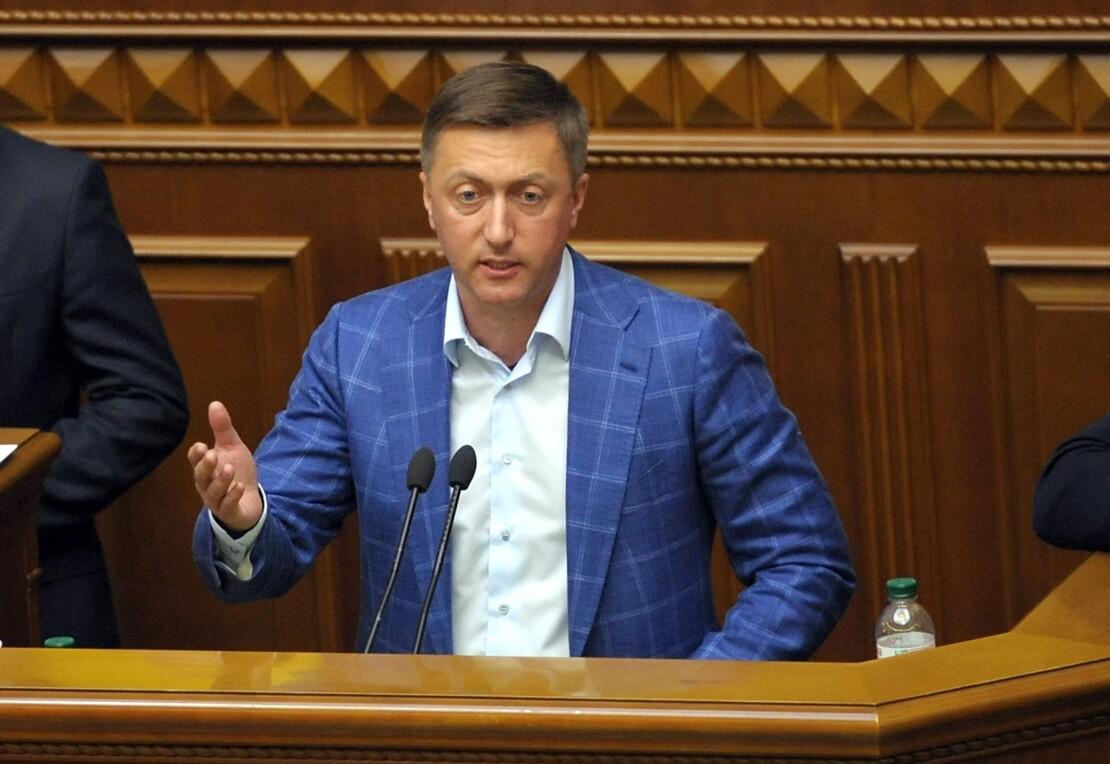
On April 21, the HACC continued the examination of MP Serhii Labaziuk, who is charged with attempting to bribe Deputy Prime Minister for Restoration Oleksandr Kubrakov and State Agency for Recovery Head Mustafa Nayyem.
At the outset, it is worth noting that as a defendant Labaziuk bears no criminal liability for giving knowingly false testimony and may use this instrument to defend his position in the case.
Labaziuk stated that before 2022, his company URD JSC had no difficulty winning state contracts — worth over UAH 7 billion in total — and operated exclusively through lawful tender procedures with no need to offer bribes. He said that before the full-scale invasion he had regarded Kubrakov and Nayyem as representatives of a “new generation” and anti-corruption advocates and had heard nothing to suggest they were involved in corrupt schemes or kickbacks.
The situation, he claimed, changed radically after February 24, 2022. New contracts stopped coming in, and the company, carrying significant credit obligations and a large workforce, was losing around UAH 200 million annually. Labaziuk described a sharp market contraction: of some 30 companies, only about five “insiders” — such as Avtostrada — were receiving contracts worth tens of billions of hryvnias, despite lacking the capacity to execute them independently. As a result, URD was forced to operate as a subcontractor, performing work at 10% below the rates available under direct contracts. This system, he argued, benefited not the state but specific individuals.
By spring 2023, the company was on the verge of bankruptcy. Labaziuk testified that during this period information about an “insider/outsider” system and mandatory kickbacks — calculated as a percentage of a contract's value — became widespread. He explained that Nayyem consistently referred him to Kubrakov (“only Sashko can sort out your issues”), making clear that without a personal arrangement with the minister there would be no work. He added that initially Nayyem had shown some willingness to facilitate communication with regional road services, for which Labaziuk had thanked him verbally. When asked why he had not reported the officials' conduct to law enforcement, Labaziuk replied that he saw no point in doing so — he had no direct evidence, and Kubrakov was at the time among the most influential figures in the country.
Labaziuk provided a detailed account of his meetings with Kubrakov and Nayyem in the summer of 2023. He emphasized that it was Nayyem who persuaded him to approach Kubrakov to resolve URD's problems, and that the meeting was organized by Kubrakov's assistant. Labaziuk claims it was Kubrakov and Nayyem themselves who steered the conversation away from general industry issues toward specific contracts for his company.
Particular attention was paid to the August 8 meeting, held in a park with no phones present. At that meeting, Kubrakov allegedly agreed to facilitate the allocation of contracts worth approximately UAH 1 billion, without asking for anything in return. Further communication was to be handled by Denys Nazimov (director of Labaziuk's firm) and Mustafa Nayyem. Labaziuk said he had been confident the company was saved, until August 14, when Nazimov informed him that a demand for “details” had been made — which Labaziuk interpreted as a direct extortion demand from Nayyem acting on Kubrakov's instructions.
According to the defendant, the decision to provide the unlawful benefit was a capitulation to circumstances: without it, the company had no realistic prospect of obtaining work through legitimate means within the system that had been created. Labaziuk stressed that he had not complained to Kubrakov about Nayyem's conduct because he regarded them as “one and the same.” He also noted that the company genuinely could not afford to pay 3–5% kickbacks on turnover — its profit margins were lower — but he felt he had no way out.
Throughout the examination, the defense repeatedly argued that these circumstances point to deliberate entrapment by the officials: they allegedly created conditions of artificial starvation for the company and then themselves offered the corrupt route as the solution.