

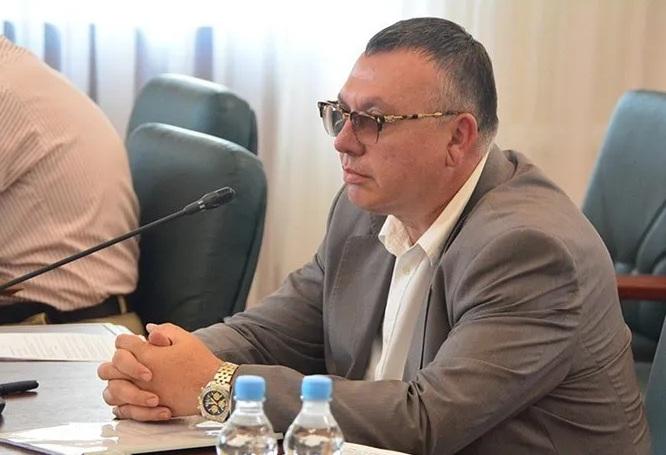
The HACC found Oleksandr Boiarskyi, a judge of the Bilhorod-Dnistrovskyi City District Court of Odesa Region, guilty in the case concerning a corruption scheme that enabled men liable for military service to travel abroad.
According to theinvestigation, the scheme involved securing court rulings determining that a minor child's place of residence was with the father, which were then used as grounds for the father to leave the country. Prospective "clients" were sought through social media groups, and the price of obtaining such a ruling ranged from $1,500 to $3,500.
In November, after meeting the applicant and the intermediaries in his office, which was located on university premises, Boiarskyi indicated that the future claim could be resolved favorably, provided that an unlawful benefit of $1,500 was paid through an intermediary.
He then effectively controlled the further progress of the case. The judge reviewed the claim that had been filed, pointed out its shortcomings, and channeled communications through a lawyer brought into the case. According to the investigation, at a meeting with the intermediary and the lawyer, Boiarskyi confirmed that a favorable ruling was possible and demanded that an unlawful benefit of $1,000 be paid through a relative of his, giving instructions on how it was to be handed over.
Boiarskyi subsequently arranged for the statement of claim to be filed in a way that would trigger repeated automated case assignment, resulting in the case being redistributed among judges more than once. After the case went to another judge, he had it put back through the assignment system, which ultimately ensured that it came to him.
Boiarskyi allegedly confirmed that the case was now before him and gave instructions on preparing a draft procedural ruling to obtain an opinion from the guardianship and custody authority, involving his assistant and the party's lawyer in this.
He then promised to issue a favorable ruling in the case once that opinion had been received, effectively making the outcome conditional on steps agreed in advance with the parties.
The HACC approved a plea agreement and found Boiarskyi guilty under Article 114-1(1), Article 332(3), and Article 368(3) of the Criminal Code of Ukraine. The verdict, however, is not available in the register. Boiarskyi was given a main sentence of six years' imprisonment, from which he was released on the basis of Article 75 of the Criminal Code with a three-year probationary period. Additional penalties were also imposed: a three-year ban on holding certain positions, and confiscation.
In this case, the HACC has also already approved agreements with lawyer Hafiichuk and with Berezhna.

 08/04/2024


