

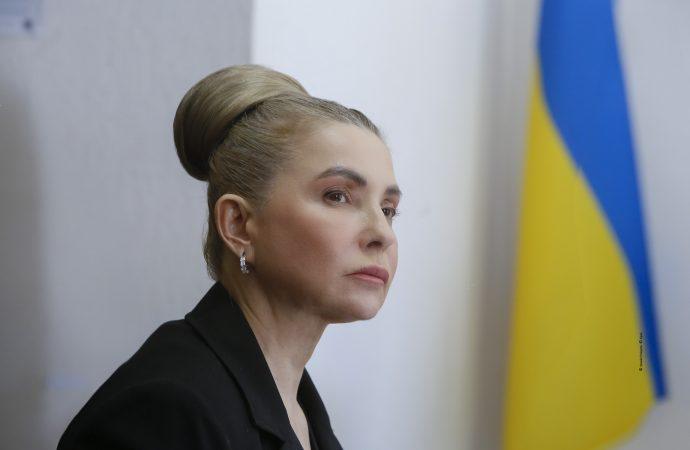


On May 12, the HACC Appeals Chamber considered the defense's appeals against the investigating judge's ruling declining to annul the suspicion notice served on Yuliia Tymoshenko. The appeals were denied.
In the panel's view, witness testimony — taken together with other evidence, including cash seized during a search in amounts matching the figures named by witnesses, and messenger correspondence — is sufficient to sustain the suspicion.
Defense arguments: procedural violations and chronological discrepancies
The defense's position rested on the claim that the suspicion notice was issued in flagrant violation of criminal procedure law. Counsel raised the following points:
-
Irregular registration of criminal proceedings. Pre-trial investigation may only be conducted within the scope of offenses entered in the Unified State Register of Pre-Trial Investigations. The defense argued that if investigators discover a new offense during an investigation, conducting investigative actions without registering the new information in the register is unlawful — and that the suspicion in this case was issued in connection with an offense that was never properly registered.
-
Chronological error in the suspicion notice. According to the investigation, the alleged offense was triggered by the exposure of MP bribery in December 2025, which created a tense situation in parliament. Yet the suspicion notice states the crime was committed in January 2026 — while the proceedings were opened considerably earlier. The defense therefore maintains that the suspicion was issued under a proceeding that was effectively "not yet open" at the relevant time.
-
Supreme Court case law. The defense cited a Supreme Court legal position holding that each act within the activity of an organized criminal group must be registered and classified separately. In the defense's view, NABU detectives failed to comply with this requirement.
Tymoshenko's statement
Speaking in her own defense, Tymoshenko argued that the evidentiary basis is weak and that law enforcement's sequence of actions is suspicious. She noted that the suspicion rests solely on the testimony of witness Kopytin and his assistant, one audio recording, three expert examinations, and messenger correspondence that makes no mention of money.
Tymoshenko drew the panel's attention to the following dates:
-
November 27, 2025 — criminal proceedings opened on the basis of a SAPO head's memo;
-
January 7, 2026 — the HACC investigating judge authorizes covert investigative actions despite the absence at that point of any crime report, examination record, or other significant evidence;
-
January 9, 2026 — only on this date does witness Kopytin formally file a crime report with the NABU.
Tymoshenko and her defense maintain that authorization for covert investigative actions was obtained without any information sources or legal grounds — effectively to "find grounds for a suspicion." She also alleged that the January 13–14 search of the Batkivshchyna party office was conducted without a court order, and that other MPs were searched during it without this being recorded. The defense also noted that it has not yet completed review of all investigation materials.
The defense also noted that it has not yet completed review of all investigation materials. As reported earlier, on April 28 the HACC set a May 24, 2026 deadline for Tymoshenko and her lawyers to complete that review.
The prosecution’s position
The SAPO prosecutor opposed the defense appeals, calling their grounds unfounded and characterizing the defense's arguments as amounting to "formal assessment and subjective opinions" that do not challenge the substance of the suspicion. The prosecution also noted that the defense had continued gathering evidence to support its position after already filing its appeal.
The prosecutor disputed the claim of an insufficient evidentiary basis, listing the materials underpinning the suspicion:
- examination records from Jan 5, 9, and 12, 2026;
- a record of the review of information concerning the vote that was the subject of discussions captured in the covert investigative actions;
- a record of the examination of the mobile phone of a person cooperating with the investigation;
- a search record from the investigation.
The prosecutor stressed that all evidence had been assessed by the court as sufficient in its totality, confirming that the suspicion is well-founded at this stage of the proceedings.
The NABU and the SAPO suspect Yuliia Tymoshenko of attempting to bribe fellow members of parliament in order to influence the outcomes of parliamentary votes.