

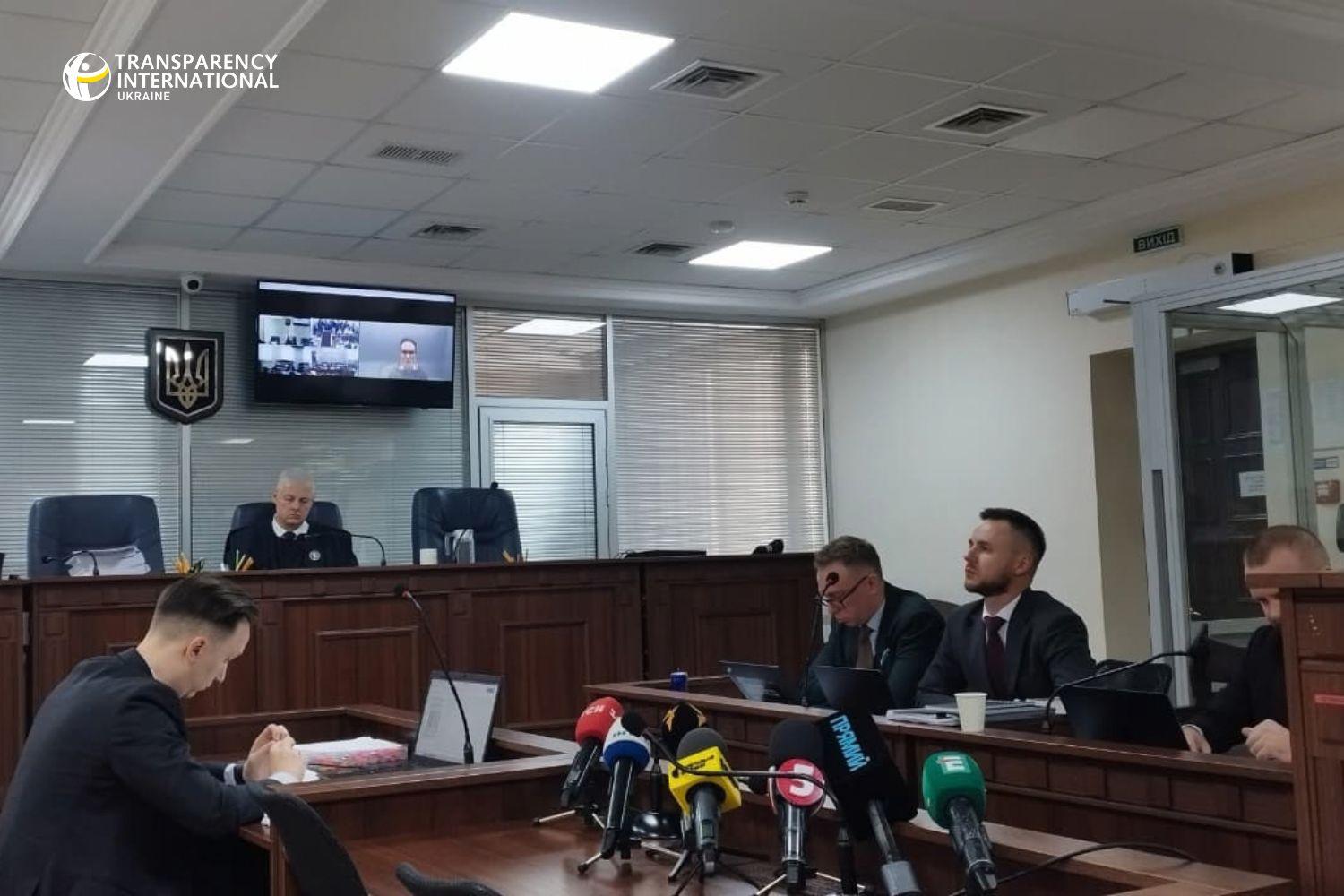


The defense filed a motion to change Iryna Mudra's preventive measure from detention to bail of UAH 13,094,000. According to the defense, this amount has already been paid into the HACC's deposit account.
To recap, Iryna Mudra is accused of participating in a criminal organization whose activities covered two key episodes, investigated in special operations Themis (a business takeover) and Forrest Gump (legalization of criminal proceeds).
On August 25, 2026, a HACC investigating judge imposed detention as a preventive measure on Mudra, with the alternative of UAH 20 million bail. On September 2, the HACC Appeals Chamber upheld the first-instance ruling.
The motion was preceded by developments reported by Mudra's defense attorneys. On September 24, a HACC investigating judge ordered the National Bank of Ukraine to verify, within 24 hours, whether banks were in fact blocking bail payments for Iryna Mudra, former Deputy Head of the Office of the President.
The defense's position
Mudra's lawyers said several people had tried to make the payment, including a lawyer's assistant, Mudra's common-law husband, and her co-godparent. According to the lawyers, the banks do not formally refuse the payments but do not process the transfers either.
The defense added the relevant documents to the case file and asked the court to examine several witnesses. The prosecutor objected, arguing that the explanations provided were exhaustive and that the circumstances in question could be confirmed by other evidence.
In their address, the lawyers stated that none of the banks had cited a specific legal provision as grounds for refusing the payment. The transactions were blocked because the recipient was the HACC. In effect, two obstacles stand in the way of posting the full bail: the seizure of Iryna Mudra's assets and the banks' restrictions.
According to the lawyers:
- Monobank reported a large number of complaints about the HACC account and disabled top-ups to it for security reasons;
- PrivatBank canceled the transactions for security reasons;
- FUIB refused to process the payment at its cash desk, and an attempted transfer ended in a technical error;
- Credobank and TASCOMBANK accepted the funds, but the transactions were later halted;
- OTP Bank blocked the payment;
- Cominbank made processing the payment conditional on the legal classification of the suspicion.
The defense argued that the blocking of bail payments in itself shows that the preventive measure is effectively becoming one with no alternative. The obstacle to using the bail set by the court is not anything Mudra or her lawyers have done, but the banks.
At the defense's request, the court examined several witnesses, including Iryna Mudra's friend and her co-godparent. Both said they had tried to pay funds into the HACC account, but the bank had blocked the payments.
The suspect's position
Iryna Mudra said she supported her defense team's position and asked the court to replace the preventive measure with an alternative one. She said she was ready to comply with every obligation the court imposed on her and had no intention of absconding.
Mudra also said she had already paid in all the funds she had access to on her own behalf. The property the court had considered when choosing the preventive measure and assessing her financial situation is now under arrest, she said, so she cannot dispose of it.
The prosecutor's position
The prosecutor asked the court to deny the defense's motion to change the preventive measure.
He argued that the bail amount set was sufficient to ensure Mudra's compliance with her procedural obligations.
According to the prosecution, the risks remain unchanged, including:
- absconding from the pre-trial investigation authorities and the court;
- unlawfully influencing witnesses;
- destroying, concealing, or damaging evidence;
- otherwise obstructing the criminal proceedings;
- committing another criminal offense.
The prosecutor cited ECHR case law and statutory provisions under which a preventive measure becomes one with no alternative when the bail amount is excessive, not when bail is impossible to post in practice.
He also pointed to the financial monitoring measures banks apply when processing such payments.
The hearing is continuing in closed session, after which the court will retire to the deliberation room to rule.