

.png)
The SAPO accuses former MPs Maksym Poliakov, Borys Rosenblat, and Tetiana Liubonko (Mykhailenko) of receiving $300,000 in bribes for helping a foreign company extract amber in Ukraine. The media dubbed the case the “amber case.”
Back in 2016, the NABU launched a special operation with the participation of an undercover detective, agent “Kateryna.” She chose the role of a representative of Fujairah, a foreign construction company from the UAE, which allegedly planned to invest resources in legal amber mining in Ukraine and its legal export. “Kateryna” contacted the defendants in the case and shared her plans with them subject to changes in Ukrainian legislation in this area.
The investigation established the involvement of former MPs Maksym Poliakov and Borys Rosenblat. The latter allegedly introduced the necessary draft law for USD 300,000 and received bribes gradually through intermediaries. For the first time in the history of Ukraine, MPs were accused of lobbying legislation in the interests of third parties and receiving more than USD 300,000 in bribes for doing so.
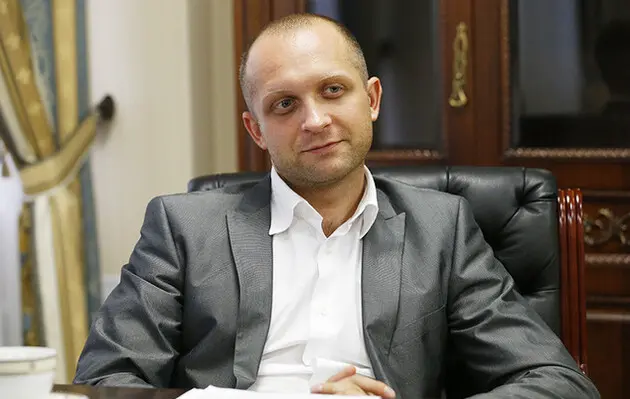
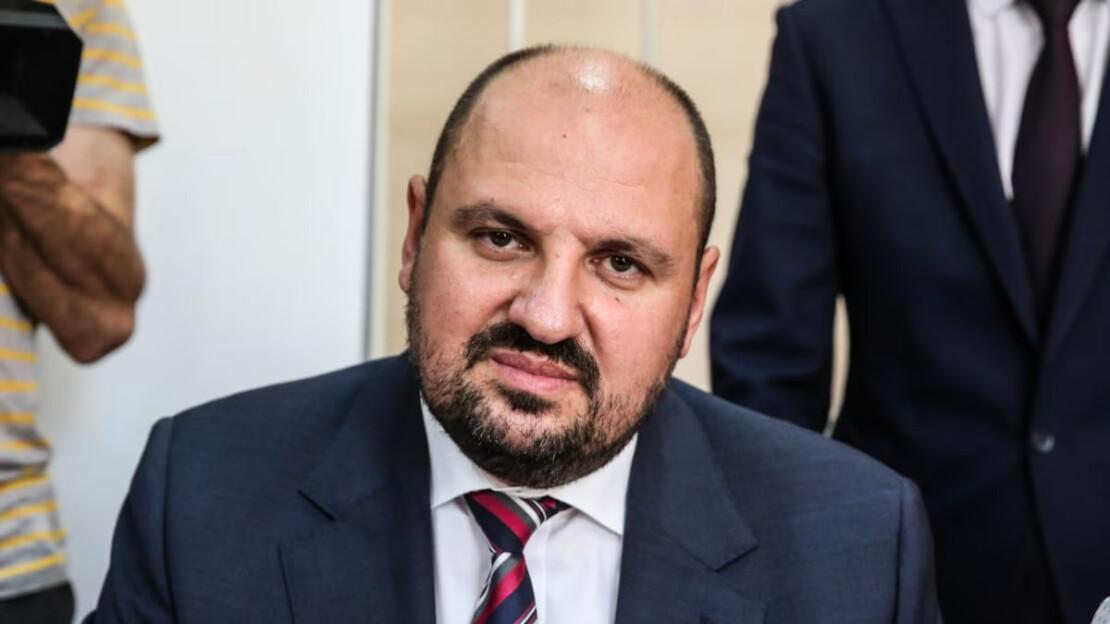
Six people were served with notices of suspicion:
- Maksym Poliakov, MP of Ukraine and secretary of the Verkhovna Rada Committee on Financial Policy and Banking — under Article 368(4) of the Criminal Code of Ukraine;
- Borys Rosenblat, MP of Ukraine and deputy chair of the Verkhovna Rada Committee on Industrial Policy and Entrepreneurship — under Article 368(4) and Article 369-2(2) of the Criminal Code of Ukraine;
- Tetiana Liubonko (Mykhailenko), an MP's assistant-consultant who, according to the investigation, acted as an accomplice — under Article 368(4) of the Criminal Code of Ukraine;
- Vadym Rudenko, a representative of the Verkhovna Rada inter-factional association Member of Parliament Control, and two of his associates — lawyer Viktor Kosianchuk and Kostiantyn Proskurko, a former assistant-consultant to Radical Party MP Tetiana Yuzkova — under Article 28(2) and Article 369-2(2) of the Criminal Code of Ukraine.
According to the prosecution, Poliakov and Rosenblat received a bribe for assisting a foreign company in amber mining in Ukraine. The NABU agent “Kateryna” was allegedly a representative of a foreign construction company called Fujairah, which planned to invest in legal amber mining in Ukraine and its legal export.
Before the HACC started its work, the case was heard by Pecherskyi District Court of Kyiv. The preparatory hearing in the HACC lasted almost 4 years: from November 2019 to September 2023. The case is now being considered on the merits.
So far, two of the defendants have escaped liability because the limitation period expired. In June 2022, the HACC released Kostiantyn Proskurko from criminal liability for the offense under Article 28(2) and Article 369-2(2) of the Criminal Code of Ukraine.
In July 2022, at the request of the defense, the HACC severed the materials concerning Vadym Rudenko into separate proceedings. Rudenko's lawyer argued that, by a HACC ruling of May 30, 2022, Rudenko had been put on the wanted list and the court proceedings against him suspended, and that severing the materials of the criminal proceedings concerning him was the logical consequence of that suspension. According to the prosecution, Vadym Rudenko was in the United Arab Emirates. Later, in October 2022, the HACC granted a motion by Rudenko and likewise released him from criminal liability because the limitation period for the punishment under Article 28(2) and Article 369-2(2) of the Criminal Code of Ukraine had expired.
In February 2024, the HACC granted the prosecutor's motion and severed the case against Viktor Kosianchuk into separate proceedings. The prosecution argued that, after the indictment reached the HACC in 2019, hearings had repeatedly been postponed because Kosianchuk failed to appear. On top of that, more than 11 hearings were postponed because of motions of various kinds that he filed.
The prosecutor notes that Kosianchuk is now the only defendant in the case whose court proceedings on the criminal offense imputed to him — under Article 28(2) and Article 369-2(2) of the Criminal Code of Ukraine — are still ongoing.
The NABU posted a video about this case on its YouTube channel.

 12/11/2019


