

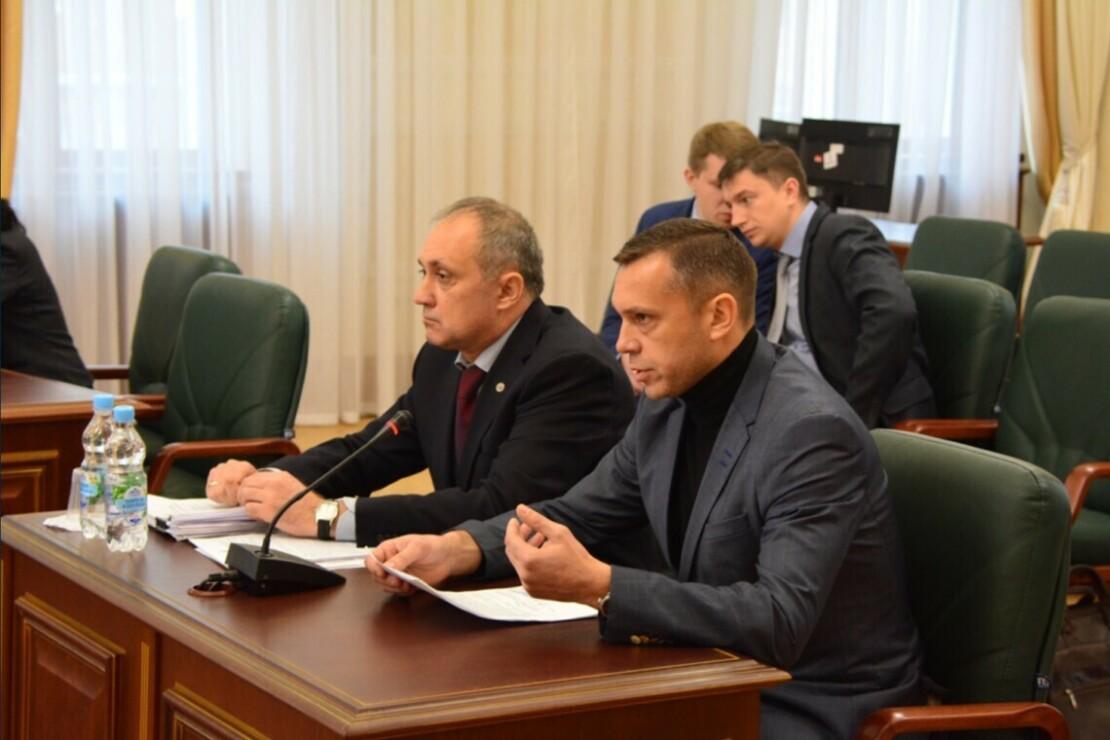
The HACC has convicted Sumy judge Oleksandr Kovalenko, sentencing him to 8.5 years in prison with full asset confiscation and a 3-year ban from holding judicial office.
The scheme
According to the investigation, Oleksandr Kovalenko, the chairman of the Sumy Region Economic Court, solicited a $26,600 bribe in exchange for a ruling favorable to construction company Sumbud PrJSC.
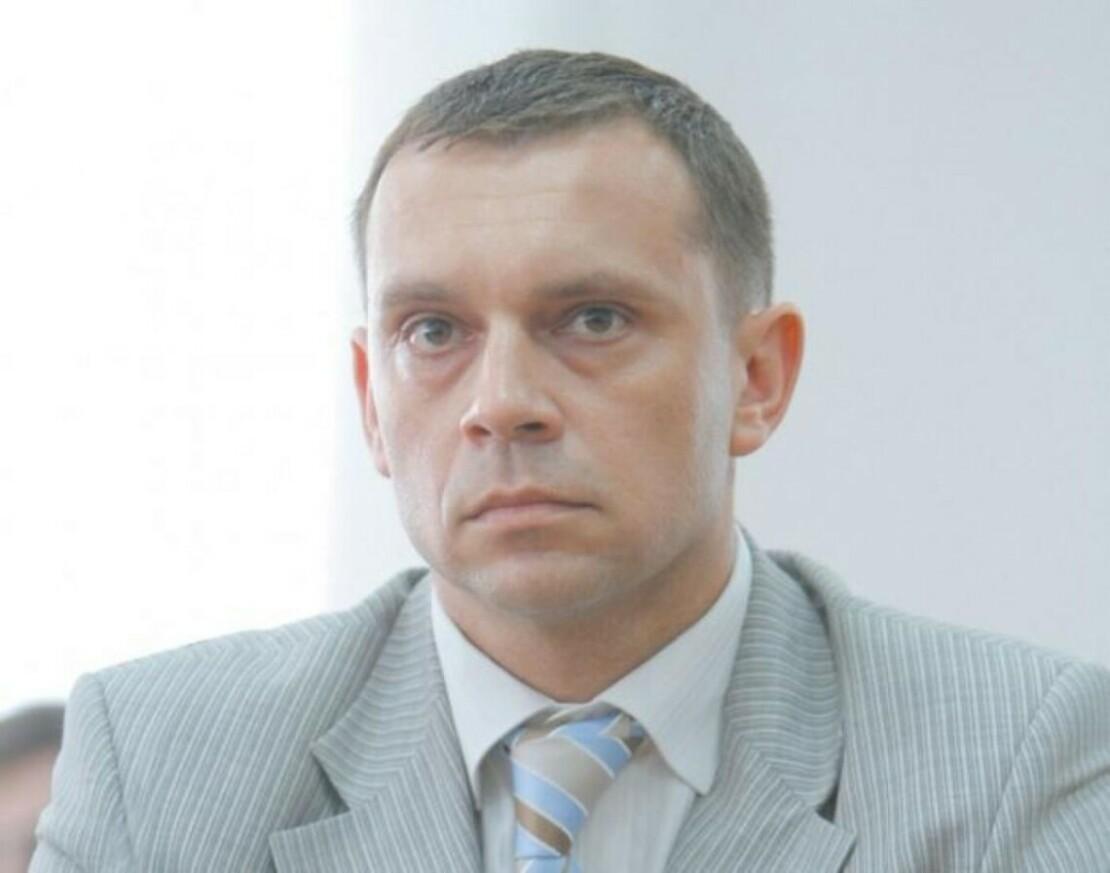
Kovalenko initially agreed to deliver the ruling if the developer provided him with a two-bedroom apartment in a new-build. He later demanded cash instead: Sumbud was to sell the apartment and hand him the proceeds through intermediary — lawyer and property manager Oleksandr Maliovanyi. The “bribe” was given to Maliovanyi by lawyer Pavlo Putii, who was involved in a special operation of the NABU with the SSU.
Kovalenko was detained on November 1, 2017. Notably, he arrived for the handoff driving a car belonging to another court — the Sumy District Court — lent to him “for a few hours for official purposes” by his colleague and friend, then-presiding judge Ihor Dashutin. Dashutin subsequently became a Supreme Court judge and a subject of a Bihus.Info investigation. In September 2025, he joined the Supreme Court Grand Chamber.
Investigators believe Kovalenko may have suspected surveillance: he not only arrived in someone else's car but also asked the intermediary to exchange the money — dollars for hryvnias or vice versa, depending on what the developer provided.
Kovalenko was charged under Article 368(4) of the Criminal Code of Ukraine. Maliovanyi appeared in the case as a witness.
In late 2017, Kovalenko voluntarily resigned as court chairman, stating that court operations should not suffer due to criminal proceedings against him, which he described as pressure and interference by the executive branch.
Trial
The trial ran for several years, frequently interrupted by air raid alerts and power outages. Key witnesses were examined throughout. Sumbud director Brytov confirmed the dispute over the parking lot plot but could not recall the details of the improper benefit transfer, while reaffirming his pre-trial testimony regarding intermediary Maliovanyi's role.
Kovalenko did not admit guilt during the interrogation. Investigators established, however, that the son of a relative Kovalenko claimed he was merely helping to purchase an apartment is a business partner of his wife, Liudmyla Kovalenko — together they co-founded a company whose director had previously appeared in cases involving controversial construction projects in Sumy, in which Kovalenko had also issued “convenient” rulings.
Kovalenko maintained the case was an SSU provocation, citing a personal conflict with the then-regional SSU chief Kosinskyi. He described the apartment episode as routine assistance to a relative who wanted to buy property with money earned in Italy, with himself acting merely as a go-between with the developer through Maliovanyi.
Closing arguments
The prosecution argued that guilt had been proven and asked the court to convict Kovalenko under Article 368(4) of the Criminal Code.
The defense sought acquittal, arguing there was no criminal event and that the offense had been provoked. Kovalenko maintained there were no unlawful arrangements and that the money in question was his own. In his account, a relative living in Italy had asked him to help purchase an apartment in a new development, which was why he contacted the developer.
In his final statement, Kovalenko said he had sincerely cooperated with the court and investigation throughout, never gone into hiding, never delayed or disrupted proceedings, and had voluntarily stepped down as court chairman to ensure an impartial process.
Scope of the scheme
Beyond the primary bribery episode, journalistic investigations (including by Nashi Hroshi) examined the broader context preceding Kovalenko's arrest. Per those reports, Sumbud may have been subjected to sustained pressure through litigation over a 95 sq.m. plot owned by Sens LLC, a company linked to Kovalenko's associates. Situated at the center of a large development site, the litigation could have been used to block construction. Kovalenko reportedly employed a tactic of contradictory rulings on the same plot — a show of force designed to compel the developer into an arrangement.
According to investigators' account, the cash demand did not arise immediately but emerged from prolonged negotiations over real estate. Initial reports indicated that resolution of the land dispute was conditioned on the transfer of a two-bedroom apartment in a specific new-build in the city center. When the parties apparently failed to agree on the market value of the proposed units, the demand converted into a cash equivalent — which law enforcement subsequently documented. Kovalenko denied these allegations throughout the trial.
Verdict
The HACC convicted Kovalenko under Article 368(4) of the Criminal Code. The court kept the existing bail and related obligations in place pending the verdict's entry into force.

 30/09/2019
 2570 days
 Imprisonment