




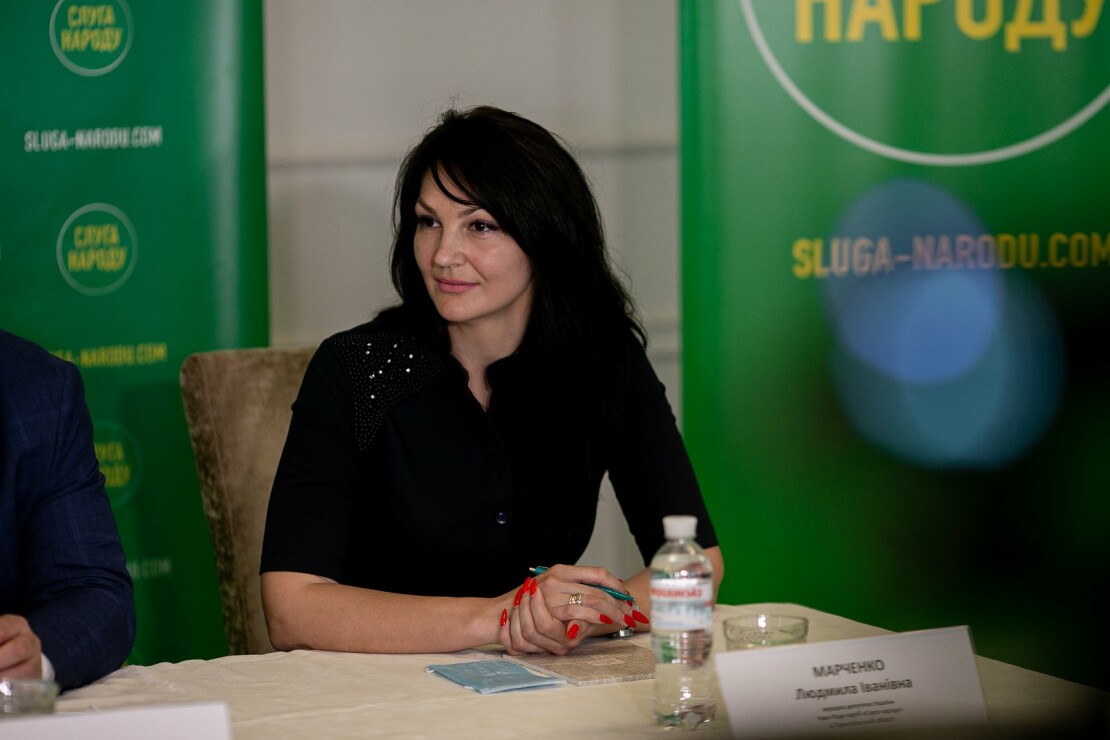
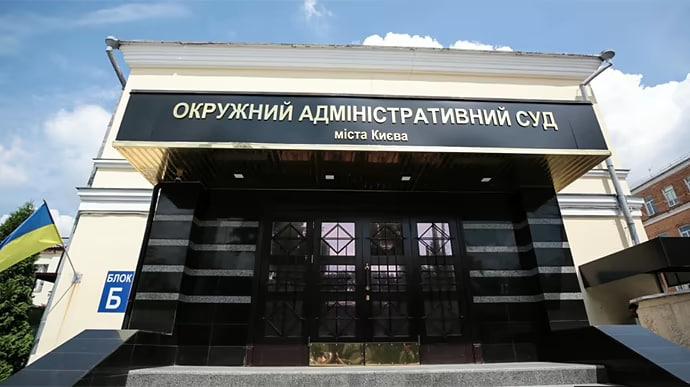
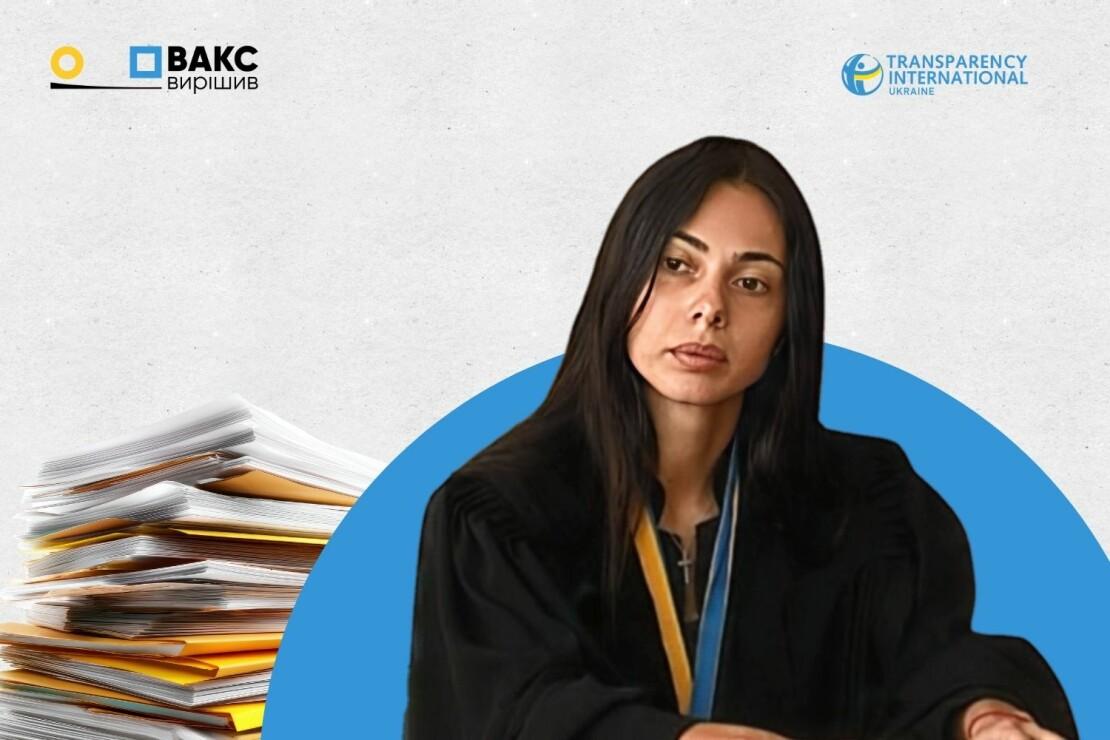
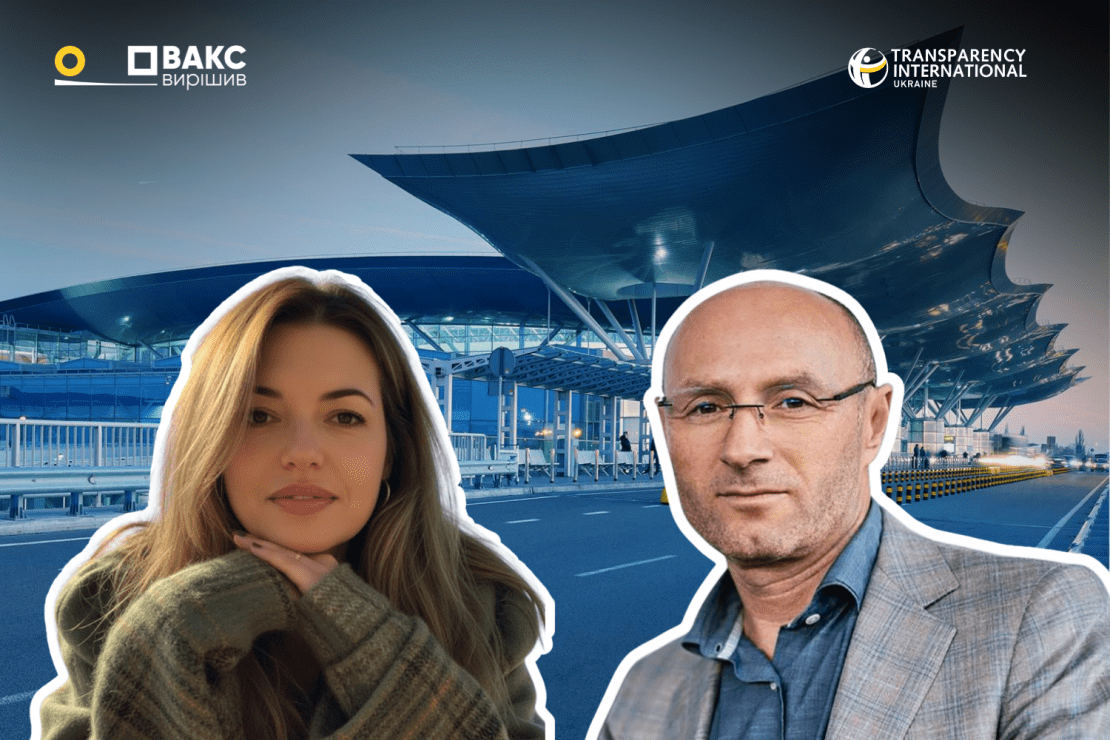
On March 19, 2026, the HACC concluded its review of the case against Member of Parliament Liudmyla Marchenko on charges of abuse of influence, sentencing her to two years' imprisonment along with a three-year ban from holding positions in state or local government bodies. The court simultaneously convicted Marchenko's assistant, Anastasiia Kolesnik, to the same prison term, with a three-year prohibition from holding positions in organizations dealing with border-crossing permits.
Liudmyla Marchenko is a ninth-convocation Member of Parliament from the Servant of the People party. She became widely known after the NABU released footage of her frantically searching her home's yard for a place to hide cash during a search — before ultimately tossing the money over the fence. Marchenko was also among the MPs who voted in favor of draft law No. 12414, a bill that would have effectively dismantled the independence of NABU and the SAPO.
Marchenko and her assistant Kolesnik were charged with abuse of influence in a scheme to collect unlawful payments in exchange for facilitating the departure of military-age men from Ukraine. The case was opened in March 2023, when information was entered into the Unified State Register of Pre-trial Investigations. By July 11 of that year, Marchenko had been formally notified of suspicion.
Although the HACC verdict is not yet publicly available, this article outlines the circumstances disclosed during court proceedings — the substance of the charges and the arguments advanced by both sides.

What was Marchenko charged with?
According to investigators, MP Liudmyla Marchenko and her assistant established an unlawful scheme to collect payments in exchange for resolving issues related to the cross-border movement of military-age men. Specifically, the scheme involved placing individuals into the Shliakh information system, issuing relevant orders from regional military administrations, and facilitating unimpeded departure from the country.
The prosecution contended that Marchenko and Kolesnik promised to exert influence over authorized officials — including staff of the Kyiv Regional Military Administration — in exchange for money.
In March 2023, volunteer B. approached Kolesnik seeking assistance with leaving the country. Later that summer, another volunteer, H., made a similar request. Marchenko, in her capacity as founder of the Ukrainian-Turkish Charity Fund, reportedly informed the deputy head of the Kyiv RMA of the need for the foundation's volunteer drivers to cross the border to deliver humanitarian aid into Ukraine.
Marchenko instructed her assistant to handle direct communications with the men on this matter, promising to influence the relevant decisions of Kyiv RMA officials in the men's favor. Kolesnik was to collect the payments and pass them on to Marchenko.
In total, NABU and SAPO identified two criminal episodes: the first involved the receipt of $6,000 in exchange for facilitating the border departure of volunteer B.; the second concerned volunteer H., with a bribe of $5,300.
Both Marchenko and Kolesnik were charged under Article 369-2(2) of the Criminal Code of Ukraine. Following the exposure of the scheme, Marchenko was expelled from the Servant of the People party.
What evidence did the prosecution present?
The prosecutor presented a range of evidence establishing the existence of the criminal scheme and the direct involvement of both defendants. Among the materials examined by the court were correspondence and recorded conversations between the parties.
The proceedings reviewed, among other things, messages involving Serhii Daineko relating to assistance with the border departure of volunteer B. Daineko is the former head of the State Border Guard Service of Ukraine, who was recently served with a suspicion notice by NABU and SAPO.
Certain messages exchanged between Marchenko and Kolesnik pointed to the receipt and transfer of funds. One such exchange read:
"Do you have everything from him? ... I need to hand it over by 6 p.m. today ... I have the order in hand ... Please arrange it so there are no delays."
The prosecutor argued that both Marchenko and Kolesnik were fully aware that the funds received constituted unlawful payments in exchange for influencing decisions regarding the departure permits of volunteers B. and H.
He further noted that the relevant orders were prepared and endorsed by Kyiv RMA officials and signed by the head of the RMA. At the time, that position was held by Ruslan Kravchenko — currently Ukraine's Prosecutor General. According to the SAPO prosecutor, it was precisely the issuance of these orders that the defendants sought to influence.
Kravchenko was questioned during the court proceedings and provided a brief account of how the procedure for preparing and approving departure permits for volunteers was organized. He also stated that he had no acquaintance with Kolesnik and had met Marchenko only once, at his office.
The prosecution's key witness — volunteer H., who heads a charitable fund — also testified. He recounted his active engagement in humanitarian projects since the start of the full-scale war and explained that he had been referred to Kolesnik by a colleague. According to H., he sought help with processing border departure permits for volunteers but instead met with what he described as a "price list." His very first meeting with the MP's assistant shocked him: $6,000 was demanded simply to enter one person into the Shliakh system. H. recalled that the sum provoked genuine outrage — he had never encountered such "rates" in legitimate volunteer circles.
When subsequent conversations confirmed the same figure, and when his associate, volunteer B., had reportedly already paid for his own departure, H. concluded that he was dealing with an organized corruption scheme. Rather than participate in it, he filed a complaint with NABU.
During H.'s cross-examination, the defense cited case materials indicating that the first partial payment had been made in March 2023: B. handed H. $3,000, which H. passed to Kolesnik the same day, directly in her car. The witness confirmed every detail contained in the case records and acknowledged his role in the transfer of the second installment — an additional $3,000 covering documents for himself and one other individual.
Was there entrapment? The defense's position
In her testimony, Marchenko emphasized that the foundation had been established solely to assist internally displaced persons, military personnel, and low-income families. She maintained that she was merely the founder, while all operational activities and project coordination — including children's rehabilitation programs — were handled by Kolesnik. According to the MP, the foundation operated entirely within the bounds of the law and in accordance with memoranda signed with government agencies.
Marchenko denied the existence of any incriminating correspondence with her assistant of the kind described by the prosecutor. She stated that she had no prior acquaintance with the individuals appearing in the case as "clients" (including volunteer H.) and that, given the large number of volunteers involved with the foundation, she could only have offered general commentary on conditions at the border, without influencing specific documents or individual decisions.

The defense argued broadly that the prosecution had failed to provide any evidence that Marchenko and Kolesnik had agreed in advance to commit a crime. The intent to solicit money allegedly arose spontaneously in Kolesnik, driven by circumstances and the persistent pressure applied by witness H. Furthermore, Marchenko purportedly had no knowledge that her assistant was accepting payments at all. In essence, the defense strategy sought to place the full weight of culpability on Kolesnik.
The defense also contended that H. already held a valid departure permit issued through the Volyn RMA and therefore had no genuine need to approach Kolesnik. His conduct, the defense argued, amounted to "active instigation" rather than passive observation. The identity of witness B. could not be established by the court, as he failed to appear at hearings. The defense further alleged that NABU had induced H. and B. to cooperate in exchange for immunity from prosecution for unauthorized border crossing.
The prosecutor, however, argued that entrapment could not be raised even as a theoretical proposition — particularly with respect to the first episode. That episode was documented through investigative operations, phone examinations, and document analysis, with law enforcement conducting passive surveillance of the participants essentially after the fact and without intervening in the process.
The recorded conversations between Kolesnik and H. also indicated that it was Kolesnik who took the initiative in raising the matter of unlawful payment. Moreover, the tone of the exchange is entirely natural and unhurried, with Kolesnik showing no surprise whatsoever at the mention of a bribe:
H.: "So how much are we looking at?"
Kolesnik: "Six."
When H. asked whether half the sum could be paid upfront, Kolesnik replied:
Kolesnik: "Why not?"
The prosecution further noted that, since the defendants had not admitted guilt, any claim of entrapment was entirely without merit.
As noted earlier, shortly before the search of Marchenko's property, Kolesnik had delivered a portion of the bribe — $2,800 — to the MP. Upon learning of the arrival of NABU detectives, Marchenko attempted to dispose of the cash. She hurriedly threw the money over the fence, an act captured on camera by the detectives.
During her courtroom testimony, Marchenko offered an explanation: Kolesnik had, she said, left her own money with Marchenko for safekeeping because she was concerned that her young child might damage it in her absence. According to Marchenko, her assistant had done this on at least two prior occasions. Marchenko described experiencing an "overwhelming sense of stress and shock," saying she had a "bad feeling" and threw what she called "that small bundle" into the field over the fence.
Kolesnik, for her part, effectively corroborated Marchenko's account, citing the same concern about her young son damaging the money at home. She also recounted that after she had passed a departure order to one of the men and he had left the country, contact with him was severed, which was why, she said, she had initially been reluctant to assist the second man. When he offered payment, however, she "gave in to temptation" and arranged his documentation. In her words, she felt sorry for a man who simply wanted to see his family abroad, and the money "was not unwelcome at the time." In July 2023, she received $2,800 from him in exchange for documents authorizing border crossing.
What happens next?
Following the conclusion of proceedings, the HACC found both Liudmyla Marchenko and her assistant Anastasiia Kolesnik guilty of abuse of influence. The verdict will take effect upon the expiration of the 30-day period for filing an appeal. Should either the defense or the prosecution submit an appeal, the verdict will enter into force only after a ruling by the HACC Appeals Chamber.
The offenses were committed in 2023, and the statute of limitations under the relevant article runs until 2028 — giving the judicial system more than two years to bring this case to a final resolution.
This is not the only proceeding in which Liudmyla Marchenko features. In September 2025, SAPO filed a lawsuit seeking the confiscation of her assets: five apartments, rights to units in a residential complex, and a vehicle with a combined value exceeding 8.2 million hryvnias. According to SAPO, to conceal the acquisition of these assets, Marchenko registered them in the names of her father and her brother's partner.
This material is prepared by the Transparency International Ukraine team
This publication was prepared within the framework of the “Digitalization for Growth, Integrity, and Transparency” (UK DIGIT) project, implemented by the Eurasia Foundation and funded by UK Dev. The material was produced with the financial support of the UK Government’s International Development Assistance Programme. The contents of this material are the sole responsibility of Transparency International Ukraine; the views expressed do not necessarily reflect the official policy of the Government of the United Kingdom.
.png)
.png)

.jpg)

.png)
.png)
.jpg)

.jpg)
.png)
.png)

.png)
.png)
.png)