




Tetiana Denysiuk is a judge of the Economic Court of Kharkiv Region whose name is associated with one of the most resonant episodes of the so-called “gas case” involving Oleksandr Onyshchenko. According to investigators, in 2016 she issued an unlawful decision in favor of Karpatnadrainvest, a company controlled by the fugitive MP.
The Onyshchenko case remains one of the highest-profile anti-corruption proceedings in Ukraine’s history. However, the HACC trial court twice acquitted Tetiana Denysiuk, and on January 30, 2026, the HACC Appeals Chamber put a final point on the matter by leaving the acquittal unchanged.
Below, we explain in detail what this case is about, what Denysiuk was accused of, and why the HACC twice acquitted her.
How is Denysiuk linked to Onyshchenko’s scheme?
Oleksandr Onyshchenko is a former Member of Parliament and former Deputy Chair of the Verkhovna Rada Committee on the Fuel and Energy Complex.
According to investigators, in 2013–2016, he organized a scheme to sell gas produced by the state-owned Ukrgasvydobuvannya through controlled companies at artificially low prices via sham exchanges. The gas was then sold to consumers at market value. The price difference, according to the investigation, amounted to UAH 1.6 billion, while Ukrgasvydobuvannya’s losses exceeded UAH 740 million.
In addition, Onyshchenko was accused of arranging an unjustified installment plan for the tax debts of companies under his control. According to law enforcement estimates, this caused the state to lose around UAH 2 billion. Total damages in the case are estimated at roughly UAH 3 billion.
In April 2024, the HACC found him guilty and sentenced him to 15 years’ imprisonment. However, the HACC Appeals Chamber later sent the case back for a new trial.
Onyshchenko was one of the organizers of the scheme and, among other things, controlled Karpatnadrainvest. The fuel obtained by this company was seized as part of the criminal proceedings.
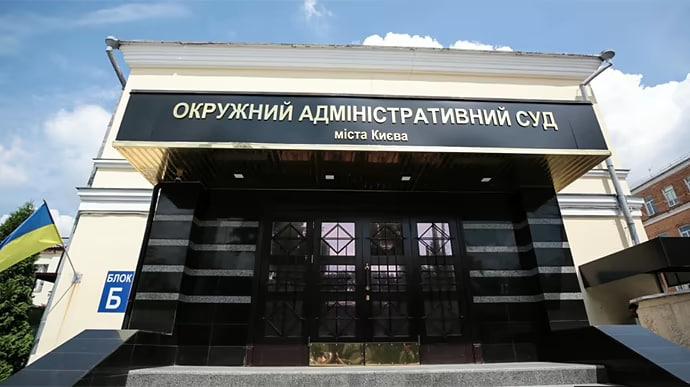
In November 2016, Ukrgasvydobuvannya filed a claim with the Economic Court of Kharkiv Region against Karpatnadrainvest. The state-owned company sought to recover UAH 3 million in debt under an agreement on the extraction, collection, and transportation of hydrocarbon products, as well as UAH 66.2 thousand in late-payment penalties and 3% annual interest. The case was assigned No. 922/3947/16, and Tetiana Denysiuk was appointed as the presiding judge.
In response, Karpatnadrainvest’s representative filed a counterclaim in which the company requested that the court:
-
Order Ukrgasvydobuvannya to sign and deliver acceptance certificates for natural gas and gas condensate for August–November 2016;
-
Transfer more than 10.9 million cubic meters of natural gas and more than 826 tons of gas condensate extracted under a joint activity agreement.
The investigation alleged that Denysiuk violated the law by accepting Karpatnadrainvest’s counterclaim despite the court fee being paid incorrectly, and by allowing the company to defer repayment of the debt and reduce the penalties.
What was Denysiuk accused of?
According to investigators’ calculations, the value of the gas and condensate disputed in the case exceeded UAH 43 million. Under the law, the maximum court fee at the time was UAH 206.7 thousand. However, Karpatnadrainvest attached only two receipts for UAH 1,378 each—an amount hundreds of times lower than what was due.
Contrary to the requirements of the Economic Procedure Code of Ukraine, Judge Denysiuk did not return the claim but accepted it for consideration. When Ukrgasvydobuvannya’s representative moved to recuse her, the judge denied the motion, promising to address the issue later—but never did.
The case was accompanied by pauses and delays: the judge announced short recesses, citing purported workload constraints. Ultimately, a representative of Karpatnadrainvest did appear at a hearing. He did not dispute the existence of the debt to the state but orally asked the court to reduce the late-payment penalties by 60% and, moreover, to grant a deferment for as long as one year. The judge allowed him to draft a written motion during the hearing and immediately granted it.
The prosecution emphasized that Ukrgasvydobuvannya’s representative directly warned the judge that the disputed gas had been seized within an NABU criminal case. This did not prevent her from issuing a decision that effectively enabled the transfer of the gas to a private company: “Grant the original claim in part […] Defer enforcement of the decision in this part until December 21, 2017. Issue a writ after the court decision enters into legal force. Grant the counterclaim in full.”
Later, the Kharkiv Economic Court of Appeal overturned the decision and left Karpatnadrainvest’s counterclaim without consideration specifically due to nonpayment of the court fee.
Investigators are convinced that accepting the claim without the court fee having been paid, ignoring the fact that the gas had been seized, the judge’s specific conduct during the hearings, and her extrajudicial connections all point to intentional actions by Judge Tetiana Denysiuk. According to the SAPO’s version, this was a deliberate attempt to legitimize the withdrawal of assets within Onyshchenko’s “gas scheme.”
Accordingly, Tetiana Denysiuk was charged with abuse of office and issuing a knowingly unlawful court decision (Article 364(2) and Article 375(1) of the Criminal Code of Ukraine).
Why did the HACC acquit Denysiuk the first time?
The court took a critical view of part of the evidence submitted by the prosecution, including documents purporting to show a chart of Denysiuk’s phone connections with other subscribers in 2016–2018. The judgment noted that this sheet did not identify the source of the information and was not properly prepared. In these circumstances, the court found the evidence improper and inadmissible.
Assessing the materials as a whole, the panel concluded that the prosecution had not proven that Tetiana Denysiuk acted with direct intent to abuse her official position or to confer an undue benefit on a legal entity.
The court emphasized that procedural rulings issued in the course of an economic case, standing alone, do not demonstrate a criminal offense. A conviction requires proof of direct intent and a causal link between the judge’s actions and the harm alleged.
Separately, the trial court noted that errors in applying procedural law—even if they occurred—may provide grounds for reversing a decision on appeal or cassation. However, such errors do not automatically constitute the offense under Article 364(2) of the Criminal Code of Ukraine.
Accordingly, in May 2021, the HACC acquitted Tetiana Denysiuk. In addition, in a separate ruling the court terminated the proceedings on the charge under Article 375(1) of the Criminal Code of Ukraine (issuing a knowingly unlawful court decision), because the Constitutional Court of Ukraine had found that provision unconstitutional.
Remand for a new trial
Reviewing the first-instance judgment, the HACC Appeals Chamber pointed to a material discrepancy between the trial court’s conclusions and the factual circumstances of the case. In particular, the panel recalled that Denysiuk’s decision had already been overturned by a higher economic court in 2017. At the time, that court clearly found that considering the claim without payment of the court fee violated procedural law and created unjustified advantages for one of the parties.
The Appeals Chamber also focused on how the claim’s demands were classified. The trial court had reasoned that Ukrainian courts at the time allegedly lacked a uniform approach as to whether demands for the transfer of gas were “pecuniary” in nature. The Appeals Chamber disagreed: any dispute whose subject is an asset with a concrete monetary valuation (in this case, gas worth UAH 43 million) is pecuniary by its nature. Therefore, the defendant’s reliance on her own interpretation of the law could not automatically prove the absence of intent.
The appellate court also characterized as a significant procedural violation the way the defendant was examined: instead of giving oral testimony, the judge read out pre-prepared written answers.
In addition, the Appeals Chamber noted that the trial court had artificially narrowed the scope of its review. Because the court terminated part of the proceedings after Article 375 of the Criminal Code was ruled unconstitutional (issuing a knowingly unlawful court decision), the judges stopped examining evidence that could have been critical to proving the alleged abuse of authority.
For these reasons, in December 2022, the HACC Appeals Chamber overturned the acquittal and remanded the case for a new trial in the HACC.
Second acquittal in the HACC
Upon retrial, the court again found that Tetiana Denysiuk’s actions did not meet the elements of the offense. In the HACC’s view, judicial practice on pecuniary claims at the time was indeed inconsistent, so Denysiuk’s actions could not be unequivocally construed as an intentional violation.
The prosecutor also argued that the recess announced on December 21, 2016 was artificial. The court addressed this separately and found it lawful: the judge had sufficient time to consider the case, and the absence of Karpatnadrainvest’s representative did not prevent the proceedings.
As to the alleged disregard of the gas seizure, the court held that the then-applicable version of the Economic Procedure Code of Ukraine did not require a judge to deny a claim on that basis alone. Because Denysiuk’s decision was timely appealed and never entered into legal force, no actual transfer of property occurred. The court reasoned that without a final, legally effective decision, it is impossible to assert “grave consequences” for the state or to establish a causal link between the judge’s actions and the alleged losses.
Detectives found on a judicial assistant’s computer a file titled “project D.docx,” created by an outside user. Contacts between the judge and individuals linked to the plaintiff company were also recorded. However, the court found that the investigation had not identified the author of the file or the email address from which it was received.
The court also stated that the mere fact that a judge is acquainted with participants, or has their phone numbers saved, is not direct proof that they discussed or coordinated the consideration of a specific case. Any doubts must be interpreted in the defendant’s favor, so the court concluded there was no intent to confer an undue benefit. Accordingly, in November 2024, the HACC issued a second acquittal.
The HACC Appeals Chamber’s position on the second acquittal
On January 30, 2026, the HACC Appeals Chamber upheld the finding that Denysiuk’s conduct did not constitute an offense under Article 364(2) of the Criminal Code of Ukraine. In the panel’s opinion, the prosecution had not proven direct intent, a self-serving motive, or Denysiuk’s ties to Karpatnadrainvest.
The court accepted the explanation that judicial practice regarding court fees in such disputes was ambiguous at the time. The panel added that the formal nature of the 2016 hearing minutes and the preparation of a draft decision by a third party are not, by themselves, proof of guilt. Since the decision was overturned on appeal and never entered into legal force, no grave consequences resulted.
Other shortcomings in the handling of the economic case—references to evidence not examined in court, the lack of reasoning for reducing penalties and deferring enforcement—likewise could not, in the court’s view, demonstrate intentional abuse of authority. These circumstances could be grounds for disciplinary proceedings rather than criminal liability.
Regarding the seizure of natural gas, the Appeals Chamber held that the judge’s decision did not affect the disposition of seized property absent a proper motion, and that no actual sale of the gas occurred while the case was pending. As a result, in February 2026, the Appeals Chamber left the HACC’s judgment unchanged.
Notably, one member of the panel issued a dissenting opinion. He agreed that the elements of the abuse-of-authority offense were not established but argued that this was insufficient for a full and comprehensive assessment. In his view, Denysiuk’s actions should have been reclassified under Article 15(2), Article 27(5), and Article 382(1) of the Criminal Code of Ukraine—as aiding and abetting an attempted failure to comply with a court decision. The argument was that, by granting the counterclaim, Denysiuk obligated Ukrgasvydobuvannya to transfer seized natural gas to the plaintiff, a private company.
In the dissenting judge’s view, Denysiuk acted intentionally because she knew the gas had been seized and could not be transferred. The fact that the offense was not completed, the dissent argued, was solely due to the subsequent reversal on appeal, rather than the defendant’s own conduct.
What comes next?
The HACC twice acquitted Judge Tetiana Denysiuk, concluding that the prosecution did not produce conclusive evidence of abuse of office or of an undue benefit being conferred on Karpatnadrainvest. The HACC Appeals Chamber upheld the absence of the offense based on three points:
-
Inconsistent practice: at the time, court practice on court fees in such disputes was not uniform;
-
Indirect evidence: a draft decision on an assistant’s computer and phone contacts with participants do not conclusively prove collusion;
-
No losses: because the decision was timely appealed and never entered into legal force, no actual transfer of gas occurred, and the state did not incur losses.
A key nuance remains the dissenting opinion: the judge believed that conscious disregard of the gas seizure pointed to intent, and that Denysiuk’s actions should have been treated as aiding and abetting an attempted failure to comply with a court decision. In his view, the absence of losses resulted only from appellate intervention, not from Denysiuk’s own choices.
The Appeals Chamber’s decision may still be appealed to the Supreme Court—SAPO prosecutors have three months to do so.
In addition, the appellate court expressly noted that certain aspects of the economic proceedings, while not demonstrating intent to abuse authority, may still be appropriate for disciplinary review—specifically, references to evidence not examined, and the lack of reasoning for reducing penalties and deferring enforcement. Denysiuk remains a sitting judge.
A detailed analysis of this case illustrates how thin the line can be between judicial error and criminal liability for a judge’s decisions. The Supreme Court may now have the final word.
This material is prepared by the Transparency International Ukraine team
This publication was prepared within the framework of the “Digitalization for Growth, Integrity, and Transparency” (UK DIGIT) project, implemented by the Eurasia Foundation and funded by UK Dev. The material was produced with the financial support of the UK Government’s International Development Assistance Programme. The contents of this material are the sole responsibility of Transparency International Ukraine; the views expressed do not necessarily reflect the official policy of the Government of the United Kingdom.



.png)


.png)

.jpg)


.png)
.png)
.jpg)



.jpg)

.png)



.png)


.png)
.png)
.png)