

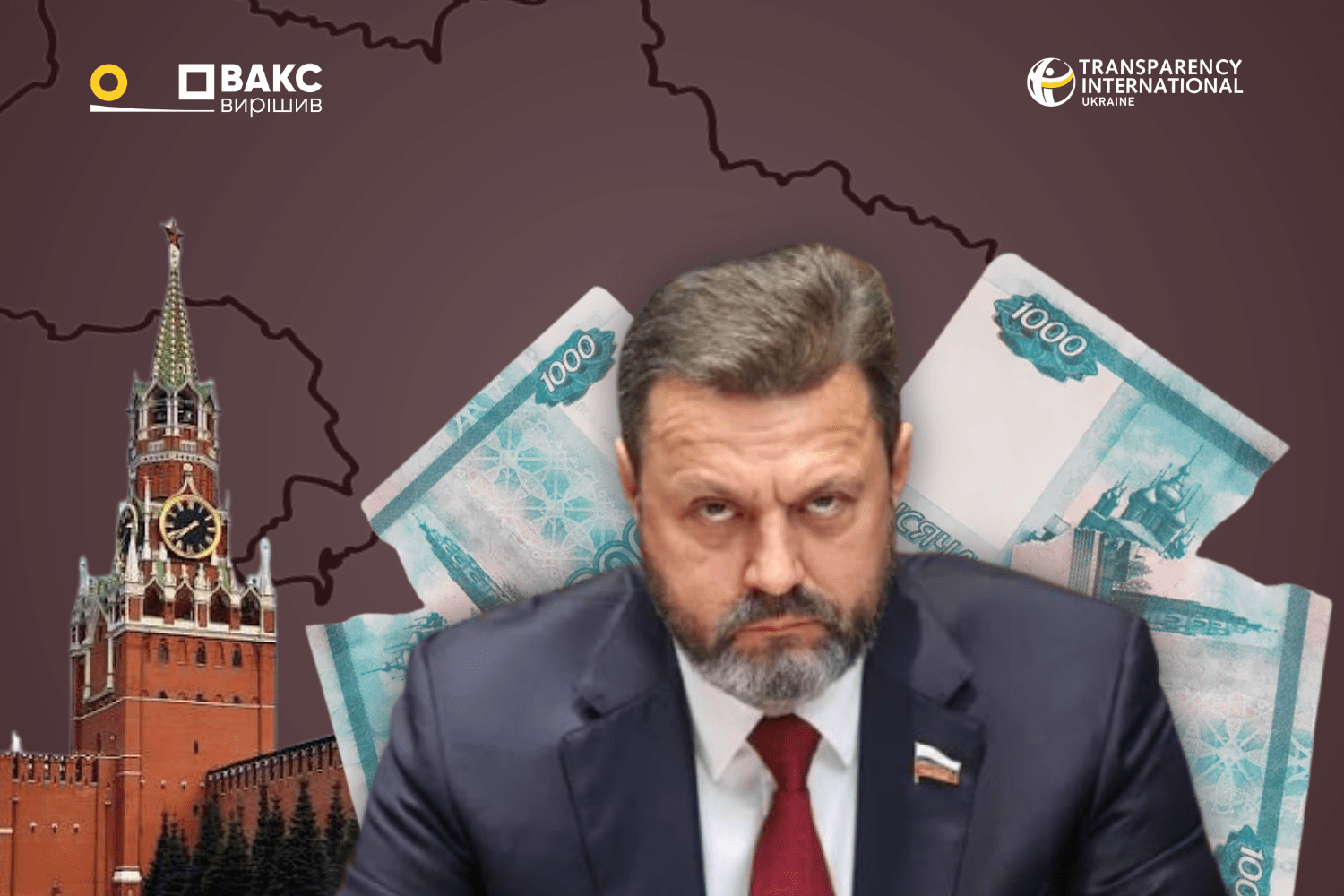


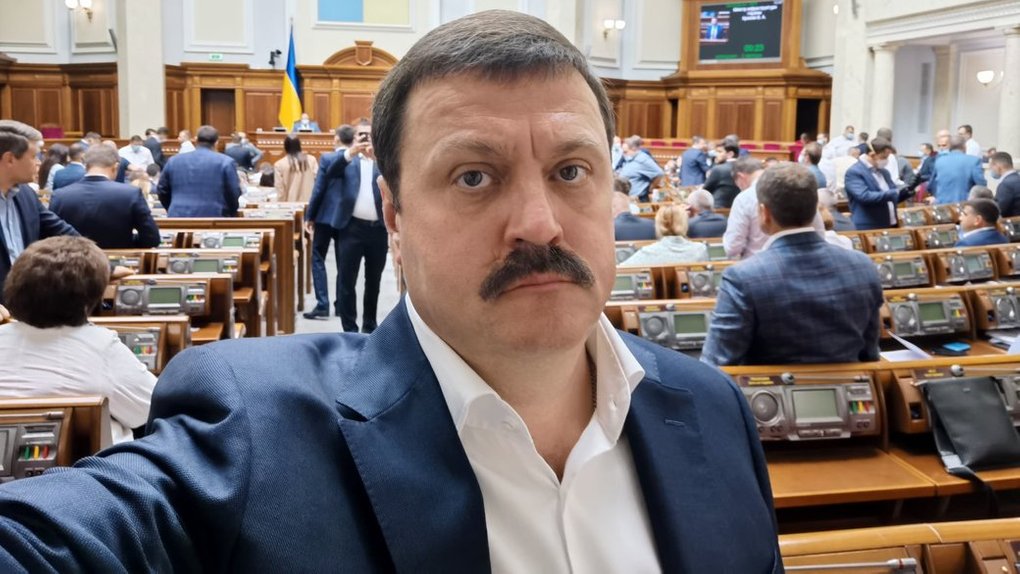
On July 13, 2026, the High Anti-Corruption Court found former Member of Parliament Andrii Derkach guilty of high treason and illicit enrichment. The HACC sentenced him to 15 years' imprisonment with confiscation of property and a three-year ban on holding office in state and local self-government bodies.
The verdict was handed down in absentia: Derkach left Ukraine back in 2021 and never once appeared at trial. But the case matters for more than the stature of its defendant — a seven-term former lawmaker whose public claims of corruption around a US presidential contender landed at the very center of the American election campaign. It is also the first illicit enrichment conviction in HACC's history handed down without a plea agreement.
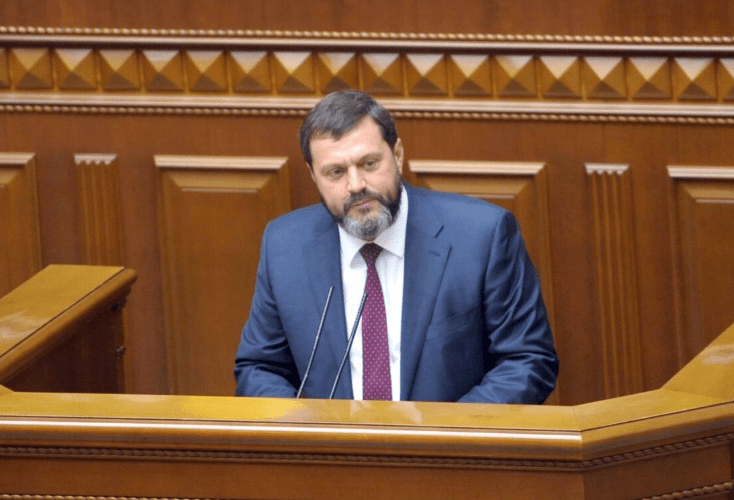
How did this story unfold — from Derkach's first meeting with Russian intelligence in Moscow? What code words did the participants use? How did the scheme to finance the criminal activity actually work? Why did the court reject the defense's arguments? And why is this verdict a precedent? This piece answers all of it.
Timeline: from suspicion to verdict
The criminal proceedings were opened in June 2022. By then Derkach had already spent half a year abroad — he left Ukraine on December 26, 2021, two months before the start of the full-scale invasion, and never returned.
On September 16, 2022, the NABU and the SAPO served Derkach with a notice of suspicion and put him on the wanted list. His actions were classified under Article 368-5 — illicit enrichment — and Article 28(2) in conjunction with Article 111(1) of the Criminal Code of Ukraine — high treason. According to the investigation, in 2019–2020 Derkach cooperated with Russian intelligence, taking part, for a fee, in information campaigns against Ukraine and its partners. A month later, on October 17, he was placed on the international wanted list. Ten days after that, the HACC chose pre-trial detention as his preventive measure in absentia, and the HACC Appeals Chamber soon upheld that decision.
In early 2023 Derkach lost both his citizenship and his mandate: on January 10, Volodymyr Zelenskyi issued a decree stripping him of Ukrainian citizenship, and on January 13 the Verkhovna Rada terminated his parliamentary powers ahead of schedule.
The pre-trial investigation ran for almost another year — the indictment reached the HACC only in December 2023. In February 2024 the court moved to the trial on the merits, and soon granted a motion for special (in absentia) proceedings, without Derkach's participation.
The merits phase lasted more than two years. On July 13, 2026, the HACC delivered its verdict: 15 years' imprisonment with confiscation of property for high treason (Article 28(2) in conjunction with Article 111(1) of the Criminal Code of Ukraine) and illicit enrichment (Article 368-5 of the Criminal Code of Ukraine).
All of Derkach's property is subject to confiscation — a rather telling inventory: a stake in the charter capital of Era-Media LLC, several iPhones, a portable AR8200 Wide Range Receiver, and a device listed as a “digital noise generator” (a Rabbler). The list also includes four non-residential premises that Derkach held in joint co-ownership with his ex-wife, Oksana Terekhova.
Not everything seized at the time was confiscated, however. In May 2026 the court returned to Terekhova the cash taken from her — roughly €49,000, UAH 200,000, and $10,500 — because prosecutors had not used the money as evidence of Derkach's guilt.
A detail for the portrait: pro-Russian ties stretching back decades
Derkach's pro-Russian connections have a longer history than the episode established by the verdict. He comes from a security-services family: his father, Leonid Derkach, headed the SSU in 1998–2001 and was a KGB alumnus.
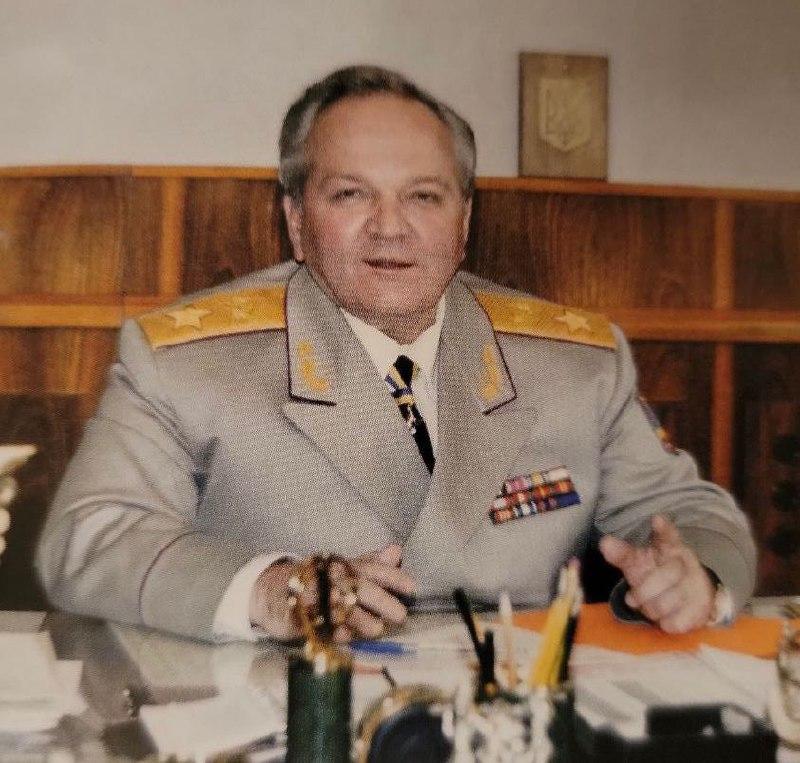
Derkach himself studied in 1990–1993 at the Dzerzhinsky Higher School of the KGB in Moscow (now the FSB Academy), where he wrote his thesis on “Organizing and Conducting Meetings with Undercover Agents” — a detail the court itself took note of.
In September 2020, the United States added Derkach to its sanctions list, describing him as “an active Russian agent for over a decade.” The US Treasury release spoke of an intent to counter Russian campaigns aimed at influencing upcoming elections and to send Moscow a clear signal that such activity was unacceptable.
And although the HACC verdict deals with facts dated to 2019, the SSU says Derkach had been recruited earlier — no later than 2016.
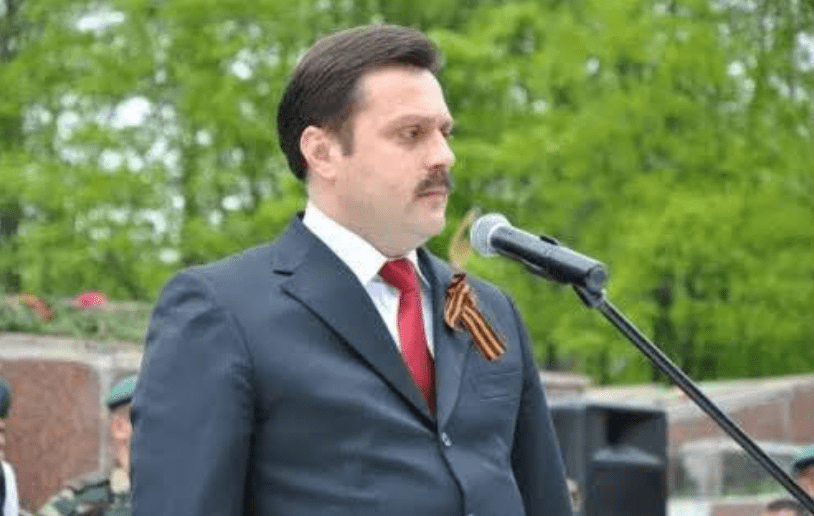
Tellingly, Derkach's name has not disappeared from the agenda despite criminal prosecution and his flight. In November 2025 it surfaced in the high-profile Operation Midas case: investigators established a link between the scheme's suspects and an office in central Kyiv owned by the Derkach family. And one suspect — Ihor Myroniuk, former adviser to Energy Minister Herman Halushchenko — had earlier served as Derkach's assistant.
How the conspiracy took shape
According to the investigation, in early 2019 an acquaintance, Ihor Kolesnikov, invited Derkach to a meeting with the first deputy chief of Russia's General Staff, Vladimir Alekseyev. Kolesnikov and Alekseyev had known each other since 2018, and Alekseyev, on learning of Kolesnikov's ties to Derkach, asked him to arrange an introduction. Derkach took some time to think it over and eventually agreed to “try working together.” By April 2019 he had accepted the offer for good and, days later, flew to Moscow, where he met Alekseyev and his aide, Aleksei Savin. Derkach was drawn into confidential, paid cooperation, and Kolesnikov became the go-between for passing along tasks and money.
The court made a point of noting that Derkach crossed the border via Minsk rather than directly into Russia, and returned the same way. Kolesnikov never flew with him — they met up once already in Moscow. The court found this deliberate tradecraft, all the more so because Derkach had trained at the KGB school and possessed the relevant skills.
In the fall of 2019 Derkach organized two press conferences — on October 9 and November 20 — about alleged US pressure on Ukrainian law enforcement and international corruption. Before the first, Derkach again traveled to Moscow; it was then that Russian General Staff representatives handed him documents connected to the US election campaign.
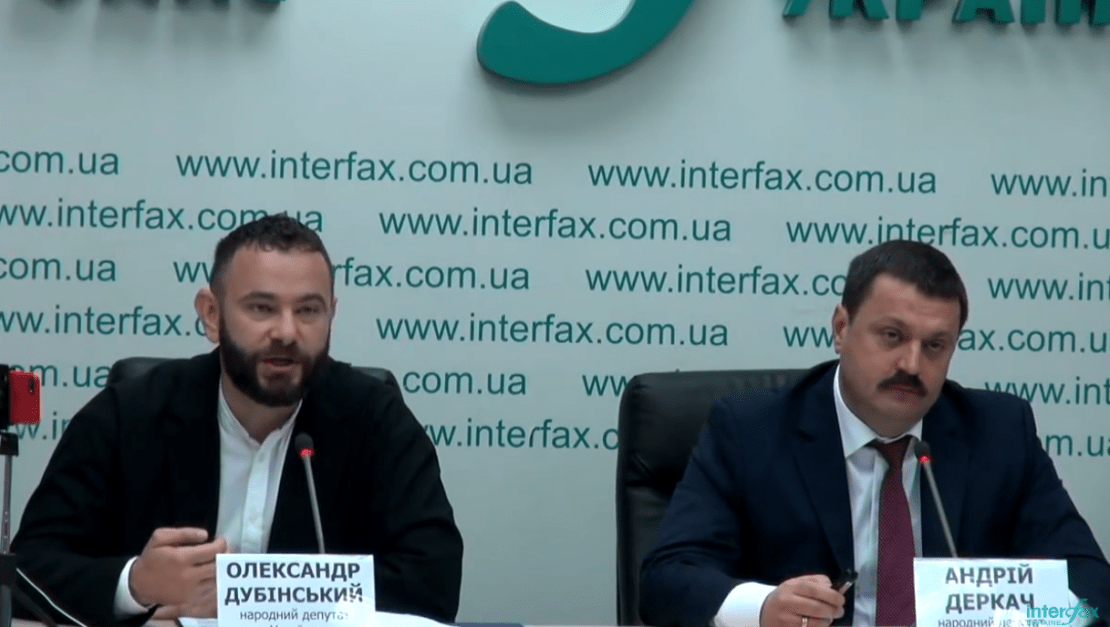
Derkach held the second press conference together with MP Oleksandr Dubinskyi, who is now in custody on suspicion of high treason and participation in a Russian GRU agent network. In the intercepted conversations he was tagged with the code word “the patient” (more on that below). In September 2025 Dubinskyi was questioned as a witness in the Derkach case. He confirmed the joint appearance but insisted it was purely about the initiative to set up a temporary investigative commission of the Verkhovna Rada concerning the circle of ex-president Petro Poroshenko, and that this idea was supposedly pushed by the President's Office through the then-presidential aide Andrii Yermak.
In February 2020 Derkach arrived in Moscow for a third time, met Alekseyev, and received a new task — for a fee, to release recordings of conversations involving Biden (then a US presidential candidate), Poroshenko, and Putin. Money for this began coming in through Kolesnikov and couriers (details below). After receiving the first tranche, Derkach held four more press conferences between May and September 2020 (on May 19, June 22, July 9, and September 16), at which he released audio of senior officials' conversations.
A forensic linguistic examination summed up the thrust of these appearances as follows: Ukraine is under US “external governance,” and the top leadership of both countries is caught up in a “democorruption” network. The court found this to be assistance to the Russian General Staff in subversive activity against Ukraine by prior conspiracy — and stressed separately that the truth or falsity of the released information was not part of what had to be proved. Derkach is charged not with spreading falsehoods but with the very fact of assisting a foreign intelligence service for payment.
“The Wife” on the line: a glossary of code words
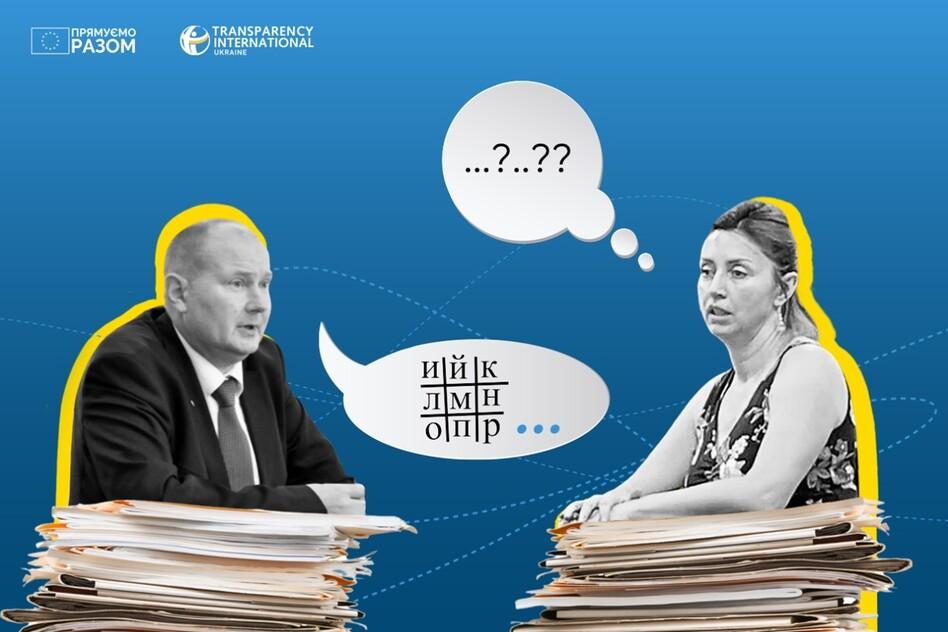
This is an unusual section for our materials, but it is perhaps the one that best shows how carefully the scheme's participants disguised their activity. Communication among Derkach, his go-between Ihor Kolesnikov, and the Russian General Staff representatives was conducted in a coded vocabulary — and the court, relying on Kolesnikov's testimony, other witnesses, and the conclusions of a forensic linguistic examination, decoded nearly every word.
“The Wife” — Andrii Derkach
“Head Doctor” / “The Doctor” — Vladimir Alekseyev, the GRU general
“Medical orderly” — Aleksei Savin, Alekseyev's aide
“Passing the medical board” / “the surgery” — holding a press conference
“Candy” — cash from Russian intelligence
“Sick note” — a financial report on how the money was distributed
“The IV drip” — media backing and amplification of a publication
“The little relative” / “the Intern” — presumably Kolesnikov's son, Ihor, who acted as courier
“The patient” — Oleksandr Dubinskyi
The examination confirmed that none of these conversations was ever about actual medicine — every one of these words was used purely as a cipher.
The earliest recorded episode is a conversation from July 27, 2019, before the first meeting in Moscow. The go-between asked the GRU representative: “How far can we go, and how far ahead are you? Meaning — can we start putting the material out?” — that is, whether the material already received could be published. The GRU advised waiting for a face-to-face meeting: “I'd rather wait for our meeting.”
A striking example is the exchange on the eve of the first press conference, on September 2, 2019. Kolesnikov reported to Alekseyev: “I wanted to confirm that on the fifth I want to come and bring the footage”; Alekseyev replied: “So come, then. I already told you.” A GRU officer, in another conversation the same day, asked whether Kolesnikov would be coming “with the Wife” — that is, whether Derkach himself would attend.
An even more vivid conversation took place on November 8: Kolesnikov reported on the money and the accounting — “That matter with the candy... and that sick note... we've registered it.” Slightly earlier the GRU had demanded that the second press conference be done well — “no worse than the last one” — and Kolesnikov assured them it would be, only this time it would be “not just with him, but with one more participant... with the patient,” meaning Dubinskyi.
A $567,000 scheme
The money began arriving right after the February 2020 meeting in Moscow — through Kolesnikov and couriers.
On March 27, 2020, Kolesnikov received a code in Telegram to collect cash. He sent his son — “the little relative” — to fetch it. The son picked up $50,000 from a middleman involved in currency exchange and passed it to his father, who in turn handed it to Derkach's trusted associates.
On April 22 a larger sum arrived — $250,000: Kolesnikov's son collected it from the same middleman and drove it to a lawmaker's constituency office, where Derkach's aide took delivery. The next day, another $267,000 was passed through a different person. In all, in under a month Derkach received no less than $567,000 in cash.
The court drew attention to the tradecraft: passwords and codes for each handover, advance phone arrangements about the location (most often Laboratorna Street in Kyiv), and couriers who knew neither the amount, nor the origin of the money, nor its ultimate recipient.
This same sum formed the basis of the second charge — illicit enrichment. According to Derkach's 2020 declaration, his lawful income and assets amounted to UAH 2.9 million and $1,483. The $567,000 (UAH 15.4 million) received from intelligence did not appear in the declaration. Assets exceeding lawful income by more than 6,500 tax-exempt minimum incomes constitute the offense under Article 368-5 of the Criminal Code of Ukraine.
The defense argued that the National Agency on Corruption Prevention (NACP) had found no signs of illicit enrichment in Derkach's declaration. The court rejected this: the NACP cross-checks data only against public registers, which the hidden money deliberately never entered — and the very fact of concealment confirms its unlawful origin.
The prosecution's key witness — also behind bars?
Ihor Kolesnikov, the key witness in the Derkach case, is himself a convicted traitor. He pleaded guilty, and the Shevchenkivskyi District Court of Kyiv approved that agreement on May 5, 2022. According to the facts the court established, from 2016 through March 2022 Kolesnikov acted on the instructions of the Russian General Staff: back in Moscow in 2016, he was drawn into confidential cooperation under a pseudonym and tasked with building an agent network in Ukraine.
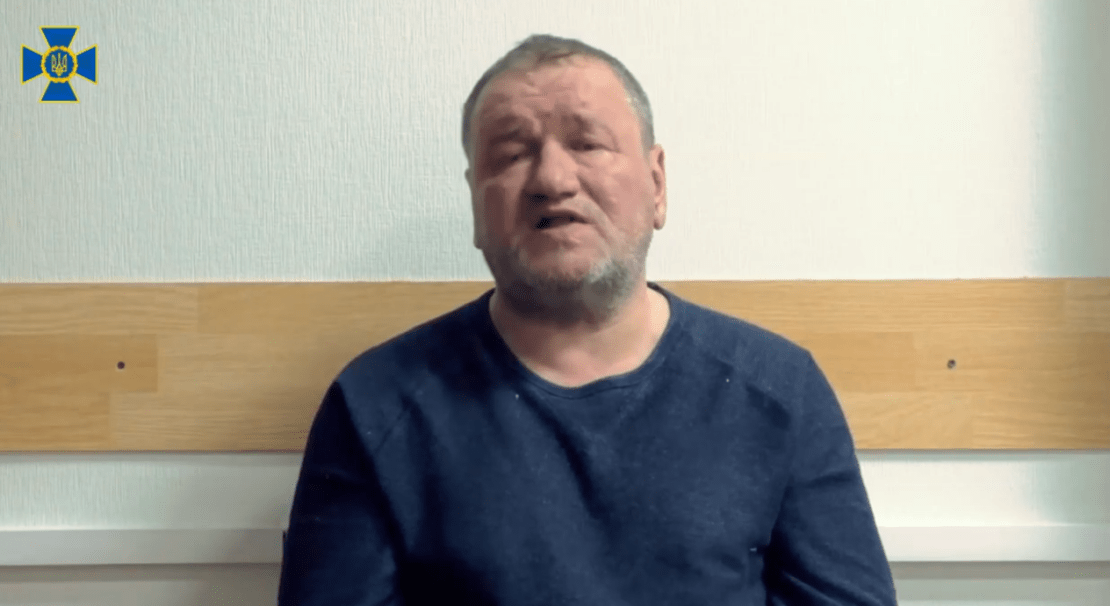
Kolesnikov served as go-between and financial operator. It was he who, in early 2019, arranged Derkach's meeting in Moscow with the Russian General Staff representative. Over 2019–2022 he regularly received cash from his handlers — anywhere from $1 million to $3 million at a time, through conversion centers in Kyiv — and channeled it into setting up private security firms staffed with former Interior Ministry officers: these were being readied to help seize government bodies and create a “people's militia” during the invasion. Kolesnikov also took part in the 2020 information campaigns and scouted other Ukrainians for recruitment and subsequent placement in senior positions within Ukrainian state bodies, to build the agent network.
Under the agreement, Kolesnikov admitted guilt, gave incriminating testimony (including in the Derkach case), and undertook to help expose other members of the network. The court sentenced him to 5 years' imprisonment without confiscation of property, counting the term from the moment of his detention on March 15, 2022. That means he would be due for release as early as spring 2027.
The defense's arguments, and why the court rejected them
The main line of defense came down to a simple assertion: the prosecution had proved nothing specific. The defense insisted that the prosecution had confirmed neither Derkach's agreement to cooperate with the Russian General Staff, nor the very fact of his contacts with Alekseyev and Savin, nor that the money Kolesnikov carried was even intended for Derkach. And Kolesnikov himself, in the defense's view, could not be considered a reliable witness — he was an “interested party” who had benefited from a deal with the investigation.
The court rejected this argument, relying not on Kolesnikov's testimony itself but on how it aligned with other evidence — the intercepted conversations, border-service data on crossings on the days of the meetings, and even the authorship of electronic files found simultaneously on his phone and on storage devices in Derkach's office. The nature of intelligence work, the court noted, objectively rules out direct evidence of recruitment — so a body of mutually consistent circumstantial evidence is enough.
The defense's most fundamental argument concerned the press conferences: the claim was that Derkach had been exercising his parliamentary powers to expose corruption, not helping a hostile intelligence service. The court's response: an MP's status does not exempt anyone from responsibility for treason, and the proper way to respond to suspected corruption is to report it to the NABU or the SSU — not to release audio of heads of state's conversations for money from a foreign intelligence service.
The forensic linguistic examination proved useful here too. The expert acknowledged that whether the information Derkach spread amounted to disinformation lay beyond her competence. But she confirmed the central point: spreading hostile narratives is a threat to the state regardless of their truth, and the very fact of doing so on a foreign intelligence service's orders already points to subversive activity. This allowed the court to sidestep the defense's trap — assessing not the truthfulness of Derkach's revelations, but the very fact of his coordination with the GRU.
The final nail in this argument was driven in by the Americans. The court took into account both the sanctions, with their wording about an “active Russian agent,” and a report by the US National Intelligence Council, which states that the information operation against Biden was personally authorized by Putin, with Derkach used to conceal the Kremlin's involvement. That same report notes that the Ukrainian government had no part in the subversive actions.
Why this verdict matters
This is the first illicit enrichment conviction by the HACC — all previous cases under this article ended in plea agreements. And it is, in all likelihood, the first HACC verdict against a defendant who not only fled to Russia but continues an active political career there. In the summer of 2024 Derkach became a candidate, and by September 12 a senator of Russia's Federation Council for Astrakhan Region. He later joined the committee on security and defense, and in 2025 was awarded the title “Hero of Russia.”
Skeptics may call an in absentia verdict a “show,” but in absentia proceedings are a normal, legally established procedure: if the convicted person appears on the territory of a state willing to extradite him, the sentence can be enforced. History offers such examples: ex-MP Oleksandr Shepelev, who also hid out in Russia, was ultimately detained in Ukraine back in 2018 and remains in custody to this day — more on that in our separate material. What is more, the punishment itself — 15 years — is the maximum under the sanction of Article 111(1) of the Criminal Code of Ukraine. For illicit enrichment (Article 368-5), the HACC imposed a further 8 years, though the sanction allowed up to 10; but under Article 70 of the Criminal Code the sentences were merged into one — so Derkach ultimately received 15 years with confiscation of property and a further three-year ban on holding office after serving his term. There are 30 days from the pronouncement to appeal, so for now the verdict is not yet in force.
These 15 years will begin to run only from the moment of Derkach's actual detention if and when that happens, and the three-year office ban will take effect only after the imprisonment ends. In other words, if he is detained, say, in five to ten years, the office ban will really kick in only when Derkach is in his 80s or 90s.
The case has an obvious downside, too: the merits phase dragged on for more than two years because of numerous procedural issues — hearings adjourned by the defense, the introduction of dubious evidence. But since the trial proceeded in absentia, the statute of limitations there is at its maximum — 15 years.
Be that as it may, this is the first high-profile treason conviction of a Member of Parliament — and it will likely give pause to defendants in other resonant cases with a similar storyline.
What comes next
The Derkach verdict is an important signal: the status of a Member of Parliament, or public rhetoric about “exposing corruption,” offers no protection from responsibility if coordination with a hostile intelligence service lies behind it. The court drew a clear line between political activity and working for the enemy: if you carry out the instructions and take the money of a foreign intelligence service to Ukraine's detriment, that is treason — whatever political status you hide behind.
Even without immediate enforcement, this verdict carries weight. It may serve as grounds for an international search and for future extradition requests.
Prepared by the Transparency International Ukraine team
.png)
.png)

.jpg)
.png)
.png)
.jpg)
.jpg)
.png)
.png)
.png)
.png)
.png)