

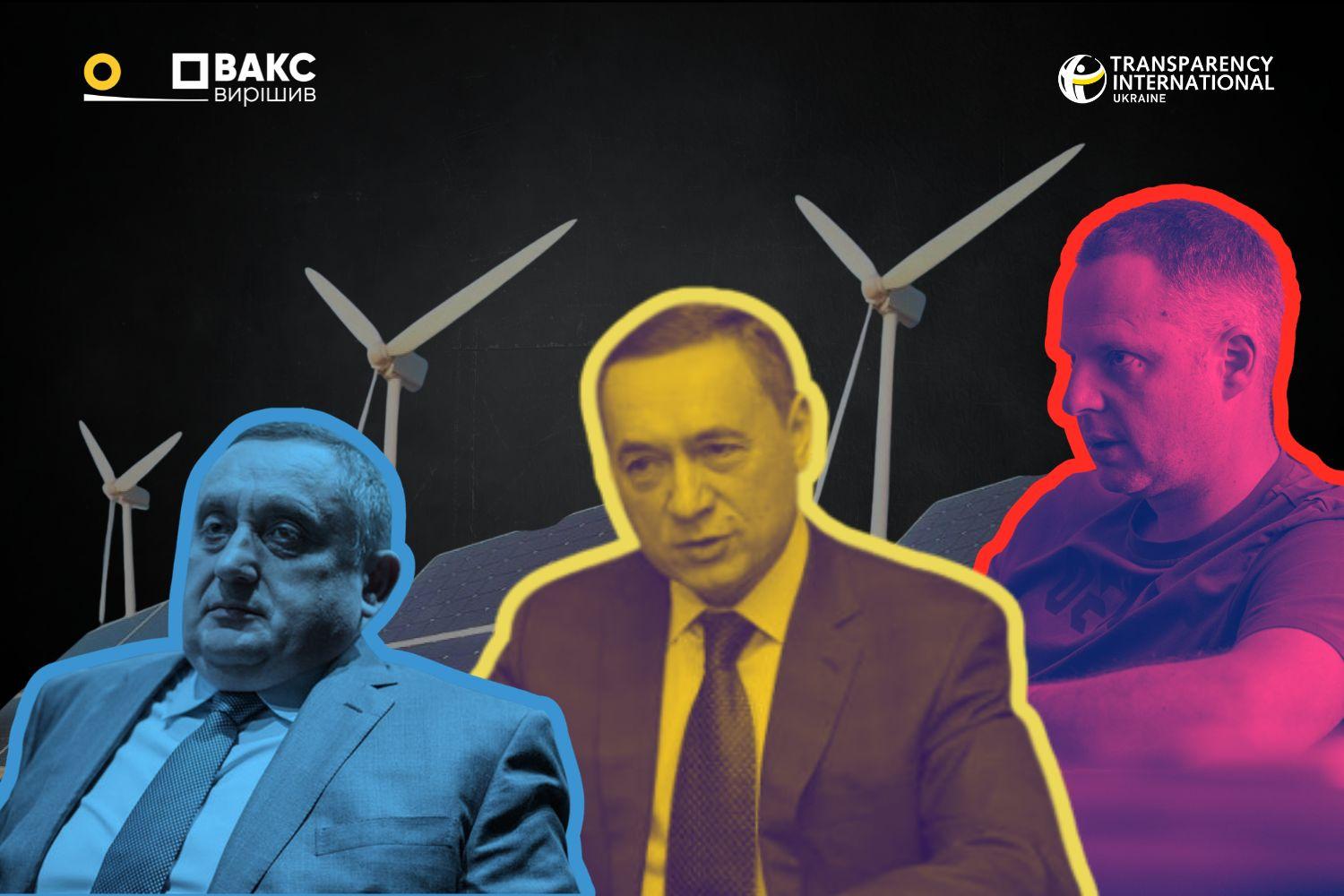


Since November 2025, Operation Midas has kept not only the officials involved and their inner circles on edge, but the entire country as well. The case has drawn even more attention due to an exceptionally challenging winter.
However, corruption schemes in the energy sector are nothing new. In this piece, we analyze previous high-profile exposures in the energy sector and examine where their proceedings stand today.
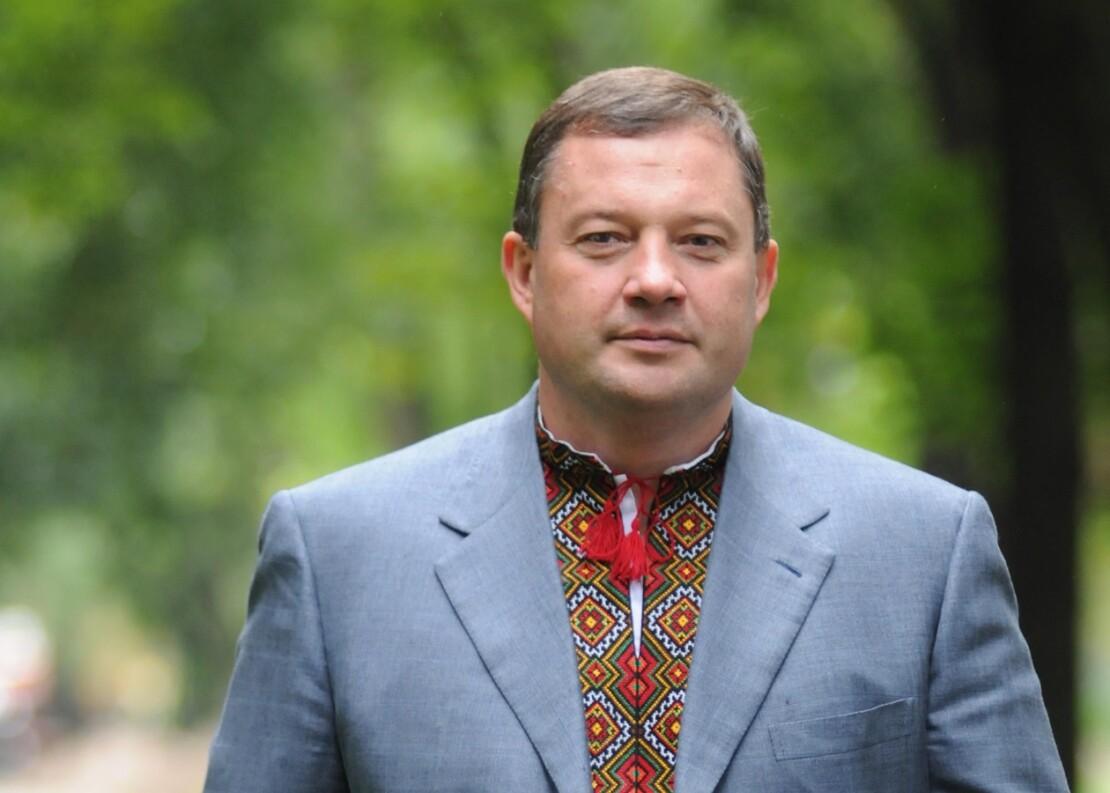
MP Yaroslav Dubnevych’s “Gas Case”
One of the most illustrative cases in the context of energy-related fraud remains MP Yaroslav Dubnevych’s gas case, concerning the misappropriation of Naftogaz of Ukraine’s natural gas worth more than UAH 2.1 billion and the laundering of over UAH 457 million. According to investigators, between 2013 and 2017, companies controlled by the MP—the Novoiavorivsk and Novyi Rozdil CHPPs in the Lviv region—illegally obtained gas at preferential prices that was intended exclusively for household needs. In practice, however, 450 million cubic meters of that gas were used for industrial electricity generation, which was then sold to the state enterprise Energorynok at market prices.
The proceeds obtained in this way, exceeding UAH 457 million, were laundered by the scheme’s organizers through an extensive network of offshore entities. The funds were later reinjected into the Ukrainian economy under the guise of foreign investment, which was intended to conceal their criminal origin.
Despite the scale of the evidence, the proceedings have been delayed due to the absence of the main defendant. Since October 2023, Yaroslav Dubnevych has been on an international wanted list, explaining his stay in EU countries by the need for long-term medical treatment, which he claims currently prevents him from returning to Ukraine.
The HACC is hearing his case in separate proceedings. On February 17, 2026, the court concluded the preparatory hearing and scheduled the case for trial on the merits. In parallel, the HACC continues hearings regarding five other defendants—former directors and financial managers of the above-mentioned CHPPs. In addition, the HACC is considering another criminal case involving Yaroslav Dubnevych: the MP is accused of misappropriating UAH 93 million from Ukrzaliznytsia through manipulation of tender procurement.
The case on fraud at Tsentrenergo
Another high-profile episode in the portfolio of Ukraine’s anti-corruption bodies is the case involving alleged manipulation at Tsentrenergo PJSC, where, according to investigators, the state-owned company lost more than UAH 176.8 million due to its officials’ favorable treatment of a private trader. At the core of the scheme is an alleged collusion between former Tsentrenergo officials Oleksandr Uvarov and Kateryna Tokar and the head of United Energy, Andrii Korotkevych-Leshchenko. Under the auction terms, in 2020 the private company undertook to purchase fixed volumes of electricity, and for any shortfall it was required to pay a penalty equal to 20% of the value of the remaining volume.
But when the actual volumes of electricity taken turned out to be far lower than planned, the alleged participants decided to “edit” the rules of the game midstream. According to investigators, they backdated and signed additional agreements that simply removed the clauses on penalties and permissible deviation thresholds. This legal maneuver allowed United Energy to take any volume of electricity without any financial consequences. As a result, the state-owned Tsentrenergo failed to receive UAH 176.8 million.
Today, the case is at the trial stage before the HACC. The defendants are charged with abuse of power or official position and official forgery. On December 30, the HACC approved a plea agreement concluded between a SAPO prosecutor and United Energy’s head, Andrii Korotkevych-Leshchenko. He was sentenced to three years of imprisonment, a three-year ban on holding positions in state bodies, and a fine of UAH 8,500.
This case remains one of the most telling examples of how manual control over contracts in the energy sector becomes a tool for masking corrupt arrangements at public expense.
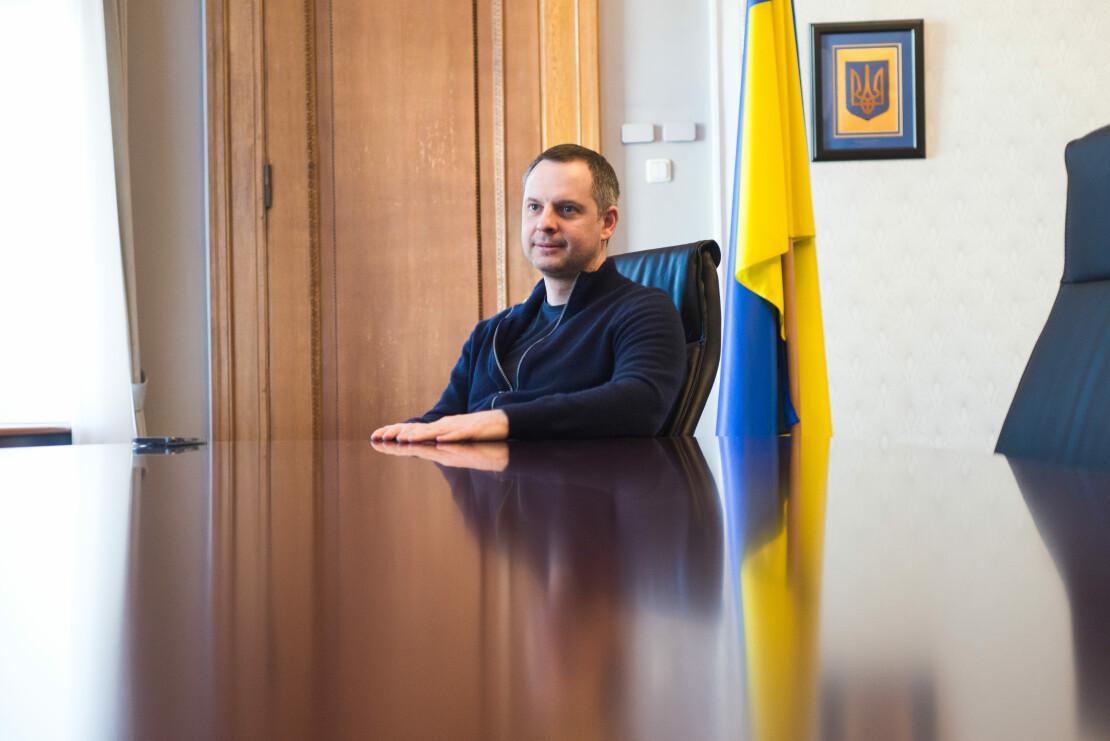
The Rostyslav Shurma case
A no less resonant and relatively “fresh” case concerns former Deputy Head of the Office of the President Rostyslav Shurma and alleged manipulations involving payments under the “green tariff.” According to investigators, the organizers set up a scheme to misappropriate public funds through solar power plants located in the temporarily occupied territory of the Zaporizhzhia region. It was established that since March 2022, the plants in Vasylivka District have had no physical connection to Ukraine’s Integrated Power System. Despite this, companies controlled by the suspects, including Natspod PE, KD Energy 2 LLC, and Renewable Energy of Zaporizhzhia LLC, submitted knowingly false data in 2022–2023 on the volumes of energy they generated.
This simulation made it possible to unlawfully receive more than UAH 141 million from the state enterprise Guaranteed Buyer. Investigators believe the money was laundered under the guise of investments in real estate and new energy projects. The scheme is described in more detail in a Bihus.Info investigation—after which NABU took it up. The scale of the case and the status of the main figure have made it one of the most discussed investigations in the renewable energy sector.
At this stage, law enforcement has moved into the “open” phase of procedural actions. On February 13, 2026, the Ministry of Internal Affairs declared Rostyslav Shurma and his brother Oleh Shurma wanted. Rostyslav Shurma is currently abroad, having left Ukraine as the father of three children. For his part, he says he is not hiding from investigators and claims he is even ready to cooperate. Still, his own statement makes one thing clear: the former official is in no hurry to return to Ukraine.
On January 22, the HACC imposed an interim measure of pretrial detention on Shurma’s trusted representative, with the option of posting UAH 30 million in bail as an alternative. On January 23, the HACC partially granted the prosecutor’s motion and set bail at UAH 3 million for Ihor Skliar—the director of KD Energy and Natsprod, whose owner is the former official’s brother, Oleh Shurma. He, too, is currently abroad. The suspects are charged with misappropriation of property on an especially large scale (Article 191(5) of the Criminal Code of Ukraine) and money laundering (Article 209(3) of the Criminal Code of Ukraine). The case remains at the pretrial investigation stage.
The Dmytro Kriuchkov case
Among the largest energy-related schemes of the past decade is the case of Dmytro Kriuchkov, concerning embezzlement at Cherkasyoblenergo and Zaporizhzhiaoblenergo.According to investigators, in 2015–2016 the scheme’s organizers siphoned more than UAH 1.5 billion from these companies. The scheme was cynically simple: unlawful debt-assignment agreements were executed through Kriuchkov’s private company Energomerezha. This allowed major industrial consumers, including companies linked to oligarch Dmytro Firtash and the Surkis brothers, to pay not the regional distribution companies for electricity consumed, but the intermediary instead. That intermediary was Dmytro Kriuchkov’s company, Energomerezha Holding Company. Payments collected by the private firm were never returned to regional power distribution companies, and the funds never reached state accounts. Separate episodes also concerned the siphoning of assets from Kharkivoblenergo under the guise of non-refundable financial assistance.
Today, this case has produced one of the harshest sentences among matters of this kind. The HACC found Dmytro Kriuchkov guilty and sentenced him to 15 years in prison with confiscation of all property. In addition, the court ordered special confiscation of assets worth UAH 468 million. The defense is currently seeking, on appeal, to overturn the first-instance court’s severe decision.
For now, however, we must acknowledge that the convicted person is physically beyond the reach of Ukrainian justice. In February 2024, Kriuchkov left Ukraine as a father of multiple children and did not return. His location has shifted repeatedly: first, Kriuchkov claimed he had permanent residency rights in Monaco; later, he was receiving medical treatment in Switzerland; and his most recent comments indicated that he is in France.
The Rotterdam+case
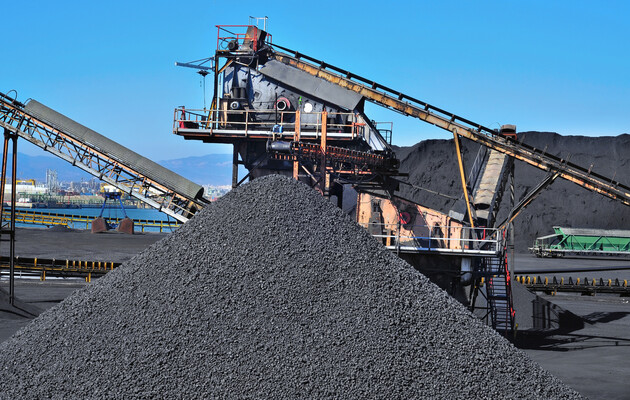
The Rotterdam+ case has become a true symbol of both investigative complexity and the scale of energy-sector schemes in Ukraine. At its core are allegations that former senior officials of the NEURC and the DTEK group of companies introduced and applied a questionable methodology for calculating the cost of coal for thermal power plants, known as the “Rotterdam+” formula. The mechanism was straightforward: according to investigators, consumer tariffs were built around the price of coal in Dutch ports, with the cost of transporting it to Ukraine added on top. Yet the formula was applied to the entire volume of coal burned—more than 25 million tons—even though in reality only a negligible 130,000 tons were imported. This led to an artificial increase in end-user tariffs and caused losses to the state exceeding UAH 38 billion. How the scheme worked is also explained visually in a Bihus.Info investigation.
The path of this case to the courtroom was exceptionally arduous: the pretrial investigation lasted more than five years, during which the proceedings were closed and reopened five times. Today, the High Anti-Corruption Court has finally moved to a trial on the merits, merging several episodes into a single process. More on why this investigation became a stress test for the entire system can be found in our analytical piece, “The Rotterdam+ Case: UAH 39 Billion in Damages and Five Years of Investigation.”
At present, the situation in the case appears mixed. Former NEURC head Dmytro Vovk and official Volodymyr Butovskyi are wanted; special court proceedings are being conducted against them. Several defendants have effectively fallen out of the trial: due to the statute of limitations, the HACC released a number of former commission members from liability, including former NEURC head Oksana Kryvenko. Nevertheless, the court’s consideration of certain episodes involving abuse of power and official negligence continues—leaving open the question of whether the state will be able to put an end to one of the largest energy scandals of modern times.
The Kharkivoblenergo Embezzlement Case
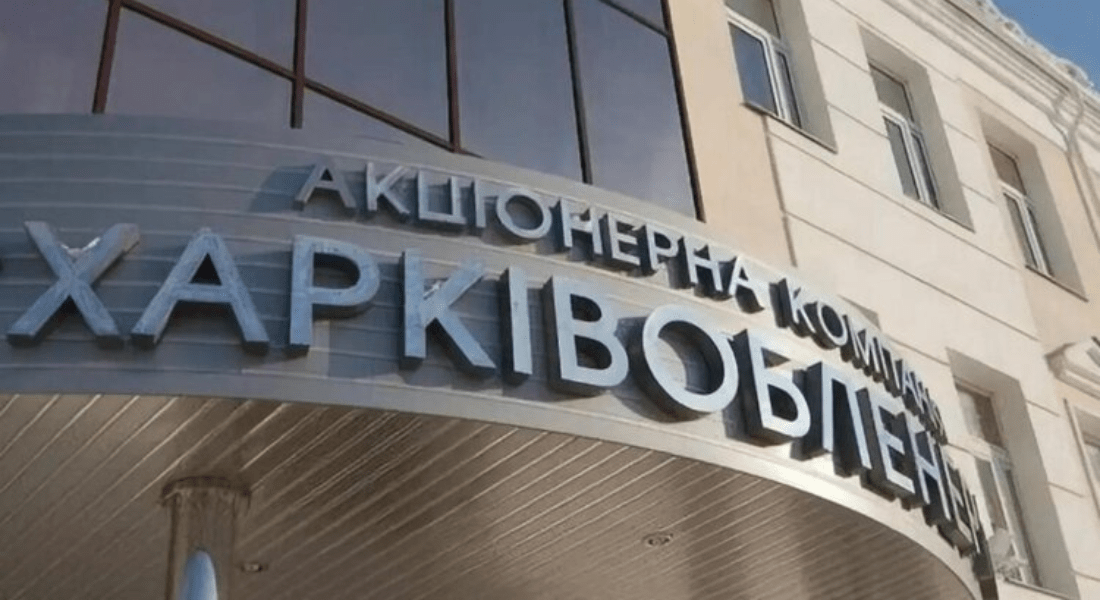
A recent example of the fight against corruption in regional energy hubs is the case involving the embezzlement of funds at Kharkivoblenergo JSC. Investigators established that in 2021 the company’s then-management, together with private partners, devised a profiteering scheme tied to procurement of critical equipment—transformers and electrical measuring instruments. According to the NABU, acting CEO Kostiantyn Lohvynenko and the scheme’s organizer Leonid Mindich formed a group that included not only their subordinates, but also representatives of the Kharkiv Chamber of Commerce and Industry and private valuation experts. The participants artificially inflated the estimated cost of the equipment by UAH 132.5 million.
Fortunately, the suspects were unable to carry the plan through to completion. Implementation of part of the contracts caused the company losses of UAH 12.5 million, but the timely NABU investigation prevented the misappropriation of the remaining amount—UAH 120 million.
The case is currently at the pretrial investigation stage. In the summer of 2024, seven alleged participants were served with notices of suspicion, and in June 2025, the scheme’s organizer Leonid Mindich was detained while attempting to cross the state border. In August 2025, the NABU announced the completion of the pretrial investigation. Next comes review by the HACC, which is to provide a legal assessment of the defendants’ actions, examine whether the charges are substantiated, and impose fair penalties if guilt is proven.
A bribe at Energoatom: the Svitlana Pinchuk case
Another telling episode in the chain of abuses in the energy sector is the case of Svitlana Pinchuk, Deputy Director General of Atomenergomash, a branch of the state-owned company Energoatom. She was exposed for demanding and receiving kickbacks from a representative of a contracting company. According to investigators, in 2025 the official demanded 10% to 15% of the value of the work—not as a one-off, but on a monthly basis. In exchange, she allegedly promised to ensure timely payment for completed work and to refrain from creating artificial obstacles to further cooperation with the enterprise. The total amount of the undue benefit she expected exceeded UAH 6.6 million.
Law enforcement managed to document the transfer of part of the money: between June and November 2025, investigators recorded receipt of a portion of the bribe amounting to about UAH 1.67 million.
As early as November 5, 2025, the HACC imposed an interim measure of pretrial detention on the suspect, with the option of posting UAH 4 million in bail as an alternative. Pinchuk’s defense sought to appeal the measure, but the HACC Appeals Chamber upheld the first-instance ruling. The pretrial investigation is ongoing, and the case adds to the list of high-profile exposures in the strategically important nuclear sector.
The €6.4 million Energoatom embezzlement: an episode in the Mykola Martynenko case
One of the longest-running and most resonant investigations is the case of Mykola Martynenko, a former Member of Parliament and former head of the Verkhovna Rada’s fuel and energy committee. It concerns large-scale misappropriation of funds from the state-owned Energoatom through the Czech company Skoda JS. According to investigators, between 2009 and 2012 the defendants ensured Skoda JS won tenders to supply equipment to Ukrainian nuclear power plants. Unsurprisingly, these supplies were priced above market rates. The difference—about 18% of the contract value—was transferred, under the guise of “intermediary commissions,” to accounts of the Panamanian Bradcrest Investment S.A., which investigators say was controlled by Martynenko. As a result, the state enterprise lost €6.4 million.
The scheme operated on an international level: funds were routed through Swiss banks, and law enforcement collected evidence in cooperation with foreign counterparts. The case is currently at the trial stage before the HACC.
This “nuclear” episode is not the only corruption offense imputed to Martynenko. The former MP is also a key figure in another episode involving the misappropriation of USD 17.2 million from the state enterprise SkhidGZK and the receipt of more than €310,000 in undue benefit. Alongside the former MP, former Energoatom executives and trusted associates who managed offshore accounts are also in the dock. These proceedings have become a marker of how, over decades, vertical ties were built between political power and strategic state assets.
The spent nuclear fuel storage facility construction case
Another high-profile corruption case in the energy sector is linked to the construction of the Centralized Spent Nuclear Fuel Storage Facility in the Chornobyl Exclusion Zone. Energoatom officials are accused of causing the enterprise losses of nearly UAH 100 million during the construction project, specifically in the procurement of radiation monitoring systems. According to the investigation, in 2020 the contract with the contractor was concluded by circumventing the open tender procedure, and subsequent additional agreements made it possible to artificially increase the contract price from UAH 421 million to UAH 1.5 billion. In practice, the contractor purchased the equipment at market price and sold it to the state at triple the cost.
On November 4, 2025, the NABU reported that one of the defendants in this case had been extradited from Germany.
The case is currently under consideration by the HACC. The indictment against four defendants, including the former head of the relevant Energoatom unit and representatives of the contractor, was submitted to the court in July 2024. The group’s actions were classified under the article on misappropriation and embezzlement of property on an especially large scale.
Electricity manipulations involving Ukrenergo: the Volodymyr Skorobahach case
Another episode illustrating the vulnerability of state settlements during critical periods is the case involving the embezzlement of more than UAH 58 million from the state-owned company Ukrenergo. According to investigators, in April 2022 Volodymyr Skorobahach, then a member of the Kharkiv Regional Council, acted as the scheme’s investor and organizer, recruiting several other participants. The mechanism relied on three controlled companies licensed to supply electricity. These companies obtained electricity from Ukraine’s Integrated Power System and resold it to end consumers. However, final settlements with Ukrenergo never took place: the financial liability remained with the shell companies. The proceeds—more than UAH 58 million—were moved out of the country. According to the investigation, the funds were routed to Bulgaria under the guise of repayment of fictitious loans, while the financial responsibility for the consumed electricity remained with the shell companies. This model allowed the group to accumulate public funds in private accounts while avoiding its obligations to the transmission system operator.
The case has now moved to the trial stage. In October 2025, the indictment was submitted to the court, and on February 16 the HACC concluded the preparatory hearing. Trial on the merits was scheduled for March 3. Skorobahach, the head of the private company, and its founder were served with notices of suspicion and face up to 12 years’ imprisonment with confiscation of property. Their actions were classified as misappropriation of property on an especially large scale (Article 191(5) of the Criminal Code of Ukraine) and laundering of proceeds of crime (Article 209).
.jpg)

.png)
.png)

.jpg)
.png)
.png)
.jpg)

.jpg)
.png)
.png)
.png)
.png)