
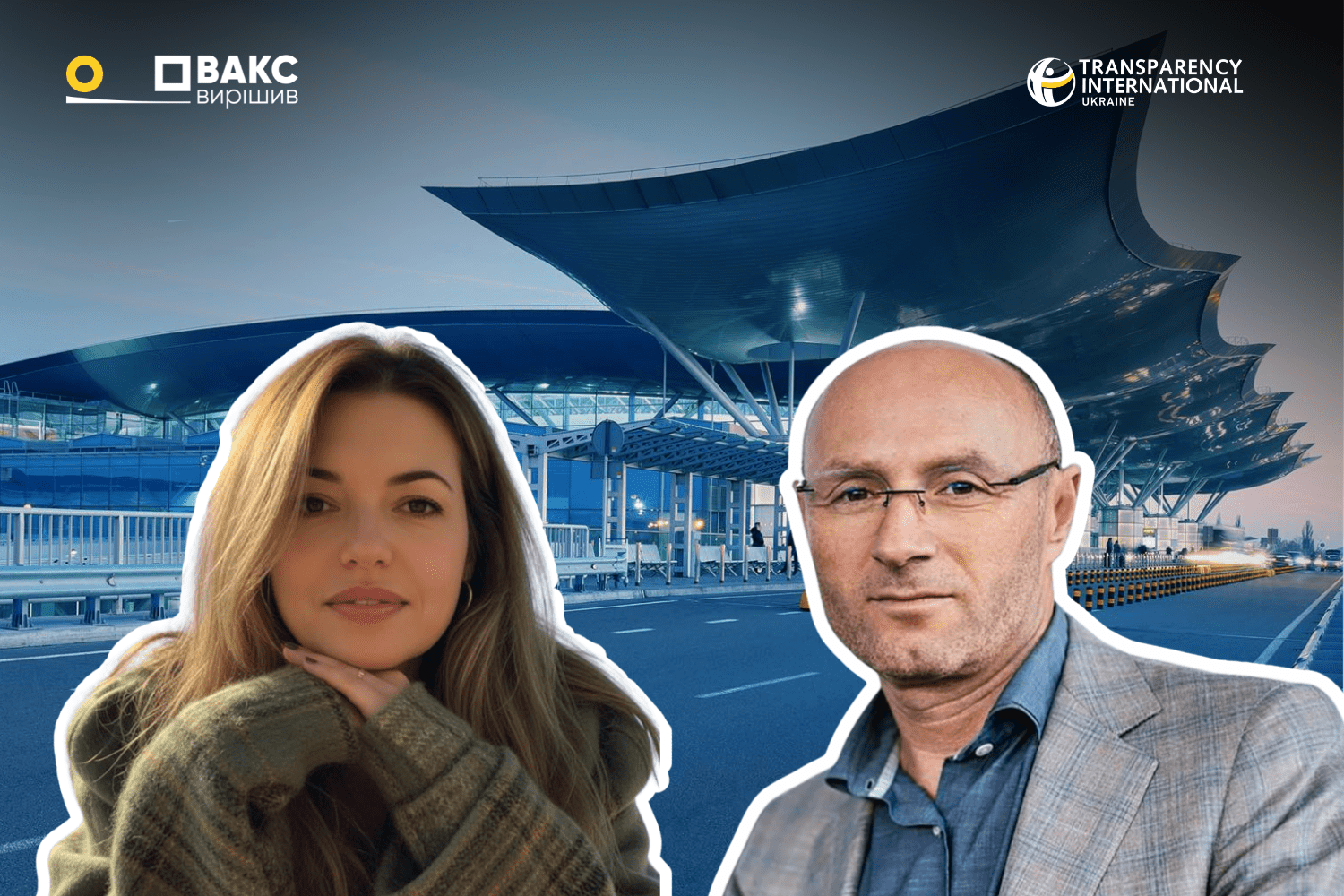


This case is not about an airport — it's about how the quality of forensic examination determines the quality of justice
The HACC Appeals Chamber reviewed the Boryspil Airport case, and the figures changed dramatically: the defendants' prison terms were partially reduced, the amount awarded under the civil claim was cut almost tenfold — from UAH 11 million to UAH 1.3 million — and the overall damages calculation fell eightfold. Behind this lies not a procedural error but a methodological one in the calculations. Why and how the Boryspil case once again sharpens the debate about the crisis in forensic examinations in Ukraine — we explain below.
The trial court's verdict and the defense's position
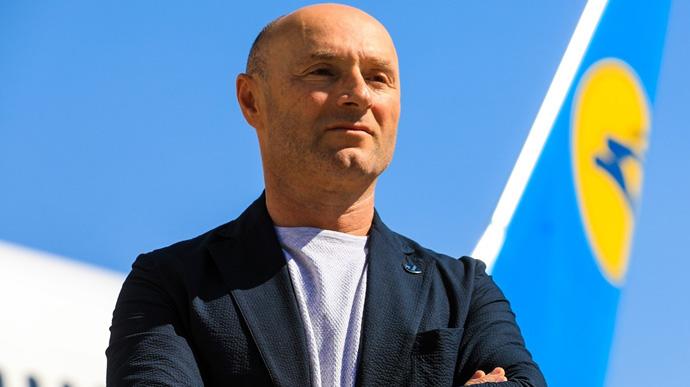
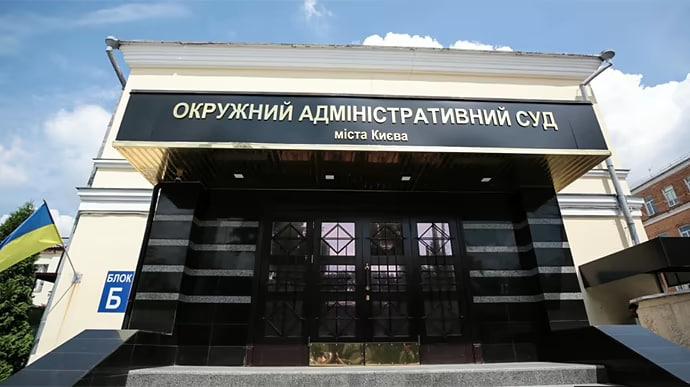
On March 1, 2023, the High Anti-Corruption Court (HACC) handed down a guilty verdict in the Boryspil Airport case. Former airport director Yevhenii Dykhne was sentenced to five years' imprisonment for abuse of office that caused grave consequences (Article 364(2) of the Criminal Code of Ukraine). Olesia Levochko, the head of one of the airport's departments, was sentenced to four years' imprisonment as an accessory. In addition, the court partially granted the civil claim brought by the regional office of the State Property Fund of Ukraine (SPFU), recovering almost UAH 11 million from the defendants jointly and severally.
The defense disagreed with the verdict and, in its appeals, asked either to close the cases for absence of the elements of a crime or to order a new trial. Defense counsel insisted that the prosecution was built on inadmissible and erroneous calculations, and that the SPFU's civil claim contained no proper evidence of the damage caused at all.
Where do the trial and appellate courts agree?
Despite substantially revising the amount of damages, the HACC Appeals Chamber agreed with the trial court on the following points of legal qualification:
-
The elements of a crime were present. Both courts concluded that the scheme of entering into preliminary lease agreements with commercial companies, bypassing the SPFU's official tender, was unlawful and intentional and bore the hallmarks of abuse of office.
-
The subjective element. The courts found that the airport's management acted in the interests of third parties — the tenants — while aware that the right to dispose of state property and set the final rates belonged exclusively to the SPFU.
As a result, the appellate court did not change the article of the charge, keeping Article 364(2) of the Criminal Code of Ukraine (abuse of office that caused grave consequences) — even though the recalculated amount of damage exceeded the criminal threshold for grave consequences.
Where do the courts differ? The problem of forensic examinations and the calculation of damages
The trial and appellate courts took different approaches to assessing the evidence that established the damage. The Boryspil case vividly highlighted the problem of the quality of specialized expertise used to establish the elements of property and economic crimes.
The trial court based its verdict on a report dated August 27, 2019, valuing the lease rights to the Premises, prepared by an appraiser from the Guild of Appraisers of Ukraine LLC. The report claimed that the market rental value was four times higher than what the companies actually paid under the preliminary agreements. The court recognized it as admissible evidence.
The appellate court disagreed. It proceeded from the position that determining rental value requires specialized expertise and falls within the competence of a forensic economic examination, not a specialist. A specialist is not vested with the right to issue opinions that may be treated as an independent source of evidence. The appellate court found that the trial court, contrary to the requirements of Article 84 of the Criminal Procedure Code of Ukraine and the case law of the Supreme Court, had recognized that specialist's opinion as admissible evidence.
A separate objection concerned the appraiser's methodology. The appellate court found his conclusions flawed: in comparing the price-growth trend at Boryspil International Airport with another airport, he failed to account for Boryspil's unique passenger traffic and its status as the sole hub for intercontinental flights.
The prosecution also rested on two forensic economic examinations, from 2019 and 2020. However, during the hearings it emerged that the expert had made gross errors: she had unlawfully indexed the 2016 rent — even though the relevant provision of the law had been suspended at the time — and had incorrectly allocated the funds between the budget and the airport.
The trial court acknowledged these errors but decided to fix them on its own — performing its own mathematical calculations and reallocating the damages. The appellate court called this practice impermissible, since the trial court had not merely calculated the damages but had also reallocated them.
Ordering a comprehensive examination
In August 2025, the Appeals Chamber partially granted the defense's motion and ordered a comprehensive forensic valuation, construction, and economic examination. Its results, obtained in December 2025, dramatically changed the figures:
The experts established the market rental value of specific premises — 45, 47, and 315 square meters — as of 2016–2017. Under the new examination, the total damages came to about UAH 1.9 million, with a clear allocation between the state budget and SE Boryspil International Airport. That is almost eight times less than the UAH 15.7 million cited in the trial court's verdict.
The defense filed a 238-page objection and asked that the experts be summoned to the hearing. The panel refused, since no sufficient legal grounds for such a summons had been provided.
Relying on the results of the new examination, the appellate court demonstrated a stricter approach to the standards of proof. While agreeing that the scheme of entering into preliminary agreements was itself unlawful, the court moved the calculation of damage onto purely market and regulatory indicators, fully rejecting the methodology based on hypothetical losses from tenders that were never held and on specialists' opinions containing methodological errors. This directly affected the size of the civil claim and became the grounds for reducing the convicts' final sentences.
Following the appellate review, Yevhenii Dykhne's prison term was reduced from five to four years, and Olesia Levochko's from four to three years. Under the civil claim, UAH 1,334,157.71 was recovered from the defendants jointly and severally in the state's favor — instead of the almost UAH 11 million awarded by the trial court. The remainder of the SPFU's claims was denied.
***
The Boryspil case shows that high-quality forensic examination is the foundation of a just verdict. Today, access to independent and professional forensic examinations is problematic. The absence of an independent expert institution available to the NABU in sensitive proceedings creates significant risks: information leaks, delays in analysis, and so on. Individual experts come under pressure (as has already been documented in the Midas case). Therefore, fulfilling our European integration commitments in this area will meaningfully improve the quality of the evidentiary base in top-corruption cases.
Author: Oksana Kopiichuk, Legal Advisor at Transparency International Ukraine, coordinator of the HACC Decided platform

.png)

.png)

.jpg)


.png)
.png)
.jpg)


.jpg)
.png)

.png)

.png)
.png)