

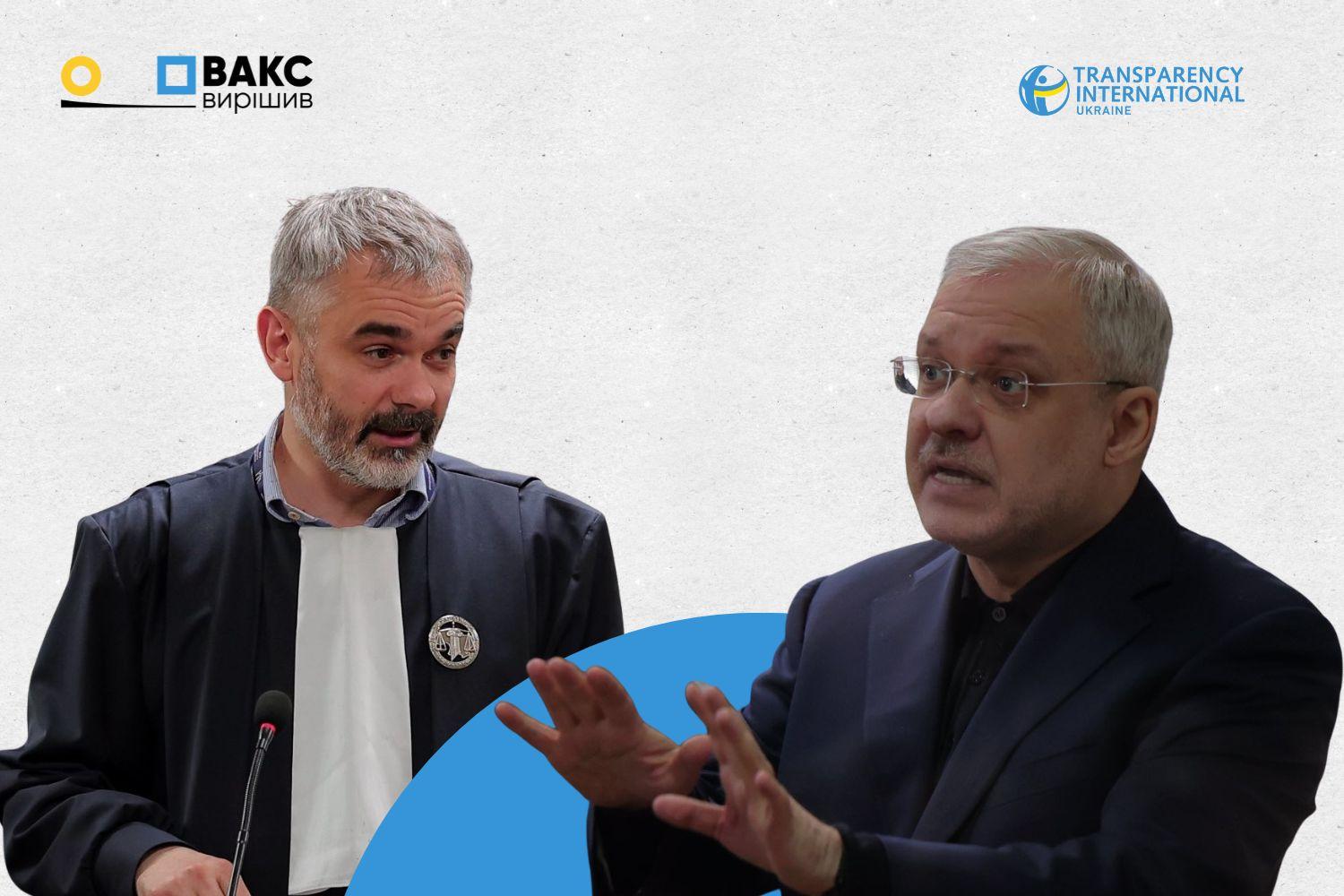


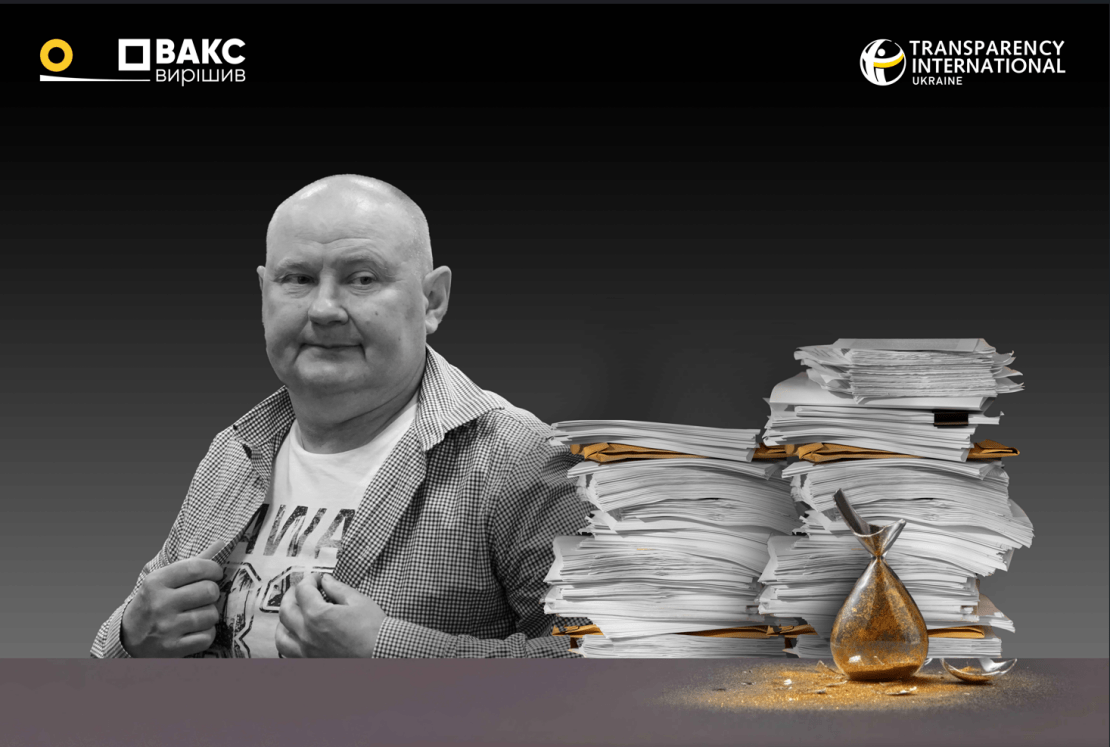
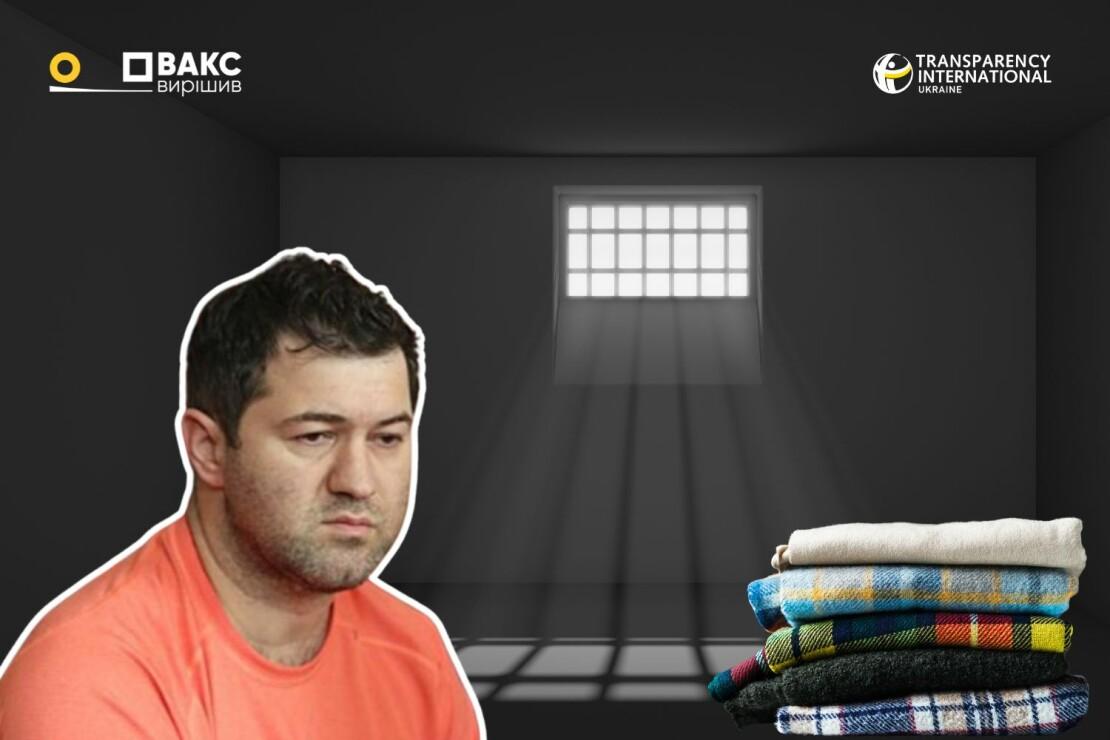
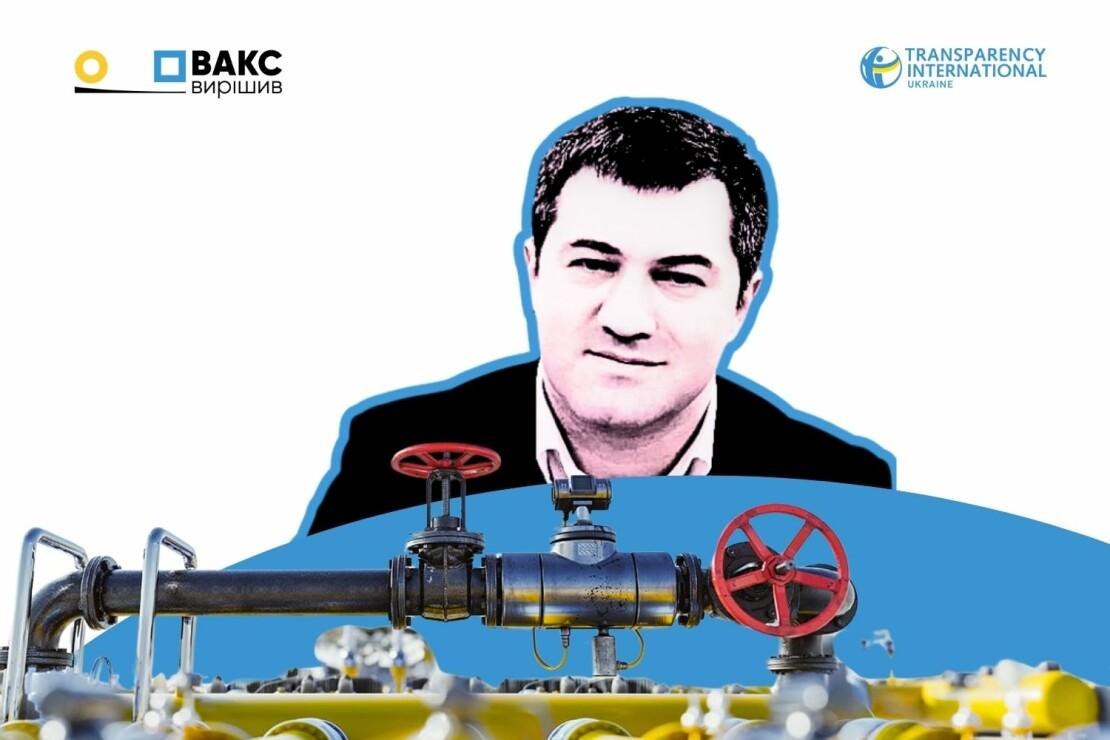
On February 17, 2026, the HACC held a hearing to determine an interim measure for former minister of justice and energy Herman Halushchenko, who is suspected of money laundering and participation in a criminal organization.
We pulled together the most notable points from today’s hearing.
Position of the prosecution
A SAPO prosecutor opened by substantiating the motion for an interim measure, briefly outlining the case and Halushchenko’s alleged role. The prosecutor said Halushchenko—referred to under the pseudonyms “Sigismund” and “Professor”—took part in a scheme to legalize illegally obtained funds. While serving as energy minister, Halushchenko allegedly helped Timur Mindich and his criminal organization launder money through offshore structures in exchange for protection before the president and a share of the illicit proceeds. The prosecutor claimed Halushchenko used the money for personal enrichment, including paying for his son’s expensive education in Switzerland.
At Halushchenko’s direction, members of the criminal organization allegedly involved Ivor Omson, a citizen of St. Kitts and Nevis and the Seychelles. Investigators say that on February 26, 2021, Omson created a private investment fund intended to store, grow, and move laundered funds. Records of incoming funds and account balances were kept in an electronic spreadsheet titled “Manhattan.”
The prosecution cited an intercepted conversation dated February 11, 2025, between Lesia Ustymenko and Oleksandr Tsukerman, where the “Manhattan” spreadsheet is mentioned: Ustymenko:
Ustymenko: “These are yesterday’s, right? I still didn’t get it, you keep getting interrupted, how should I enter it in “Manhattan”? Or is it better in Timur’s personal one?”
Tsukerman: “No. Put it in Manhattan that 250 came in from the Tennis Player... Anyway, some will be from Sigismund, some to us. We’ll distribute it.”
The prosecutor also referenced another intercepted record in which Myroniuk and Basov discuss distributing money received from businesses for work performed by Energoatom, also mentioning Halushchenko:
Basov: “Yeah, that’s all Lohynov. And Hera brought it before. There’s 62 (opens the main compartment of the briefcase — ed.).”
Myroniuk: “Who brought it?”
Basov: “Well, Rema.”
Myroniuk: “So this is the old one?”
Basov: “Yes, the old one.”
Myroniuk: “Then split it in three: you, me, and the professor.”
The prosecution argued that later, while serving as justice minister, Halushchenko actually coordinated and exerted influence over Energoatom. The suspicion and intercepted materials, the prosecutor said, are also supported by documents obtained from the Marshall Islands in response to a mutual legal assistance request, inspection reports of documents and phone copies, and documents confirming payment to a Swiss college for Halushchenko’s son.
Based on this, the prosecutor said the suspicion was well-grounded and asked the court to impose pretrial detention with an alternative of bail of UAH 425,984,000. In the prosecutor’s view, considering the alleged offense and the funds involved, that amount would be within Halushchenko’s means and sufficient to ensure compliance with obligations.
The prosecutor also said all five procedural risks were present: risk of absconding, tampering with or destroying evidence, influencing witnesses, committing another offense, and otherwise obstructing the proceedings. To support the absconding risk, the prosecutor cited a March 2025 conversation between Tsukerman and Muzhel: “Sigismund dreams of fleeing. Dreams of going somewhere as an ambassador.”
P.S. Later, NABU posted another video about the case on its YouTube channel titled “Sigismund.” The video describes the alleged scheme and Halushchenko’s role in it, and it also includes excerpts from intercepted recordings related to the case.
Position of the defense
The defense argued that, based on the prosecutor’s narrative, the main reason for Halushchenko’s detention and notice of suspicion was his attempt to temporarily leave Ukraine to see family. The attorneys said he tried to leave legally, was not hiding from investigators, and intended to return because his elderly father lives in Ukraine. Addressing the prosecution’s argument about flight risk, one defense lawyer said the 58 instances of crossing the border since martial law was introduced are not evidence of evasion. On the contrary, he argued, Halushchenko returned to Ukraine after every trip, which in the defense’s view fully undercuts claims that he would flee.
The defense also claimed NABU detectives deliberately waited until Halushchenko left the country to create the appearance of flight, calling it an effort to tailor evidence to fit the notice of suspicion. One lawyer said the prosecution had not submitted any substantial evidence and argued that the pseudonyms cited in intercepted materials were allegedly assigned to Halushchenko by NABU detectives on their own.
The defense insisted the intercepted materials are inadmissible as evidence because the participants spoke in a non-state language—Russian. According to the lawyers, if materials are not presented in Ukrainian and no translation is provided, the court cannot properly assess them, the defense cannot analyze them, and investigators should not rely on them—thus violating the person’s right to defense.
One lawyer also referred to three acquittals issued over the past week by HACC judges, hinting at a similar outcome here. However, the attorney did not rule out that his client “may have been involved somehow,” but argued that the prosecution had not presented adequate evidence of Halushchenko’s guilt in this particular case.
The defense also submitted certificates, letters of appreciation, commendations, and decorations Halushchenko has received over recent decades.
In his speech, Halushchenko denied investigators’ conclusions that he served as a coordinator. In his view, coordination among participants would be impossible without direct personal communication, which he said is not documented in the case materials.
He separately commented on his alleged involvement in the “Barrier” scheme (we explain how it operated in a separate piece). Halushchenko confirmed he took the actions in question but emphasized that he lacked criminal intent. He said he was trying to protect Energoatom’s assets and prevent debt collection related to the Zaporizhzhia Nuclear Power Plant. After the plant’s occupation, he said, Energoatom faced claims totaling more than UAH 1 billion, and he felt compelled to intervene to prevent losses to the state-owned company.
As for evidence that he influenced financial or personnel decisions after his resignation, Halushchenko acknowledged that various company directors did contact him, but explained it as the result of shared experience during his 4.5 years in office.
The defense said it hoped the court’s decision would “give grounds to believe that our Ukrainian court—at least the HACC—is still an institution created to resolve legal disputes. Not the President’s Office, not lawmakers who promised to come to the courtroom today, not the U.S. State Department—but you, Your Honor.”
When HACC investigative judge Viktor Nohachevskyi asked what bail amount Halushchenko would be prepared to post, Halushchenko replied: “I don’t know—maybe I could find 30 million… 20.”
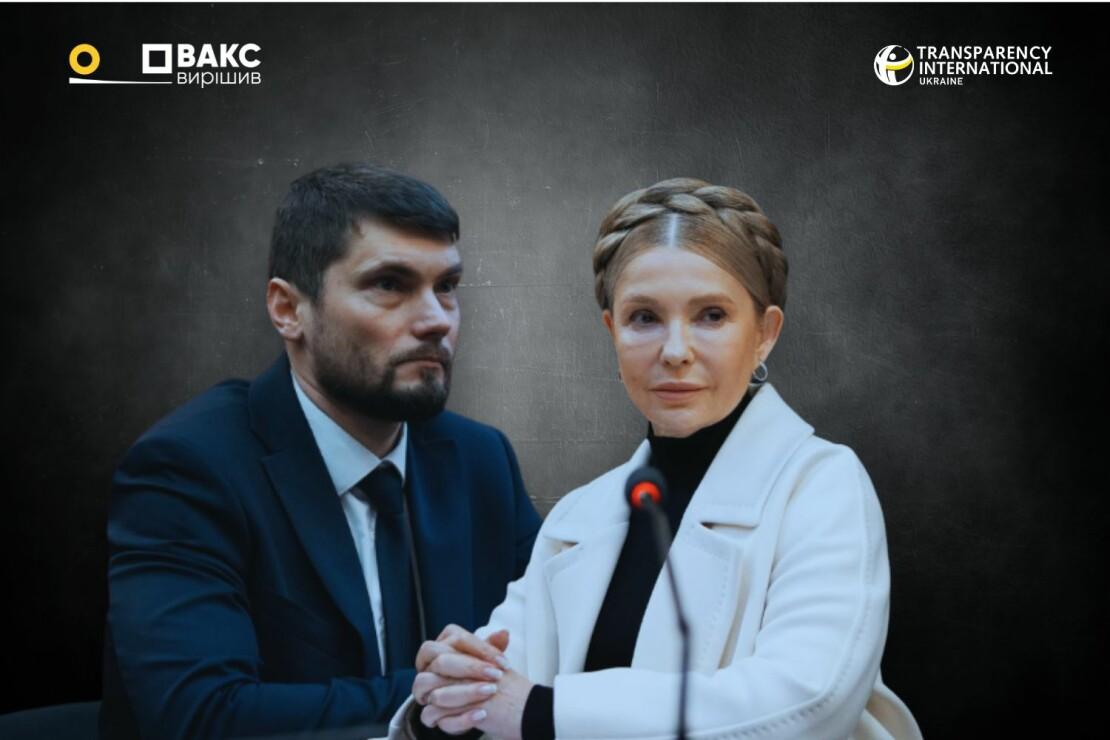
Photos used in the collage: Yan Dobronosov/Telegraf

.png)
.png)

.jpg)
.png)
.png)
.jpg)


.jpg)
.png)

.png)

.png)
.png)
.png)