
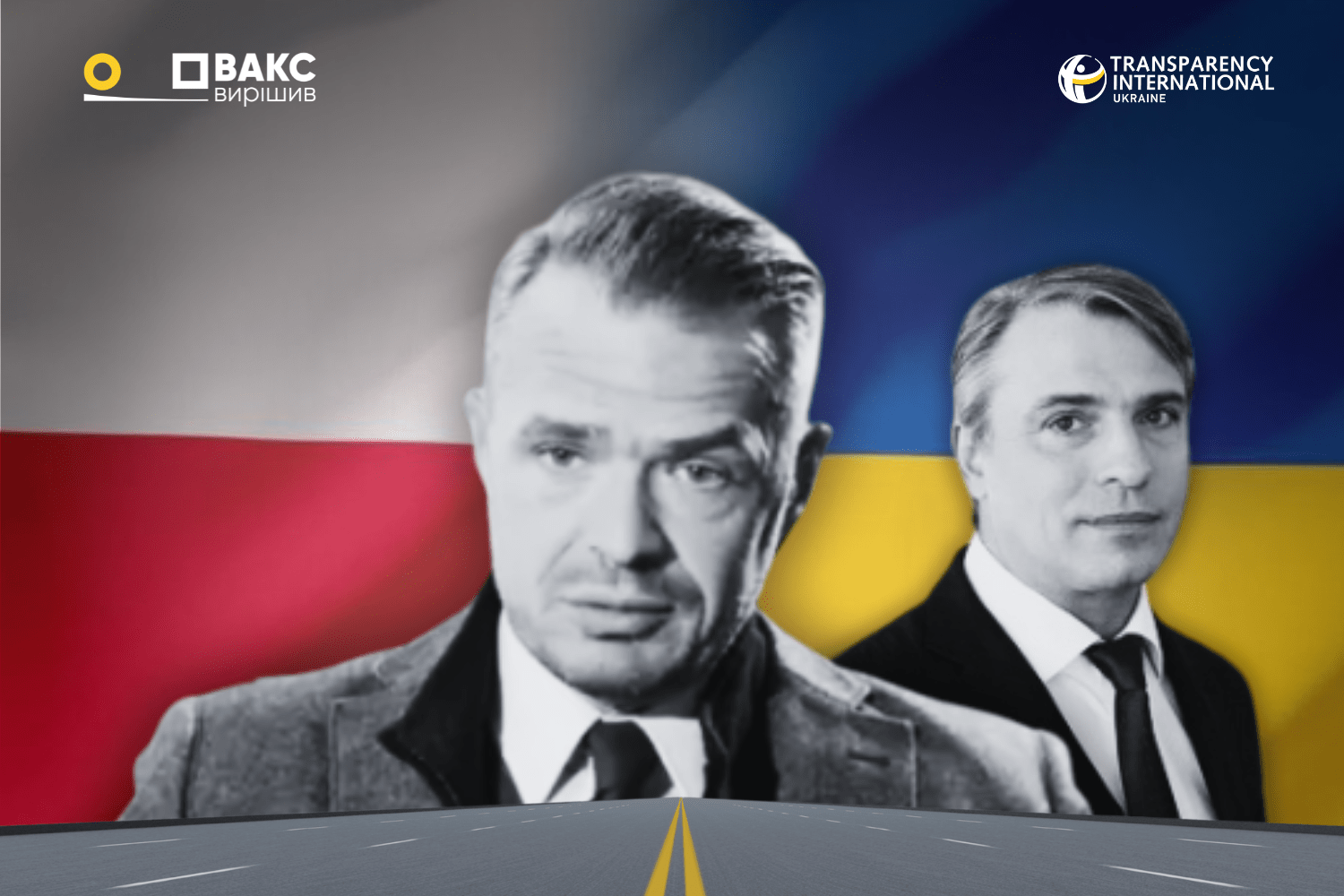


The case against former Ukravtodor acting head Sławomir Nowak marked Ukraine's first instance of exposing an especially serious corruption offense in cooperation with a foreign state. Proceedings launched in September 2019, and by November 2019 Ukraine and Poland had established a joint investigation team to probe the cross-border scheme. The indictment against key defendant — businessman Oleksandr Tislenko — reached the HACC in September 2022, with trial assigned in February 2023. Over five years into the investigation, the case remains in the evidence examination phase.
What the Ukravtodor case is about and why it matters
According to the NABU/SAPO, between 2017 and 2019 Nowak, serving as acting head of the State Road Agency of Ukraine, participated in a criminal scheme to receive improper benefits from contractor companies. Entrepreneurs paid for favorable treatment during the execution of state contracts financed by international loans, including from the European Bank for Reconstruction and Development (EBRD).
The scheme worked as follows: private company owners funneled bribes to Nowak through intermediary — Polish national Jacek Paluch. The money changed hands on Polish territory via elaborate financial chains: Ukravtodor tender participants topped up the charter capital of Polish companies controlled by Nowak associates. Total improper benefits exceeded $575,000 and €70,000. Testifying at the December 10, 2024 hearing, Paluch described how the codeword “joke” — concealed behind references to a Polish comedy and songs — was used to coordinate money transfers. Phrases like “when's the next joke” meant “when's the next delivery.”
The case matters not only because of the scale of damage and its international profile, but because it represents the first joint investigative team between the NABU and a foreign state for a serious corruption offense. The total value of loan funds that served as the pretext for bribery exceeds €270 million.
The main episode in the indictment concerns Altcom, which received a contract to overhaul highway M-05 Kyiv–Odesa, financed through an EBRD loan. Per the prosecution, Altcom owner Oleksandr Tislenko systematically paid Ukravtodor leadership bribes as a kind of “subscription fee.”
In exchange, Nowak approved contract payments, extended agreement deadlines, deferred work completion, and waived penalties — allowing the company to avoid a €9 million fine and contract termination.
Who is involved and what are the charges
The main defendants are:
Oleksandr Tislenko — owner of Altcom Road Building LLC, a company that rose to prominence during Euro 2012 preparations through major road and Olimpiiskyi stadium contracts. On April 13, 2021, he was served notice of suspicion of providing improper benefits to an official in an especially large amount, committed by prior agreement by a group of persons.
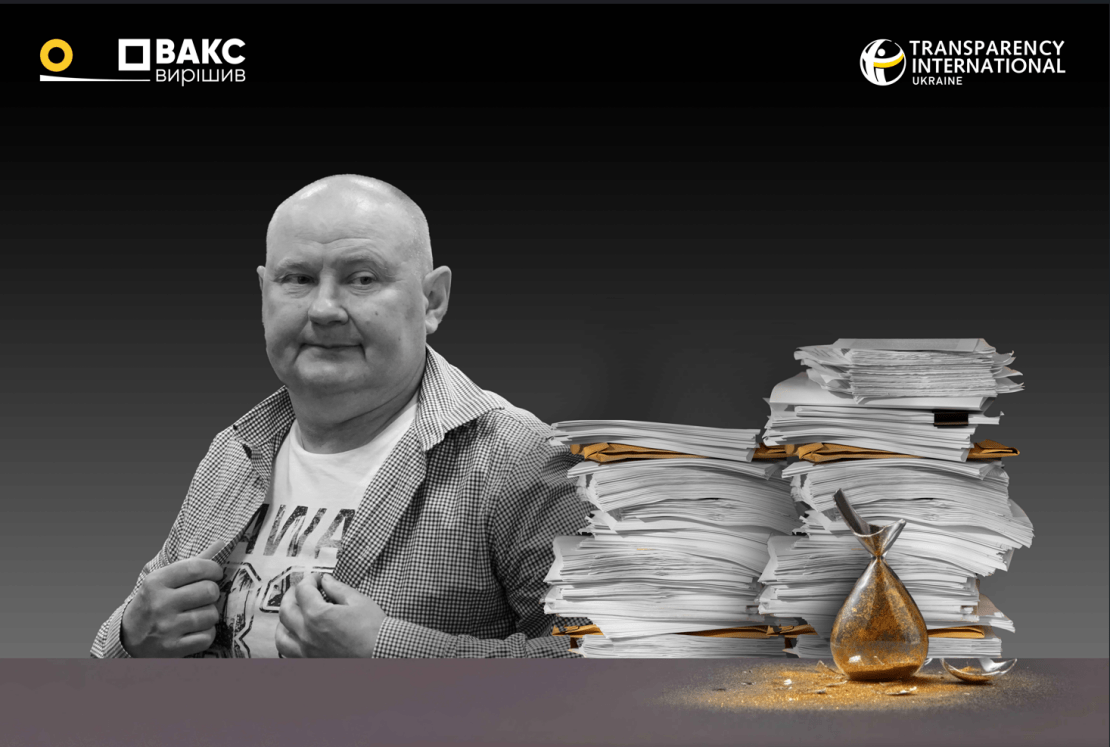
Sławomir Nowak — former acting head of the State Road Agency of Ukraine (Oct 2016 – Oct 2019), previously Poland's Minister of Transport and Water Management (2011–2013). His dual Ukrainian-Polish citizenship rendered extradition from Poland impossible. He was served notice of suspicion on July 20, 2020, of accepting improper benefits by an official occupying a position of special responsibility.
Jacek Paluch — Polish national, key prosecution witness, and intermediary in the bribery chain. He cooperated with Polish law enforcement. At the December 10, 2024 hearing, Paluch testified he met Nowak through his wife and maintained both professional and personal ties with him. Per trial monitoring records, Paluch used the money received from Tislenko to purchase a car and a Warsaw apartment.
Altcom Road Building LLC — named as a legal entity subject to criminal-law measures on the grounds that the offense was committed in its name and interests by its authorized person, Tislenko.
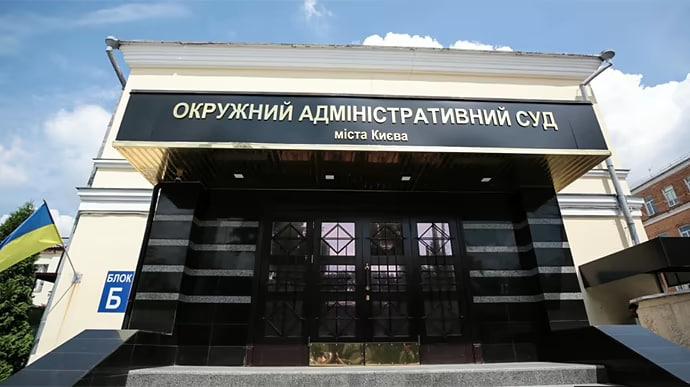
The HACC is currently trying Tislenko and Altcom Road Construction LLC. Nowak's case is being heard in Poland, while Paluch appears as a prosecution witness.
Why the trial is dragging on
Substantive proceedings at the HACC opened in February 2023 but have been plagued by delays. In 2024 alone, trial monitoring recorded at least seven postponements — due to a judge's leave, the defendant's illness, and technical failures.
One of the defense attorneys has repeatedly drawn warnings from the court for disrupting the proceedings, interrupting the presiding judge, and stalling tactics. At the December 10, 2024 hearing the judge issued two warnings and threatened to refer the matter to the Qualification and Disciplinary Commission of the Bar if violations continued. At the February 28, 2025 hearing, the same attorney claimed to be feeling “very unwell” and announced he would be stepping out periodically.
In 2025, sessions have been further disrupted by lengthy witness examinations, no-shows, and — on one occasion — defense counsel getting stuck in an elevator. The next hearing is scheduled for April 17, 2026. Given that the offense was committed in 2019, the statute of limitations runs to 2029.
What key decisions has HACC made during the preparatory proceedings?
During the preparatory proceedings (2022–2023), the HACC rejected defense motions to return the indictment and close the case, finding it compliant with the Criminal Procedure Code.
The defense argued that the indictment was not specific and that the prosecutor had not complied with the requirements of the law. The court held that formulation of charges and legal classification are matters of prosecutorial discretion, and that guilt is to be assessed at trial — not at the preparatory hearing stage.
On November 22, 2024, the court granted a prosecution motion to admit a Ukrainian-language copy of the indictment issued by the Warsaw District Prosecutor's Office in Polish criminal case No. 3041-1 Ds. 43.2021. Defense motions for temporary access to additional materials from the Polish proceedings were denied.
In rulings dated December 17, 2024, the court was sharply critical of Tislenko's claim that he lacked the funds to retain counsel — noting the inconsistency between presenting himself as a successful developer running large construction projects in South and Southwest Asia while simultaneously claiming financial hardship.
What is happening with Nowak's case in Poland
Polish Central Anti-Corruption Bureau officers detained Nowak on July 20, 2020, with simultaneous searches conducted in Kyiv, Lviv, and across Poland. In September 2020, investigators discovered two caches concealing over $1 million in cash. Additional assets were seized: two apartments worth approximately $550,000 and a Land Rover.
On April 12, 2021, a Polish court released Nowak from custody — prompting prosecutors to flag flight risk concerns. On July 7, 2021, the Warsaw District Prosecutor's Office presented Nowak with a supplemented indictment covering an additional €315,000. The full Polish indictment — covering Nowak, Paluch, and others — was filed on December 21, 2021, charging Nowak with leading an organized criminal group, extortion, accepting material and personal benefits in exchange for awarding road construction and repair contracts in Ukraine, and money laundering.
Trial in Poland began in 2024. Several proceedings were quickly split off, including what became known as the “Polish episode”— alleged bribery in exchange for appointments to lucrative positions at the State Treasury (Skarb Państwa). In September 2025, the Warsaw District Court (Mokotów) terminated that episode at the preparatory hearing stage, citing a manifest absence of factual basis for the charges — affecting 17 counts against Nowak. The ruling triggered a controversy: on October 10, 2025 — the last possible day — the Warsaw District Prosecutor's Office filed an appeal, arguing the court had exceeded its authority by conducting an impermissible substantive review of evidence at the pretrial stage.
In February 2026, the “Polish episode” was closed for good. The Warsaw Regional Court dismissed the prosecution's appeal, confirming the manifest absence of factual grounds. The presiding judge noted that the charges rested solely on Paluch's testimony, uncorroborated by any other evidence.
The main “Ukrainian” proceedings concerning corruption at Ukravtodor continue before the Warsaw Regional Court. Speaking to TVN24, Nowak said he took “bitter satisfaction” from seeing justice “rise to its feet” in his case, and expressed hope that those responsible for what he called fabricated charges would be held accountable.
Key evidence
The prosecution's central evidence is Paluch's testimony who agreed to cooperate with Polish law enforcement officers. At the December 10, 2024 HACC hearing he gave a detailed account of the bribery mechanism, the use of codewords, and the purchase of Warsaw real estate with the proceeds. Per trial monitoring records, Paluch testified that Tislenko handed him bundles of cash, that funds were to be held in offshore zones, and that he experienced no pressure from law enforcement.
Material evidence includes the fruits of the September 2020 searches: two cash caches totaling over $1 million discovered at Nowak's residence — part of it hidden inside furniture, found only during a second search after a witness tipped off investigators.
The prosecution also submitted video recordings of the searches and cash-counting procedures conducted in Poland and read into the record materials from covert investigative measures capturing coded communications among the scheme's participants. The defense contests this evidence, citing the absence of full Polish-language translations and alleged violations of the right to cross-examine witnesses.
What to expect
The HACC continues substantive proceedings in the evidence examination phase, with prosecution witnesses still to be examined. Given the volume of case materials, the number of defendants, and the complexity of the cross-border structure, the trial is likely to continue for some time.
The case presents unique procedural challenges: parallel proceedings in two jurisdictions and language barriers in evidence review.
Notably, on November 27, 2024, the Office of the Prosecutor General and the State Bureau of Investigations sent Poland a motion to take over prosecution of Nowak in a separate episode — failure to comply with a court judgment reinstating an official to a road authority post in one of Ukraine's regions.
The duration of these proceedings illustrates the challenge of investigating and trying complex cross-border cases. It is therefore critical that the evidence gathered receives proper judicial assessment — and that it does so within a reasonable timeframe.
This material is prepared by the Transparency International Ukraine team

.png)
.png)

.jpg)

.png)
.png)
.jpg)

.jpg)
.png)
.png)
.png)
.png)
.png)