

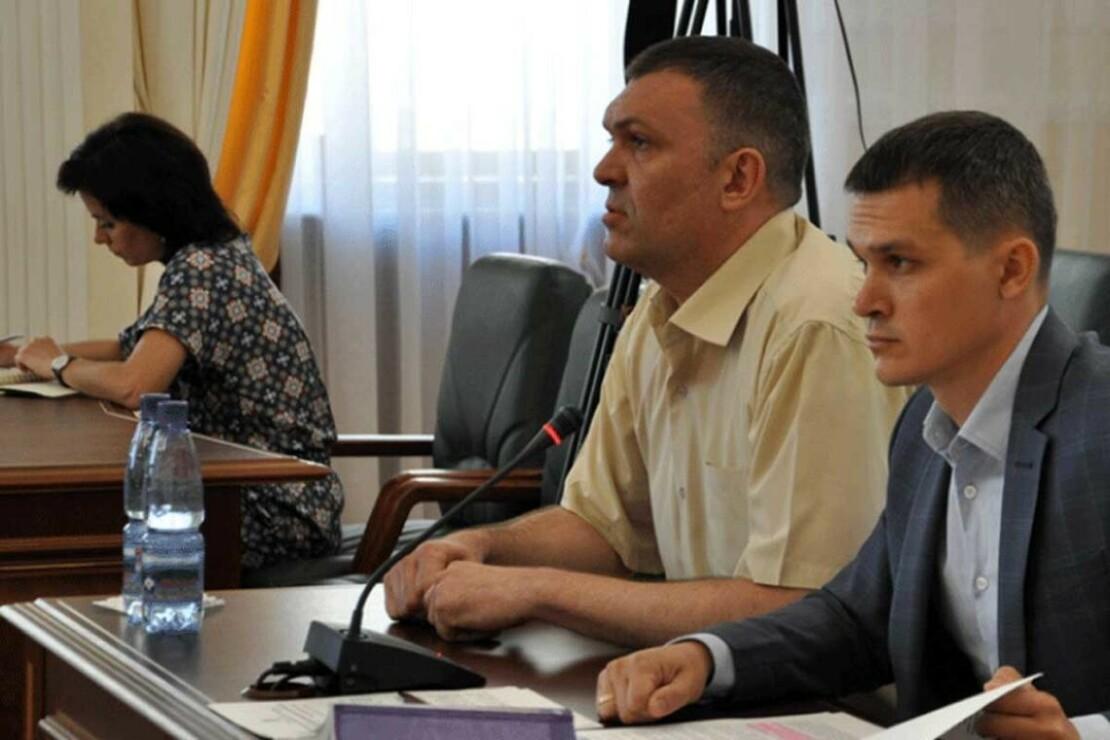
On August 10, 2022, the HACC found Serhii Laziuk, a judge of the Dzerzhynskyi District Court of Kharkiv, guilty of extorting bribes for rulings in civil cases. He was sentenced to 7 years' imprisonment with confiscation of property and a ban on holding the position of judge for 3 years.
According to the verdict, over 2015–2016 Judge Laziuk acted in two episodes. In the first, on May 22, 2015, in a court corridor, he made a request for an unlawful benefit to a plaintiff in a debt recovery case in exchange for a quick and lawful ruling in the plaintiff's favor: he first named 20–30% of the claim amount (around $20,000), then, after bargaining, accepted the plaintiff's offer of a sum not exceeding $3,000 and named the final amount — UAH 75,000. The court did not establish that any money was actually handed over in this episode.
In the second episode — a case concerning forced eviction from an apartment — Laziuk demanded $1,000 from the plaintiff's son for a ruling in the father's favor, threatening to delay the ruling or to overturn one already issued if he did not receive the money. The money was handed over in installments: he received $500 on November 2, 2015, in a court corridor near his office, and the remainder, reduced at request to $300, on January 21, 2016, in his office. In total, he received $800. The court later joined the two proceedings into one.
The criminal proceedings in the first episode were opened in March 2015. The investigation was initially handled by investigators for especially important cases of the Prosecutor General's Office, but they found no elements of a crime and closed the proceedings. The SAPO overturned this decision, but the then Prosecutor General Lutsenko overturned SAPO's ruling. Ultimately, NABU-SAPO began investigating the circumstances of the crime in October 2016.
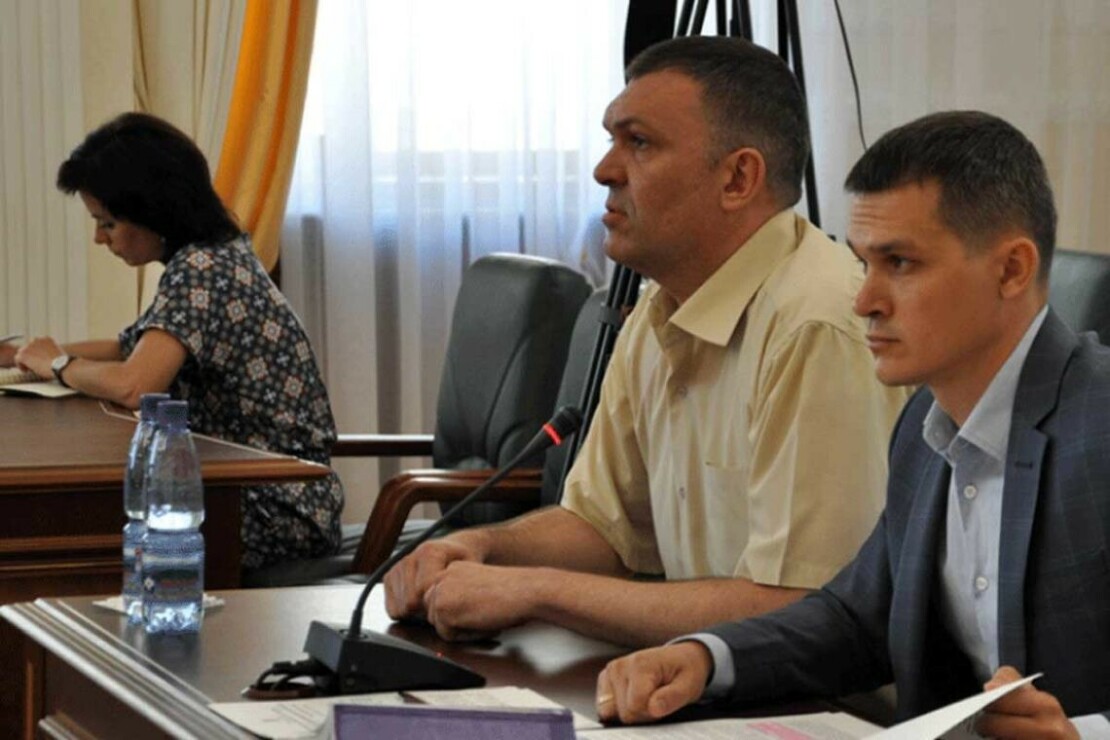
Laziuk's actions were classified under Article 368(3) of the Criminal Code of Ukraine. The HACC panel of judges sentenced him to 7 years with confiscation of property and deprivation of the right to hold the position of judge for 3 years.
However, one of the panel members, Judge Oleksii Kravchuk, disagreed with the decision; in his view, the proceedings should be closed because of a violation of the procedure for resuming the investigation and the unreliability of the key witness's testimony. The judge notes that the head of the SAPO had no authority to overturn the PGO investigator's ruling to close the case, and that the Prosecutor General allowed an unjustified delay (of almost a year) in reopening the proceedings, even though the grounds for classifying the actions as “a request to provide an unlawful benefit” under Article 368 of the Criminal Code of Ukraine had been obvious as early as the initial stage in 2015. In addition, the judge points to the inadmissibility of the testimony of a witness who had earlier provided exculpatory video recordings but changed them to incriminating ones in court.
Serhii Laziuk appealed the verdict to the HACC Appeals Chamber. After a year of appellate review, the HACC Appeals Chamber suspended the proceedings due to Serhii Laziuk's mobilization.
Serhii Laziuk serves as a squad commander in the command platoon of the mortar battery of the 225th Separate Regiment (military unit A7400), which was among the first to enter the territory of Kursk Region in September 2024. Currently, the soldiers of the 225th Regiment, under the command of Oleh Shyriaiev, have broken through the Russians' defenses in Belgorod Region.
Numerous times, SAPO prosecutors tried to challenge the decision to suspend the proceedings over the defendant's mobilization and asked the court to require him to join the hearings by video link. However, the HACC panel of judges refused every time. However, there were dissenting opinions from judges on at least three occasions. The common thrust of these dissenting opinions is that a defendant's mobilization should not be an automatic ground for suspending a trial, since this violates the principle of reasonable time limits and the right of access to justice. The judges emphasize that the panel did not verify the actual impossibility of Serhii Laziuk's participation in the hearings, ignoring the technical possibility of connecting him by video link, which is permitted by law and widely practiced for service members who are not directly in a zone of active hostilities. In their view, the groundless suspension of the case for an indefinite period creates conditions for evading criminal liability and contradicts the court's duty to ensure the continuity of the proceedings.
What is Judge Serhii Laziuk known for?
Judge Laziuk has a rather dubious reputation. In particular, his rulings often coincided with the interests of the then Kharkiv city authorities, which is why he is called “Kernes's pocket judge” or “Seierozha-Quarter” for allegedly demanding 20–30% of the claim amount.
Laziuk is also associated with supporting the felling of Gorky Park in Kharkiv and with recognizing Russian as a regional language, and back in 2008 he acquitted the then Mayor of Kharkiv, Mykhailo Dobkin, and the secretary of the city council, Hennadii Kernes, in a case concerning the unlawful possession of drugs.
The Gorky Park episode is perhaps the most telling in Serhii Laziuk's biography. In 2010, the mass felling of trees in this park began in Kharkiv for the construction of a new road. Kharkiv environmental activists set up a tent camp, trying to stop the felling with their own bodies, but force was used against them by unidentified men in black uniforms (the so-called “municipal guard”) — on the morning of June 2, 2010, it was such men, together with loggers, who dispersed the tent camp, while the police detained activists en masse.
It was Laziuk who was the judge that “legalized” these detentions: on June 9, 2010, he handed down a ruling ordering 15 days of administrative detention for two defenders of the park — Andrii Yavornytskyi and Denys Cherneha — whom Amnesty International later recognized as prisoners of conscience.
For this ruling, the Ukrainian Helsinki Human Rights Union awarded Laziuk and the then Mayor of Kharkiv, Hennadii Kernes, joint third place in the category “For violating the right to peaceful protest during the public's defense of Kharkiv's Gorky City Park” of its annual “Thistle of the Year 2010” anti-award.

 19/09/2019


