



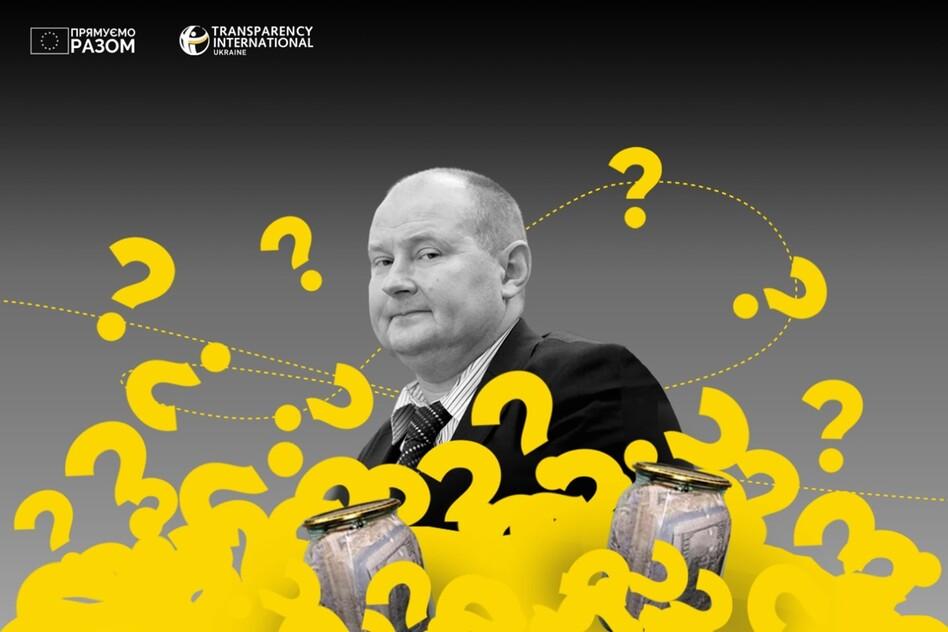
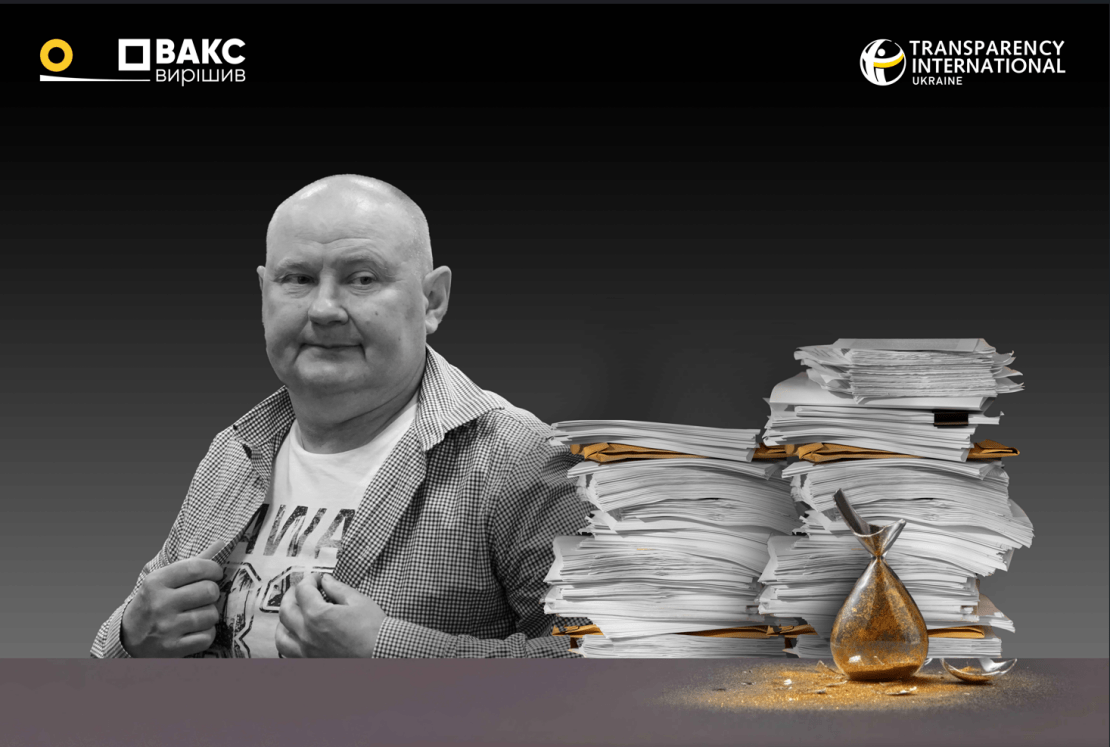
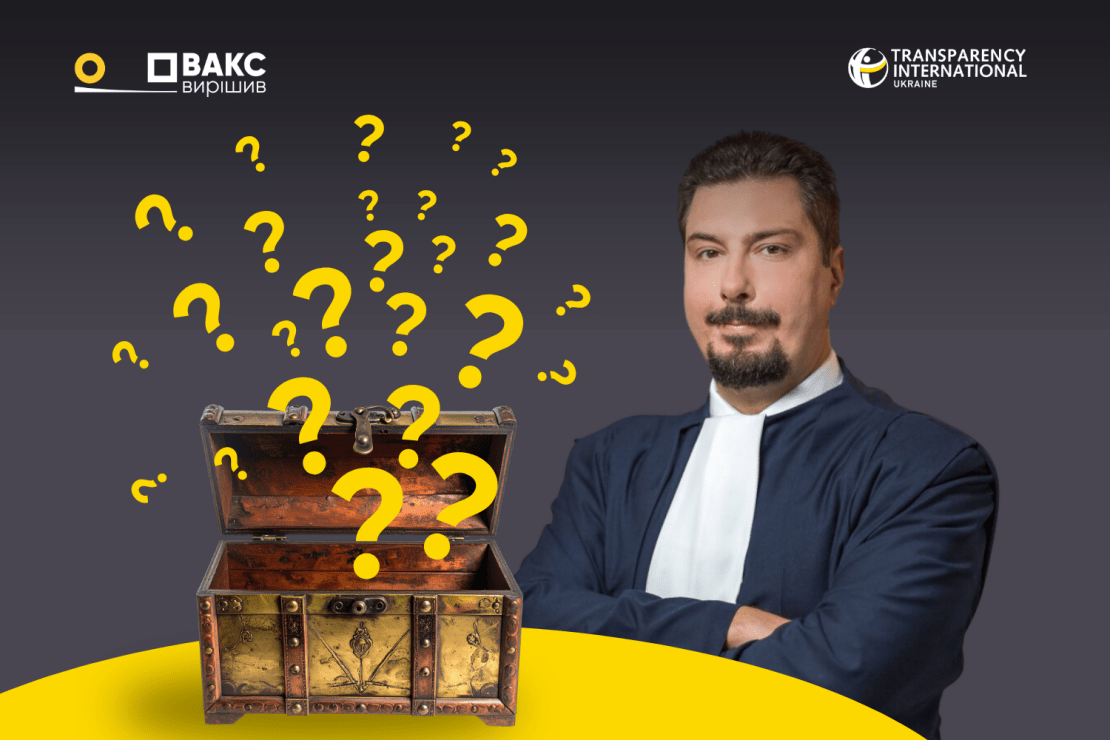
The Ministry of Justice announced that on August 31, 2026, $1.25 million (over UAH 55.6 million) was transferred to the state budget — money confiscated under a HACC verdict in the case of a former Chair of the Supreme Court. This was Vsevolod Kniaziev, who entered into a plea agreement in a bribery case and received a five-year prison sentence along with additional penalties. You can read more about it at the link.
This is good news — and not an isolated case. According to the State Treasury Service, in 2025 alone UAH 965 million came into the budget under a dedicated budget code from confiscations in corruption and corruption-related crimes. That is a sizable flow of money — but could it be larger?
How much the HACC orders confiscated — and how much reaches the budget
According to the official statistics of the High Anti-Corruption Court, in 2025 special confiscation was applied in 13 proceedings, totaling UAH 673,015,256, while confiscation of property as a punishment featured in 32 proceedings, totaling UAH 42,501,771. In the first half of 2026, special confiscation was applied in 9 proceedings, totaling UAH 71,765,801.42, with the value of confiscated property not specified.
_page-0001.jpg)
So HACC verdicts alone ordered more than UAH 715 million confiscated in 2025. Revenue under the corresponding budget code for the same year was UAH 965 million. These figures need not match exactly: the treasury can also receive money from rulings in earlier years and from rulings by other courts in corruption cases, not only the HACC.
In total, the following sums were received into the general fund of the state budget under the code “Funds from the sale of property and receipts of national and foreign currency confiscated by court decision for the commission of a corruption or corruption-related offense (excluding receipts to the special-purpose fund for ensuring the state's defense and security)”: UAH 392,868.86 in 2021; UAH 798,689.06 in 2022; UAH 2,200,213.11 in 2023; and UAH 107,567,681.48 in 2024.
Where transparency breaks down in enforcing confiscation orders
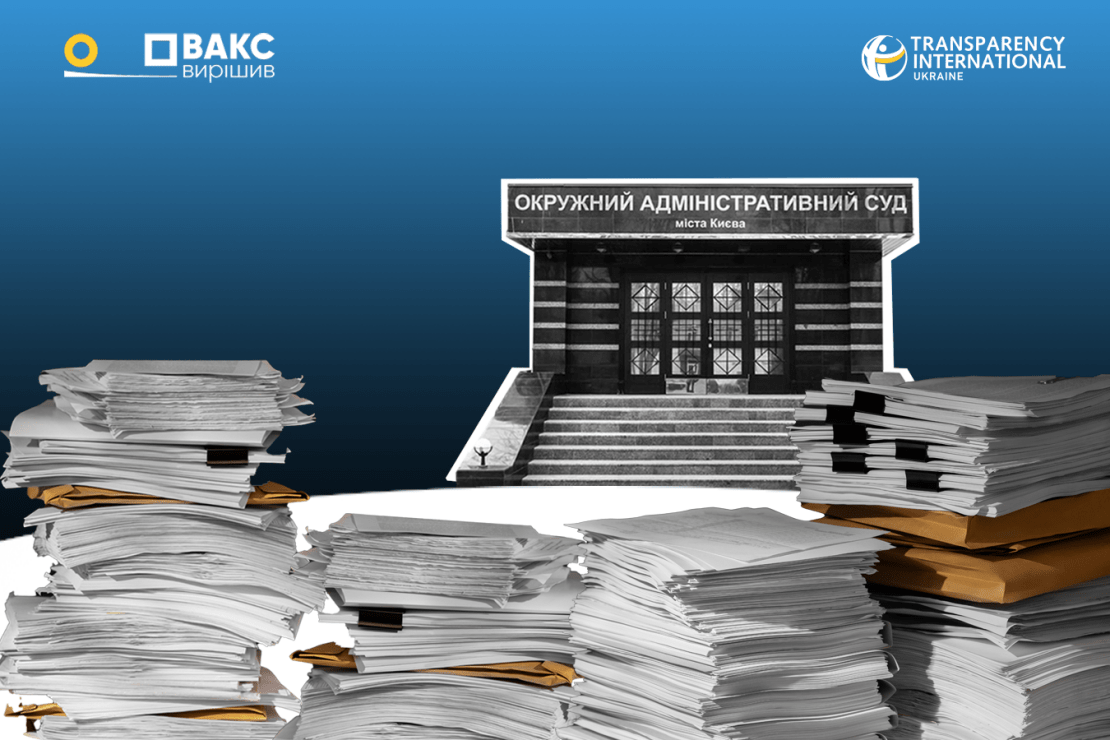
Yet specific information on which court rulings have been enforced and which have not is impossible to find. The enforcement service's statistics on the Ministry of Justice website do not allow one to single out the actual sum recovered from enforcing court rulings. Our own research, meanwhile, shows that problems with the actual enforcement of rulings do exist — and, unfortunately, they are not rare. These include repeated unsuccessful auctions on SETAM and the opacity of the enforcement process itself.
Statistics obtained from the Ministry of Justice on request record UAH 236 million in revenue from the sale of confiscated property in 2025, whereas the UAH 965 million cited above is Treasury data for a narrower, special category: corruption and corruption-related criminal offenses.
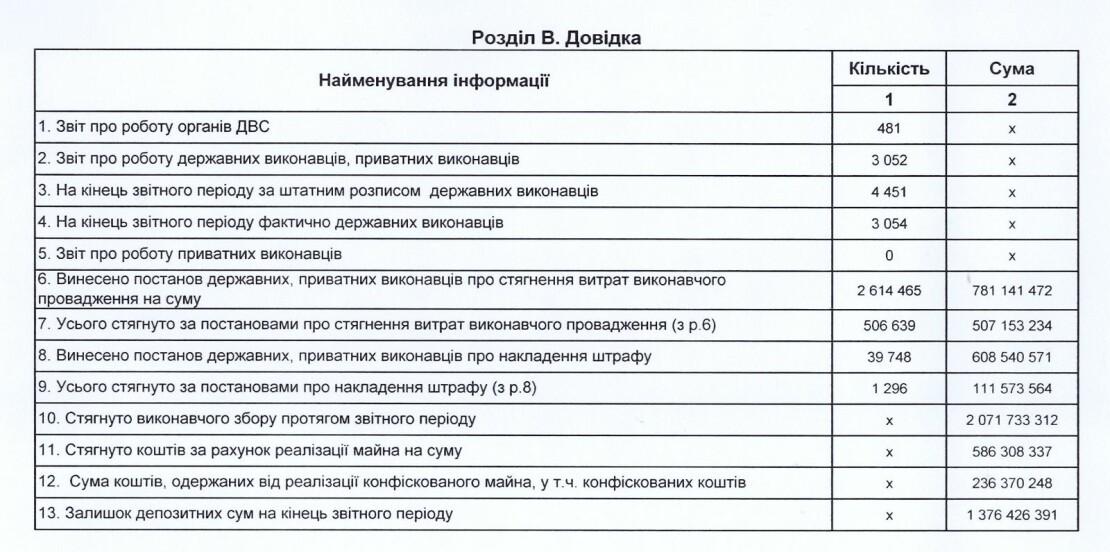
These two figures are clearly calculated in different ways, which leaves no clear data to work with. On top of that, in response to a request from Transparency International Ukraine, the Ministry of Justice said it does not track how many confiscation rulings have been enforced on a per-verdict basis. So we can see the aggregate UAH 965 million, but there is no public way to trace what share of the specific UAH 673 million the HACC ordered in 2025 has already been collected, and what share is still being enforced.
What needs to change?
Tellingly, this very gap is meant to be closed by a measure already set out in the Rule of Law Roadmap. By the fourth quarter of 2026, a coordinated system is to be introduced for collecting, analyzing, and publishing statistics on pre-trial investigations, indictments, and court proceedings in cases of corruption offenses and high-level corruption — including the use of seizure and confiscation (and the enforcement of confiscation rulings), as well as similar measures against legal entities. The bodies responsible are the NACP, the SJA, and the Prosecutor General's Office.
So the state itself has set the deadline — the end of 2026, only a few months away — for a system that should show exactly what is missing now: a consolidated, verifiable picture of how much has been ordered and how much has actually been collected in corruption cases, confiscation included.
Prepared by the Transparency International Ukraine team

.png)
.png)

.jpg)
.png)
.png)

.jpg)



.jpg)

.png)

.png)

.png)
.png)
.png)