
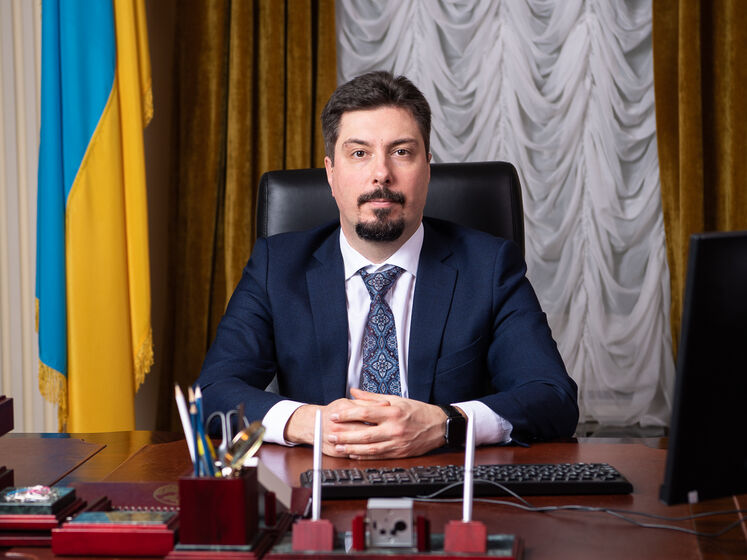
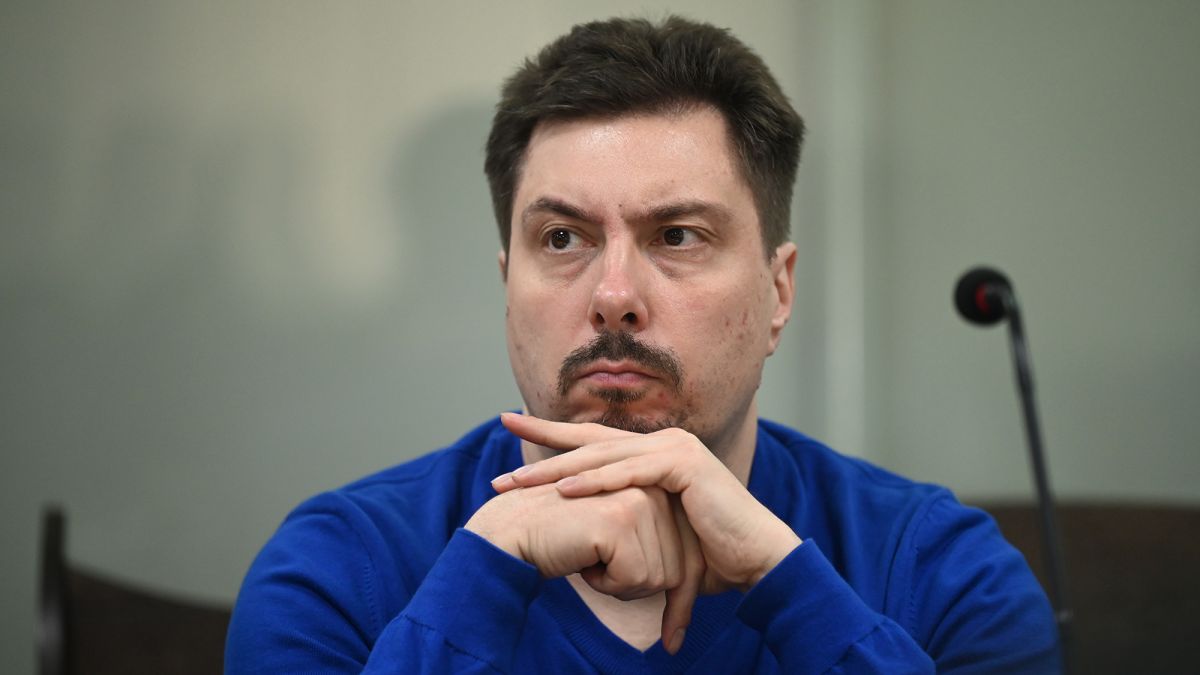
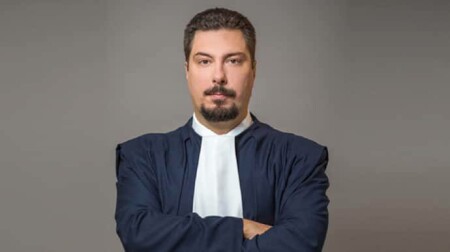
The HACC found former Supreme Court Chairman Vsevolod Kniaziev guilty of accepting an offer of, and receiving, a bribe for performing actions through the use of his power and official position.
In May 2023, NABU detectives exposed Kniaziev, along with lawyer Oleh Horetskyi, for receiving a $2.7 million bribe. According to the investigation, Kniaziev, in collusion with lawyer Oleh Horetskyi and notary Kyrylo Horburov, organized a scheme to receive bribes in exchange for passing the required court ruling in the interests of oligarch Kostiantyn Zhevaho.
According to the prosecution, the scheme was built by the intermediaries — lawyer Horetskyi and notary Horburov — while Kniaziev secured the outcome inside the court. Horburov, in particular, acted as an intermediary in the negotiations between the lawyer and the judge.
The total bribe in the case was $2.7 million, Kniaziev knew of only $2 million, of which $1.8 million was to go to the judges and the rest to the intermediaries. Horetskyi and Horburov intended to secretly pocket the remaining $700,000.
Kniaziev set the amounts and the manner of distributing the bribes, took receipt of the cash, and passed it on to the judges. Oleh Horetskyi, acting under the cover of his legal practice, sought out persons willing to pay a bribe, collected the funds from them, created cover documents (contracts), stored the money in his office and a bank safe deposit box, and passed it to Horburov. Kyrylo Horburov assisted in collecting and transferring the bribes, and personally delivered the cash to Kniaziev.
The scheme operated for the benefit of oligarch Kostiantyn Zhevaho and his company Ferrexpo AG. The Grand Chamber of the Supreme Court was to overturn the ruling of the Northern Commercial Court of Appeal of September 12, 2022, under which Zhevaho's company stood to lose control over the shares in the Poltava Mining and Processing Plant. In January 2023, Zhevaho's confidant — the security director of his company — reached out to Horetskyi, who was believed to have close ties to Kniaziev.
.jpg)
On April 19, 2023, the Grand Chamber, with Kniaziev taking part, did overturn the appellate court's ruling, effectively returning the shares to the oligarch's control. To disguise his interest in the outcome, Kniaziev resorted to a ruse: he deliberately joined another judge's dissenting opinion, so as to create the illusion of detachment from the ruling in favor of Ferrexpo AG.
On May 1, 2023, Kniaziev sent the intermediary, Horburov, precise instructions on exactly how to package the first tranche of the bribe. He ordered 13 packages to be made up:
- ten packages of $100,000 each;
- two packages of $150,000 each;
- one package of $50,000.
The remaining $450,000 he ordered left in the safe for the time being.
The money was packaged, though a counting error left the sum $1,200 short, and as early as May 3 the intermediary brought $1.348 million to Kniaziev's home. On May 8, Kniaziev reported to the intermediary that part of the bribe had been passed to the judges and gave the order to bring the rest.
The final $450,000 Horburov delivered to Kniaziev's apartment on May 15 — and it was during this very visit that NABU and SAPO caught him red-handed.
In court, the defense and Kniaziev himself argued that, while he was under surveillance, the investigation had interfered with his private life. In the defense's view, the records of the covert investigative actions had been drawn up with violations, so the resulting evidence should be ruled inadmissible.
Vsevolod Kniaziev is charged under Article 368(4) of the Criminal Code of Ukraine.
The HACC found him guilty and approved a plea agreement. Kniaziev fully admitted his guilt and agreed to give incriminating testimony against his accomplices. He was sentenced to five years' imprisonment, together with a three-year ban on holding positions in judicial and law enforcement bodies. The court also ordered the confiscation of:
- an apartment and a house in Mykolaiv;
- UAH 32,000;
- €1,700;
- $201,000.
Special confiscation was applied to the $1.248 million that constituted the unlawful benefit.
Kniaziev must also transfer funds totaling $1.1 million in support of the Armed Forces of Ukraine.
The agreement became possible after Kniaziev provided incriminating testimony. On the basis of that testimony, law enforcement served notices of suspicion on other persons involved in the case. According to the investigation, Grand Chamber judge Zhanna Yelenina, Supreme Court judges Iryna Hryhorieva and Ihor Zhelieznyi, and retired judge Oleksandr Prokopenko accepted unlawful benefits in exchange for ruling in Zhevaho's interests.
Since February 2024, he has been suspended from the administration of justice until the verdict of the Anti-Corruption Court comes into force or the case against the judge is closed. Even earlier, almost immediately after being served with the suspicion, the Supreme Court Plenum removed him from the post of court chairman.
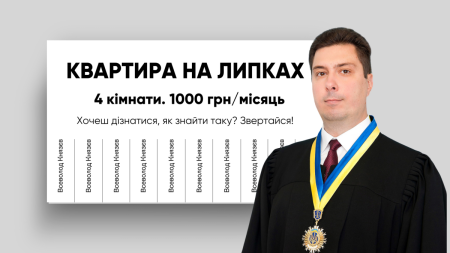
Administrative proceedings were also initiated against Kniaziev. During the search, the judge was found to have a contract under which he rented a 4-room apartment in Kyiv for UAH 1,000. At the end of 2023, the court found the former Supreme Court chairman guilty of violating the anti-corruption restrictions on gifts, fined him UAH 2,550, and ordered the confiscation of the sum by which the rent fell short of the property's actual value — UAH 906,000. Since Kniaziev did not return these funds voluntarily, the enforcement service seized his assets and his ex-wife's property for compulsory recovery.
After that, the NACP reported to the High Council of Justice, which subsequently opened a disciplinary case. The HCJ resolved to hold Vsevolod Kniaziev disciplinarily liable and to dismiss him from the position of Supreme Court judge. In December 2024, the Grand Chamber of the Supreme Court upheld that decision, which marked the final stage of the disciplinary proceedings against Kniaziev.
Lawyer Oleh Horetskyi has already entered a plea agreement — for offering a bribe to an official and for fraud. As a result of the court's verdict, Horetskyi was exempted from serving 5 years in prison and was assigned probation for 3 years.
Kyrylo Horburov, by contrast, was not even served with a notice of suspicion. Kniaziev's defense attorney stated that Horburov was a NABU agent and actually provoked the crime in the interests of the NABU.
.png)
.jpg)

 04/03/2024
 952 days
 Imprisonment


.png)