

A year ago, the NABU and the SAPO made public Operation Midas, a case of corruption in the energy sector. We look at the legislative loopholes the case has exposed and at what Parliament must do to close them.
First published by Glavcom.
“Please, make it so that everything I touch turns to gold,” King Midas begged the god Dionysus. In the myth, the gift nearly destroyed the king. In our reality, the NABU and SAPO operation of the same name has shown the opposite: the “gold” generated by corrupt schemes can often serve as a shield against justice.
The year since Operation Midas became public should have been a turning point. Instead of teaching that punishment is inevitable, however, it has become something of a manual on how money of likely criminal origin protects its owners. Front companies posted bail for the suspects with money of dubious origin. In one case, according to the investigation, the money had been laundered specifically for that purpose. According to the NABU, a cottage development was built with illegally obtained money, and the plan was to run it through a chain of transactions to shield it from potential confiscation. The investigation itself depended on expert examinations that were deliberately delayed, including by putting pressure on experts, and it suffered from leaks. Even so, the pre-trial investigation has now been completed. That raises the question of what decisions Parliament must make to close these routes.
In this piece, we examine how Midas suspects got out of pre-trial detention on bail of dubious origin, how they tried to shield the Dynasty mansions from confiscation, and where the investigation proved most vulnerable: expert examinations and leaks. We also explain which legislative changes could close these loopholes.
How the Midas investigation unfolded
On November 10, 2025, the NABU and the SAPO announced that they had exposed a criminal organization in the energy sector. According to the investigation, its members demanded kickbacks of 10–15% of contract value from Energoatom’s counterparties and laundered the money through a back office in central Kyiv. According to the NABU, approximately $110 million and €12 million passed through this “laundry.” Searches of the suspects’ premises took place that same day.
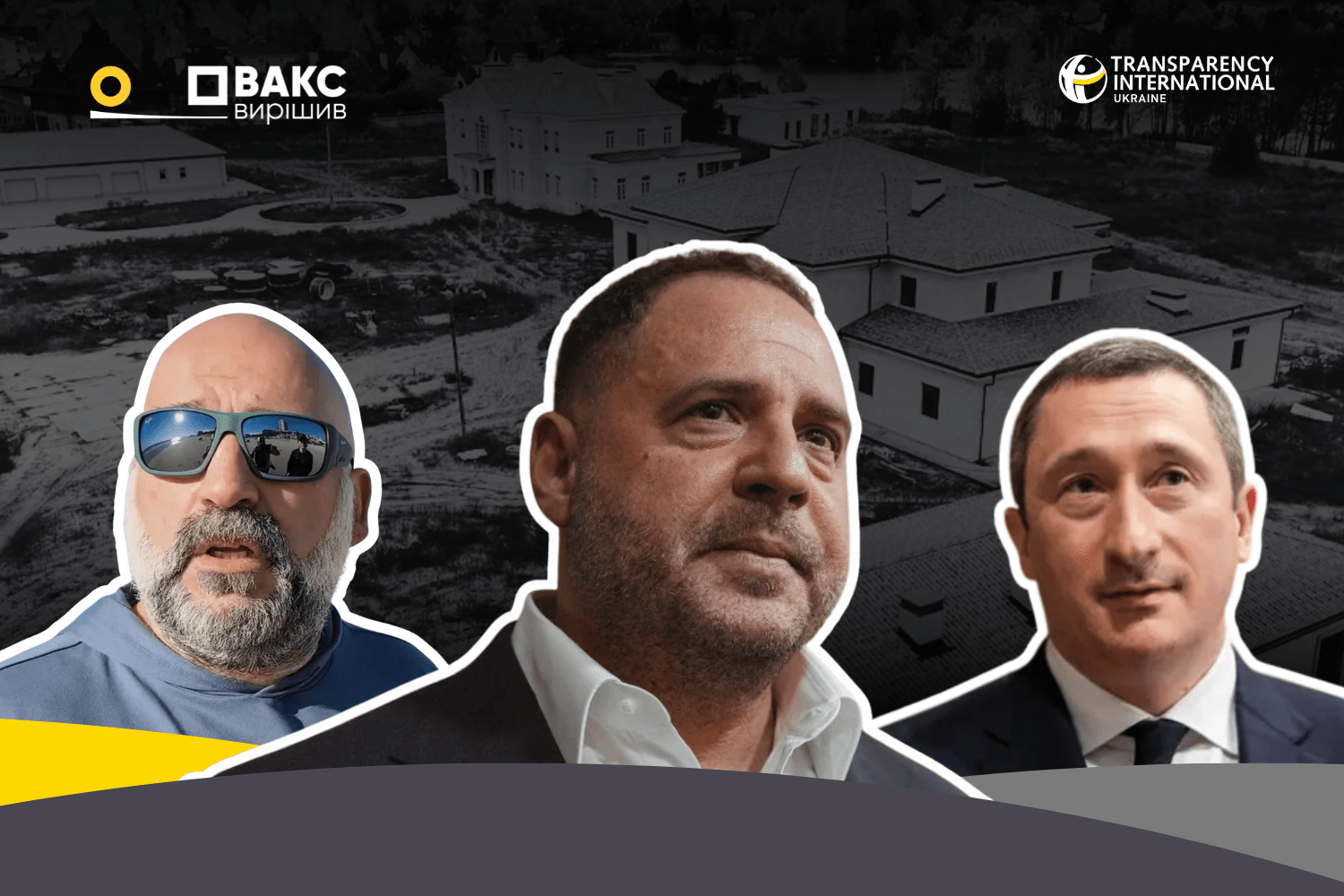
Over the following days, eight people were served with notices of suspicion of participating in a criminal organization. Investigators regard businessman Timur Mindich as the organization’s leader. The other suspects include former Deputy Prime Minister Oleksii Chernyshov, energy sector officials, and back-office staff. Two officials, a former adviser to the Minister of Energy and an executive director of Energoatom, were also suspected of receiving an unlawful benefit. Chernyshov was also suspected of false asset declaration and illicit enrichment.
In February 2026, Herman Halushchenko was served with a notice of suspicion of money laundering and participation in a criminal organization. He was a former Minister of Justice and, before that, Minister of Energy. His name had come up on the tapes earlier, but he was served with the notice only several months later, when he tried to leave the country.
In May, the investigation reached another episode: Dynasty. This is the name of an elite cottage development in Kozyn, near Kyiv. According to the NABU, UAH 460 million was laundered during its construction. In this episode, former Head of the Office of the President Andrii Yermak was served with a notice of suspicion of money laundering. He had been dismissed from the Office of the President back in November, amid the first wave of suspicions in Midas. Chernyshov, Mindich, and several others were also named as persons involved in the case.
In October 2026, one of the episodes of Chernyshov’s alleged illicit enrichment, worth $500,000, was reclassified as a more serious crime: money laundering. On November 4, the NABU and the SAPO completed the pre-trial investigation. Over almost a year, they had documented thousands of hours of covert investigative (search) actions.
However, the story does not end there. In November 2026, another notice of suspicion of money laundering became public. The SAPO notes that a number of proceedings have been severed from the case file, and in these, investigations into bribery in the energy sector, money laundering, and other crimes are continuing.
Who paid for the Midas suspects’ freedom: the bail loophole
The Midas case very soon went beyond a mere investigation and exposed important gaps in the legislation. One of them concerns bail.
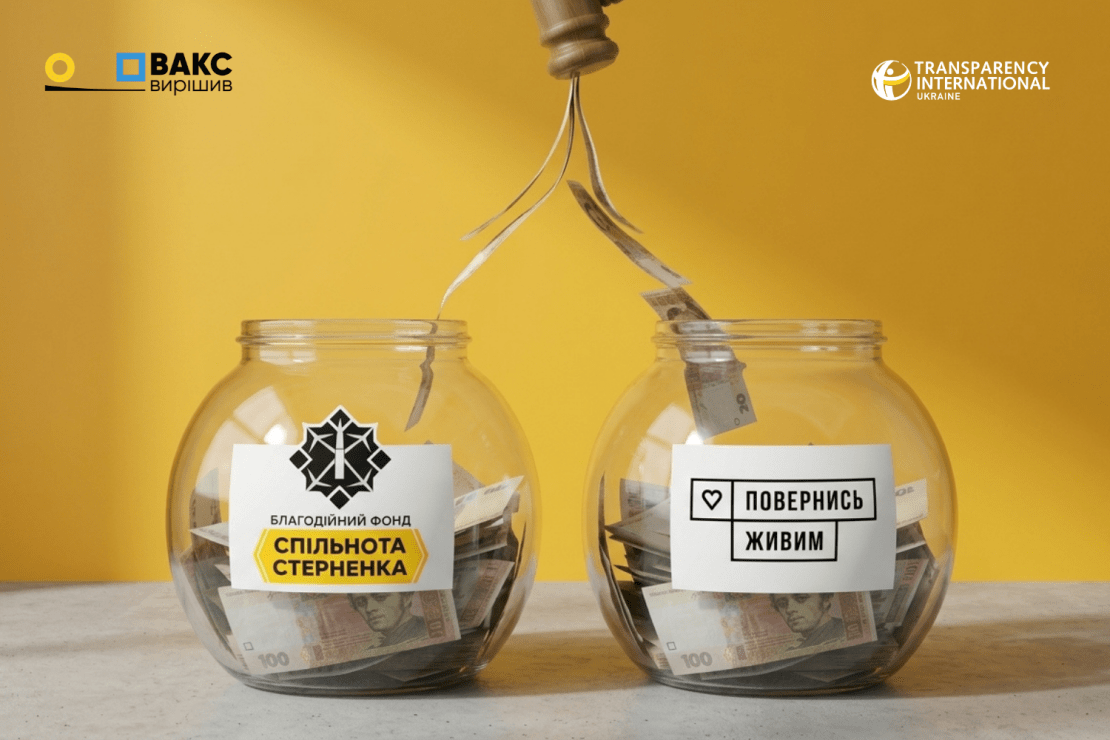
Bail is meant to guarantee that a suspect will not flee and will meet their procedural obligations. But Midas has shown that this tool has a weak spot: the money posted as bail may itself be of dubious or even criminal origin.
We covered the preventive measures imposed on the Midas suspects, and how they changed, in a separate piece. Here, we focus on the most high-profile cases.
On November 12–13, 2025, the HACC remanded Lesia Ustymenko and Liudmyla Zorina in custody, with the alternative of bail set at UAH 25 million and UAH 12 million, respectively. On November 13, Kyiv-based Vanhar LLC posted a total of UAH 37 million for both back-office employees. Journalists from Schemes found that the company had been registered only in May 2025, with authorized capital of UAH 1,000, and listed furniture manufacturing as its main activity. The journalists could find no evidence of any real business activity by the company that would explain where these funds came from. This raised doubts about whether the bail money really belonged to this company or came from other sources.
The problem was even more striking in the case of Herman Halushchenko. The court set his bail at UAH 200 million and later reduced it to UAH 150 million. On June 29, the money was posted, and the former minister was released from the pre-trial detention center.
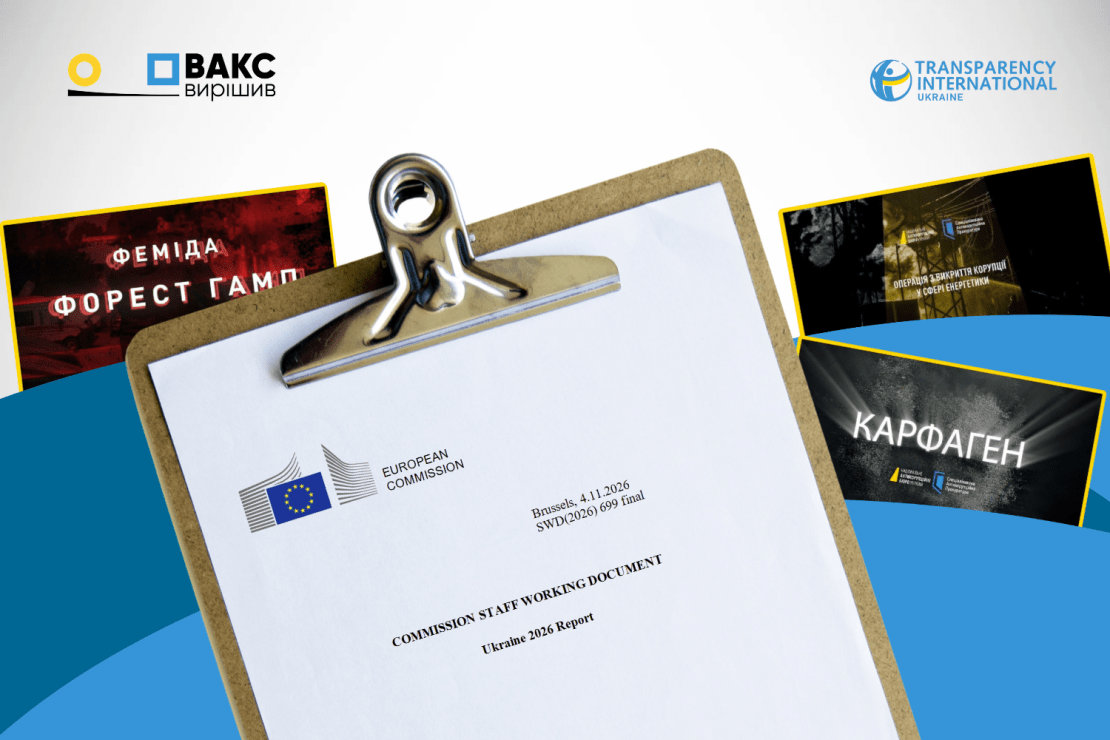
Where this money came from became clear in August, when the NABU and the SAPO announced that they had exposed new schemes, dubbed Forrest Gump and Themis. According to the investigation, a group led by former MP Maksym Mykytas and Deputy Head of the Office of the President Iryna Mudra took de facto control of the state-owned Sense Bank and used a chain of controlled companies to post Halushchenko’s bail. The money came from a so-called “slush fund” that was filled through corporate raiding and corrupt deals.
The preventive measure hearings in the Forrest Gump case revealed how the scheme worked. From June 9 to 22, 2026, its participants looked for bail payers and worked out how to launder the funds. From June 22 to 29, they transferred the laundered money to the HACC account. According to Ukrainska Pravda’s sources, four companies posted the bail: Tetras Optima LLC: UAH 54 million Giran Construct LLC: UAH 87 million Skate Retail LLC: UAH 5 million Pellet Service LLC: UAH 4 million.
Because of gaps in the legislation, the source of bail funds is checked only under the general rules before the money reaches the court’s deposit account, and this check is sometimes poor. Any individual or company, except state-owned or municipally owned ones, can post bail for a suspect. As a result, the anti-corruption bodies have to establish where the money came from after the fact and send requests to the State Financial Monitoring Service. NABU Director Semion Kryvonos said on Ukrainska Pravda’s broadcast that the Bureau waits “abnormally long” for responses to such requests.
Draft Law No. 15388 could fix this. It proposes making information about bail payers public, verifying both the payer and the origin of funds posted as bail, and suspending the crediting of these funds if their lawful origin cannot be confirmed. In certain cases, it proposes that such bail be forfeited to the state in full or in part.
We at TI Ukraine believe these changes could make the posting of bail more transparent. However, some provisions need to be balanced so that they do not threaten the right to liberty or lead to the unlawful disclosure of personal data. Bail should be forfeited to the state only when the lawful origin of the funds has not been confirmed.
The Dynasty mansions: how to avoid confiscation
On May 11, 2026, the NABU and the SAPO served former Head of the Office of the President Andrii Yermak with a notice of suspicion. It concerns the laundering of more than UAH 460 million through the construction of the Dynasty cottage development in Kozyn. At the same time, the NABU published a memo setting out a plan that, according to the investigation, the suspects had prepared in case their assets were seized and confiscated.
The story of the mansions began long before this plan. In 2019, the Kozyn territorial community sold a 4.25-hectare land plot for UAH 9 million. Investigators estimate its market value at no less than UAH 43 million and as much as UAH 180 million. A gated cottage development was later built on the plot. Its owners and nominees were changed several times to put as many legal “layers” as possible between the actual beneficiary and the asset. In the end, Oleksii Chernyshov, whom the NABU considered the organizer of the scheme, is not even mentioned in the documents.
The Bihus.info investigation brought publicity, and the NABU opened its investigation. After that, the actual owners wanted to shield the cottage development from potential seizure and confiscation.

In its materials on the case, the NABU published the suspects’ plan. It targeted a specific gap in the legislation: property held by a third party can be confiscated only if it is proven that this party “knew or could have known” about the property’s criminal origin. The suspects did everything they could to carry out the five steps described in the plan. Fortunately, they did not manage to finish.
Implementing Directive (EU) 2024/1260 is meant to close exactly this loophole. The Directive allows a court to proceed on the basis that the property is disproportionate to lawful income, without having to prove that each acquirer knew where the property came from. Under the Rule of Law Roadmap, Ukraine must implement the Directive by Q2 2027, but the European Commission recently shortened the deadline for this task. The Dynasty case shows clearly why this commitment must be fulfilled in substance rather than as a box-ticking exercise.
Independent expert examinations and leaks: where the investigation is vulnerable
In its 2025 Enlargement Report, the European Commission calls the lack of access to independent forensic examinations a systemic problem. Corruption cases are often economic in nature, so much depends on how the value of works and the amount of damages are assessed. When expert institutions are overloaded and experts are pressured or bribed, evidence in corruption cases is gathered more slowly and less thoroughly.
In response to our request, the NABU reported that it had ordered more than 50 expert examinations during the Midas investigation. Most of them have been completed, but it is unknown how long they took. SAPO Head Oleksandr Klymenko also spoke about threats against an expert in the Dynasty case: she was pressured not to complete the valuation of the Kozyn mansions.
We at TI Ukraine have been calling for years for the NABU to have access to independent forensic examination, and the issue is still unresolved. On August 27, 2026, Draft Law No. 15569 was registered in the Verkhovna Rada to provide the NABU and the SAPO with an independent forensic institution. It proposes reorganizing the Research Center for Forensic Examinations of the Ministry of Justice into an autonomous Research Center for Independent Forensic Examinations. The Center would be able to deliver genuinely timely, high-quality, and objective forensic examinations in NABU and SAPO cases. It would also have separate funding, a special governance procedure, and its own guarantees of independence.
We at TI Ukraine support adopting this draft law as a basis, with minor revisions.
The second vulnerability is leaks. On May 8, 2026, Ukrainska Pravda published the third installment of the “Mindich tapes.” According to the outlet, in these recordings the suspects discuss Andrii Syniuk, then Deputy Head of the SAPO, and call him a “good contact” at the anti-corruption prosecutor’s office. The protocols also record that on October 16, 2025, Syniuk used his personal access to the internal pre-trial investigation system to look up the parties to certain cases, including the Midas suspects. He was not a member of the prosecution team in these proceedings.
At the time, SAPO Head Oleksandr Klymenko confirmed that there had been at least two information leaks during the operation. Criminal proceedings were registered over them, but no active investigative actions were taken then, so as not to jeopardize the main operation. Since then, the NABU and the SAPO have been dealing with the problem using their own internal resources, but we have yet to see any results in the criminal proceedings concerning these leaks.
What needs to change?
The Midas case turned out to be more than another high-profile corruption investigation. It was a genuine stress test of our anti-corruption system. The NABU and the SAPO managed to document a scheme that, according to the investigation, involved people at the very top of the chain of power. At the same time, the investigation ran into gaps in the legislation: bail can be posted with money of dubious origin; a mansion can be moved out of reach of potential seizure through a chain of “bona fide” buyers; an expert examination can be dragged out.
These loopholes were not created for Midas, and they will not disappear with it. They work just as well in other cases, so if they are not closed now, they will continue to be exploited.
It is important to stress that most of the solutions are already on the table. Many draft laws have been registered, and the deadline for implementing the EU Directive is an incentive to develop and adopt the necessary changes. Everything now depends on political will. As long as Midas’s “gold” continues to serve as a shield against justice, high-profile cases like this one may simply be buried, and society will never get the justice it expects.
Author: Kateryna Ryzhenko, Deputy Executive Director of Transparency International Ukraine for Legal Affairs