
.jpg)
The HACC found lawyer Yurii Donets guilty of trading in influence. The court sentenced him to four years' imprisonment, together with a three-year ban on practicing law. He was released from punishment due to the expiry of the statute of limitations.
The proceedings on the charges against Zontov have been suspended owing to his military service.
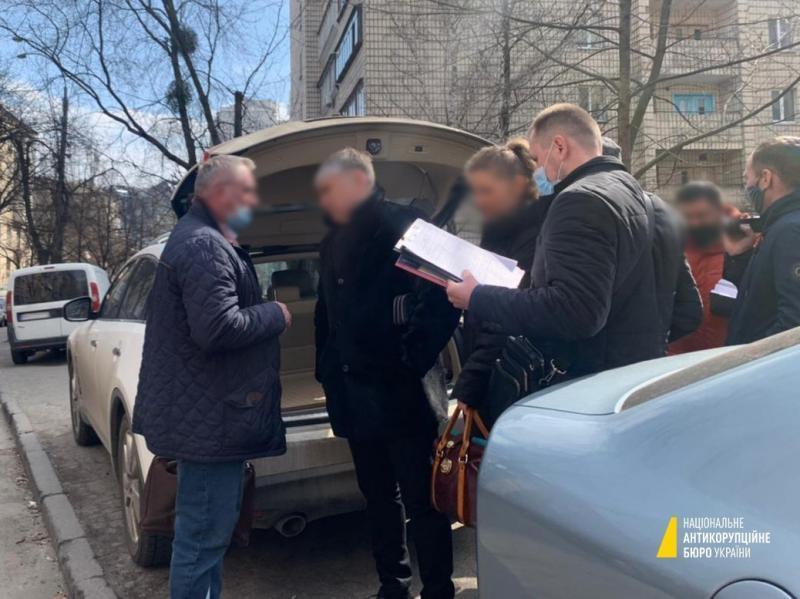
On April 7, 2021, SAPO prosecutors and NABU detectives served notices of suspicion on two lawyers who had been caught accepting a $100,000 bribe. According to the investigation, they were to pass this sum to Tetiana Balas, a judge of the District Administrative Court of Kyiv (DACK), in exchange for issuing the required decision in a case seeking to have a tax assessment notice declared unlawful and annulled.
A tax dispute arose between the insurance company Axe Capital and the tax authorities. The tax office imposed a fine of more than UAH 54 million, and the company filed a lawsuit with the DACK to cancel this decision.
Axe Capital Insurance Company LLC appointed Serhii Kovalenko as liquidator, assigning him the functions of carrying out the liquidation procedure of the company.
According to the investigation, during one of the meetings in the Silpo supermarket, lawyer Yurii Donets proposed to Kovalenko to “settle things” with a judge, suggesting that Judge Pavlo Vovk could rule in favor of the company if he received $120,000. Donets claimed that he had connections in the court and that there was a real possibility to influence the decision if the money was transferred “through the right person.” That person turned out to be Yurii Zontov, the brother of former DACK Chairman Pavlo Vovk. Donets engaged him as an intermediary who allegedly could secure “the right decision” through his family ties.
When Kovalenko suggested reducing the bribe to $100,000, Donets allegedly promised to “settle” this with Zontov. They had several meetings during which they discussed further steps. Donets kept insisting that only through bribery and the right connections could the case be won, even despite having strong expert evidence on hand.
Later, Donets allegedly informed Kovalenko through Telegram that he would receive information about the decision at the beginning of the week and that it might be necessary to transfer part of the unlawful benefit. After that, according to the investigation, he again called Kovalenko via Telegram and informed him that Judge Vovk had preliminarily agreed to issue a ruling in favor of the company, and it was proposed to transfer the first part of the amount — $20,000.
After Donets's proposal, Kovalenko filed a report of a crime with NABU, after which all his meetings with Donets took place under the control of law enforcement.

During the next meeting, Kovalenko said that he currently had only $10,000. Donets agreed to accept that amount. They went together to a branch of Kredobank JSC, where Kovalenko took the money from a safe deposit box and handed it over. As later emerged in court during Kovalenko's questioning, this $10,000 (like the rest of the sum) had been provided to him in advance by NABU detectives as part of covert investigative actions. A few days later, Zontov called Donets, insisted on receiving the remaining amount, and said that the judge would issue a ruling in favor of the company, urging him to prepare the text of the court decision for transfer.
Thus, Kovalenko handed over another $90,000, as well as a flash drive with the draft court decision and its printed copy. Later that same day, Donets gave Zontov $80,000 and the flash drive with the draft decision, keeping the remaining $10,000 for himself. The next day, the NABU detained the lawyers.
Zontov was charged under Article 190(4), Article 369(3), and Article 366-2(2) of the Criminal Code of Ukraine, and Donets under Article 190(4) and Article 369(3).
Yurii Zontov is also suspected of entering inaccurate data in his e-declaration. This was the first notice of suspicion after the reinstatement of criminal liability for false declaration.
During the proceedings at the HACC, the process was repeatedly drawn out by participants' failure to appear and by changes in the composition of the panel, as a result of which the hearing of the case had to start over from the beginning. The hearings were later complicated by the mobilization of one of the defendants: in 2025 it emerged that Yurii Zontov had voluntarily joined the ranks of the Armed Forces of Ukraine and was carrying out combat missions, which made his participation in the hearings impossible even remotely.
The proceedings against Zontov were later severed on account of his voluntary military service. The hearing of the case against Donets continued.
In the closing arguments, the prosecutor insisted that Yurii Donets's guilt had been fully proven, noting that the initiative to pass the $100,000 bribe for a favorable decision by the DACK judge had come precisely from the defendant — as confirmed by the records of covert investigative actions, recordings of the meetings, messenger correspondence, and the fact that the funds were seized. Rejecting the entrapment theory, the prosecutor emphasized Donets's active steps even before the whistleblower was brought in.
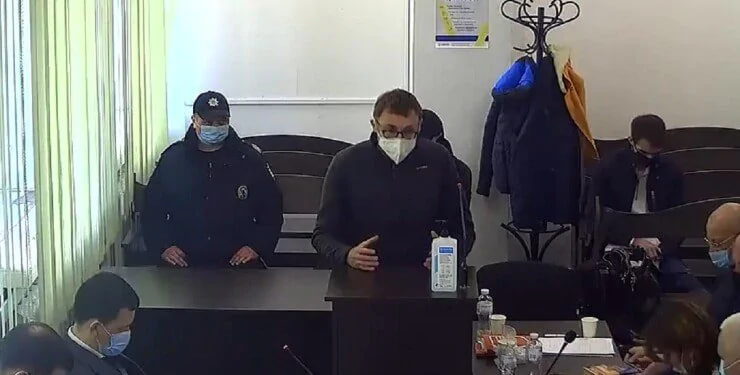
The defense, for its part, categorically denied any guilt, arguing that the case was the result of a deliberate entrapment operation by the NABU, and asked for Donets to be fully acquitted. In his statement, Yurii Donets alleged incitement by agents provocateurs and former colleagues, noting that his actions could amount, at most, to signs of trading in influence, rather than the serious offenses with which he had been charged. His defense counsel supported this position, pointing to the inadmissibility of the evidence on account of unlawful searches and procedural violations, in particular the premature appearance of the defendants' names in the case file.
In June 2026, the HACC found Donets guilty of trading in influence under Article 369-2(2) of the Criminal Code of Ukraine. He was sentenced to four years' imprisonment and a three-year ban on practicing law. However, the judges released Donets from punishment due to the expiry of the statute of limitations.

 14/03/2022
 1676 days
 Imprisonment




.png)